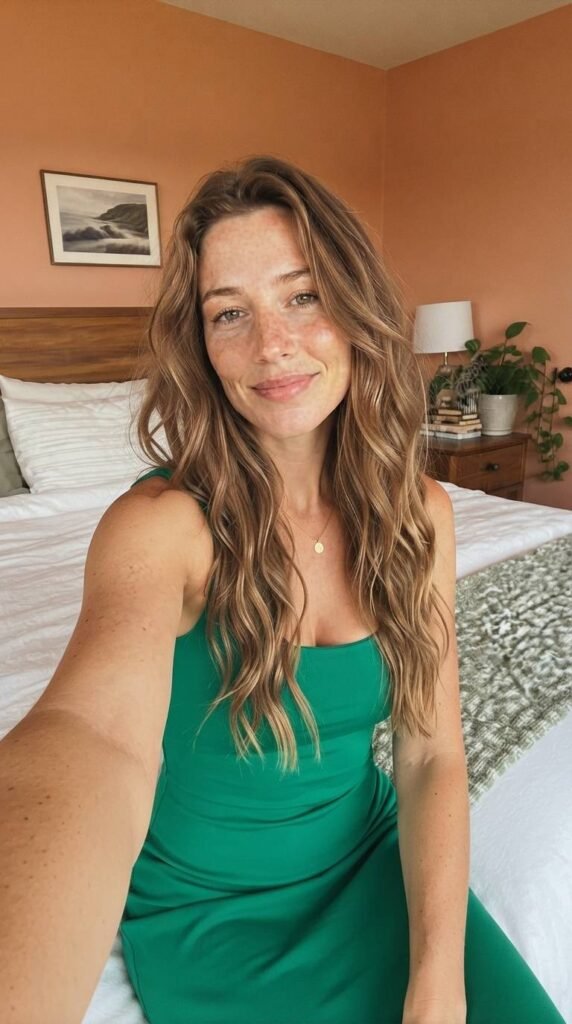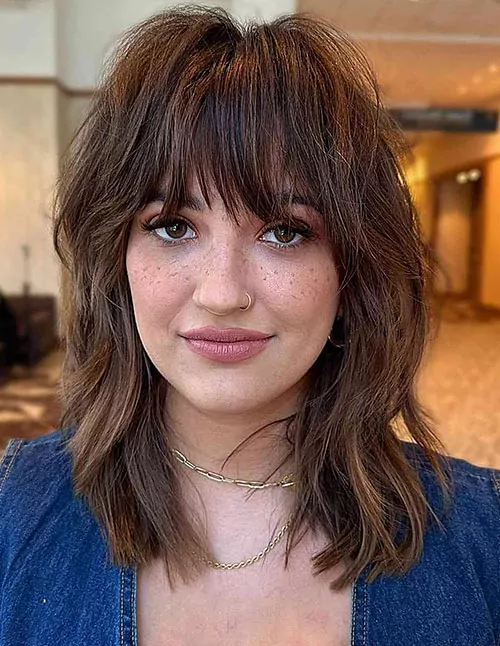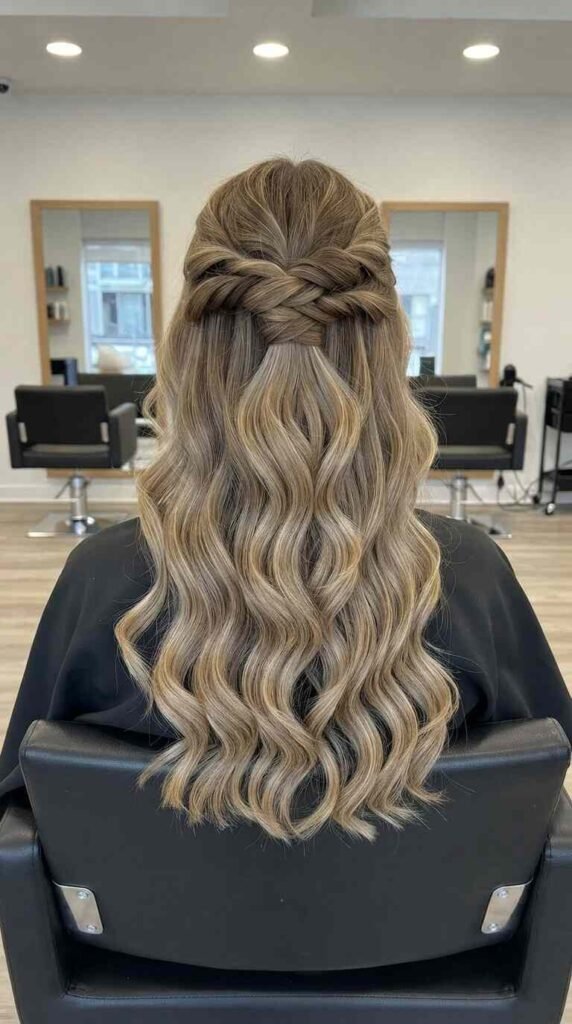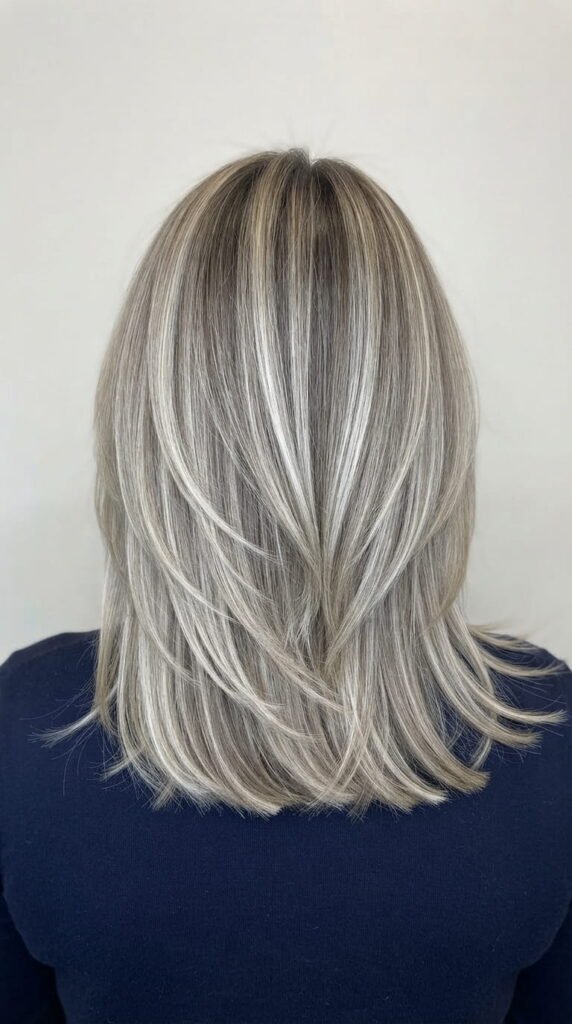
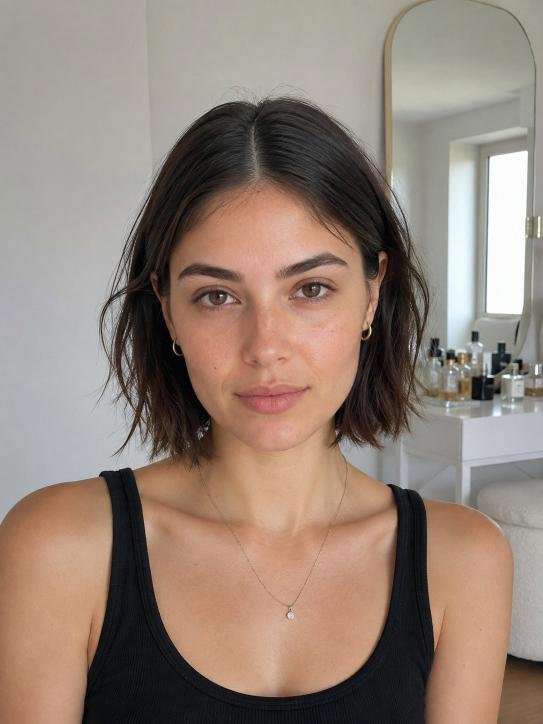
Want a haircut that feels fresh and stylish without sacrificing too much length? Shoulder-length layered bobs offer that sweet spot between a classic bob and a longer, more versatile haircut. With the right combination of choppy ends, soft layers, and face-framing details, you can find a look that adds movement to fine hair, removes bulk from thick hair, or gives naturally wavy strands a relaxed finish.
One of the best things about shoulder length layered bob styles is how easily they can be customized. A blunt, textured cut creates a different effect from an angled bob, while curtain bangs or a deep side part can completely change the overall shape. Whether you prefer a polished salon blowout, effortless waves, or a wash-and-wear haircut, these 20 ideas can help you choose a bob that suits your hair type, face shape, and daily routine.
Blunt Choppy Bob
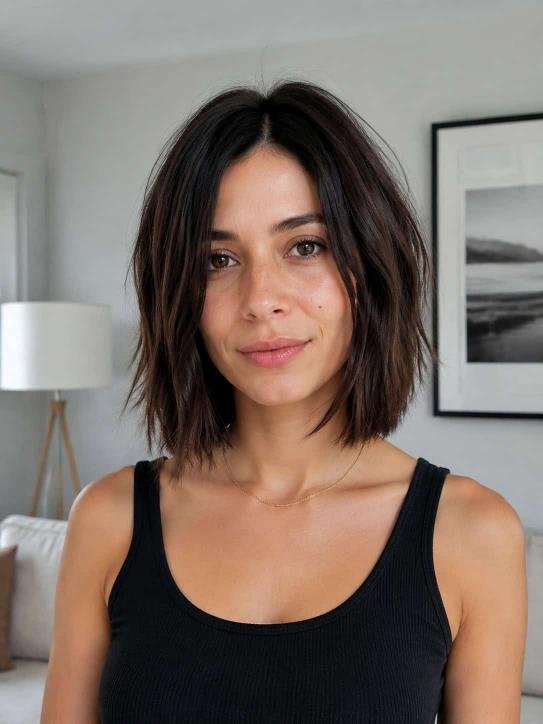
A blunt choppy bob combines a relatively solid outline with subtle, piecey texture through the ends. The hair falls around the shoulders, creating a clean shape, while light texturizing keeps the cut from looking too heavy or rigid. This balance makes it a great choice if you like the structure of a traditional bob but want something a little more relaxed.
The style can be especially flattering on fine or medium-density hair because the fuller perimeter helps the ends appear thicker. Your stylist can add a few internal layers or carefully textured sections without removing too much weight from the bottom. For everyday styling, a blow-dry with a round brush creates a smooth finish, while a small amount of texturizing cream gives the ends a more casual, piecey appearance.
A-Line Choppy Bob
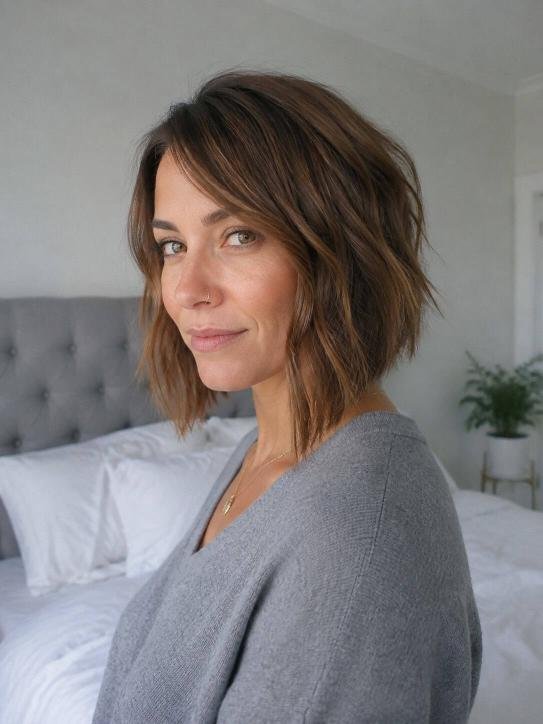
An A-line choppy bob is slightly shorter at the back and gradually longer toward the front. This angled shape draws attention to the jawline and gives the haircut a defined silhouette without needing dramatic layers throughout. When choppy ends are added, the result feels modern rather than overly precise.
This style works well if you want your hair to frame your face while maintaining enough length around the front to tuck behind your ears or style into loose waves. The angle can be subtle for a softer look or more noticeable if you prefer a sharper shape. Ask your stylist to consider how your hair naturally falls, since cowlicks, density, and texture can affect how the longer front pieces sit.
Inverted Choppy Bob

An inverted choppy bob features a more pronounced difference between the shorter back and the longer front sections. The back is often shaped to create lift around the crown, while the front pieces fall toward the face for a flattering, face-framing effect. Choppy layers give this structured haircut extra movement and keep it from feeling too formal.
This cut can be a good option if your hair tends to lie flat at the back or if you want a bob with a noticeable shape from the side. It is particularly effective on straight and slightly wavy hair, although curly textures can also work with a customized approach. Keep in mind that a strong inverted shape may need occasional trims to maintain its proportions as the shorter back grows out.
Stacked Choppy Bob
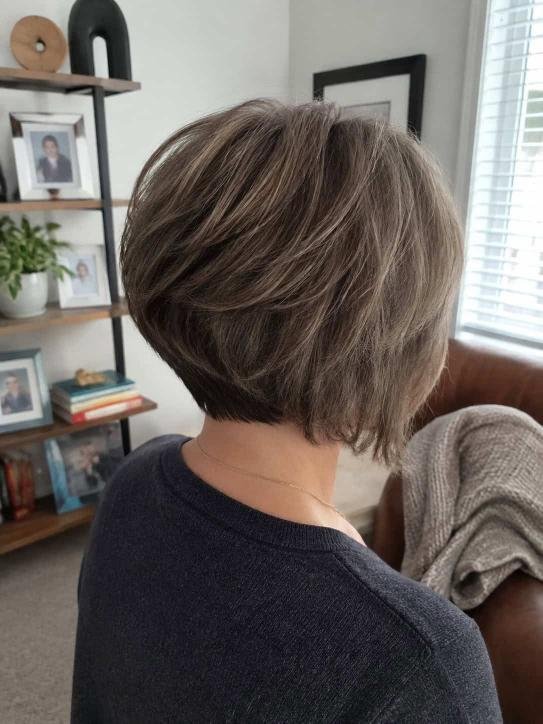
A stacked choppy bob uses graduated layers at the back to build volume and create a rounded shape. The back sections are cut progressively shorter, while the sides and front can remain closer to shoulder length. This creates a fuller-looking silhouette with plenty of movement, making the haircut feel lively rather than flat.
If you have fine hair that struggles to hold volume, a carefully designed stacked bob may give you the lift you want without relying entirely on styling products. For thicker hair, the graduation needs to be tailored so the back does not become too bulky. A blow-dryer and round brush can help emphasize the shape, but your stylist should create a cut that still looks attractive when you let your hair air-dry.
Asymmetrical Choppy Bob
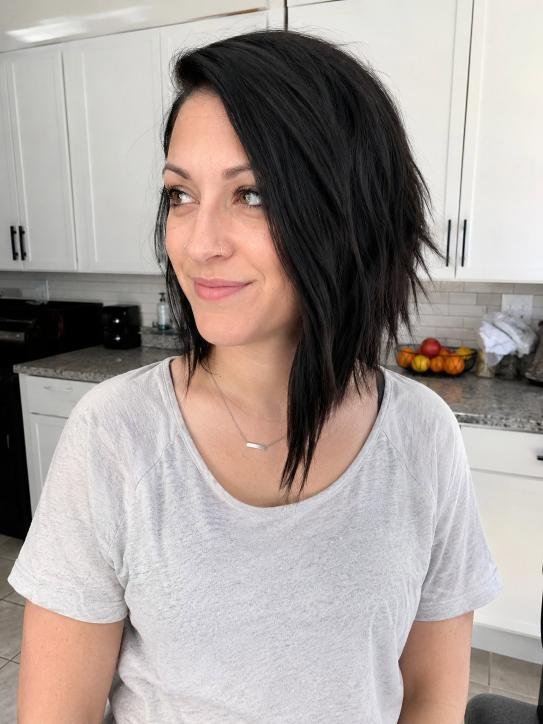
An asymmetrical choppy bob has one side that is slightly longer than the other, creating an intentionally uneven shape. The difference can be subtle enough for everyday wear or more dramatic for a bold, fashion-forward look. Choppy ends soften the contrast and add texture, making the haircut feel less rigid.
This is a useful option if you enjoy hairstyles with a little personality but do not want a very short cut. The longer side can frame the cheekbone or jawline, while the shorter side opens up the opposite side of the face. A side part can emphasize the asymmetry, and a light styling cream can separate the ends so the shape remains visible without looking overly styled.
Rounded Graduated Choppy Bob
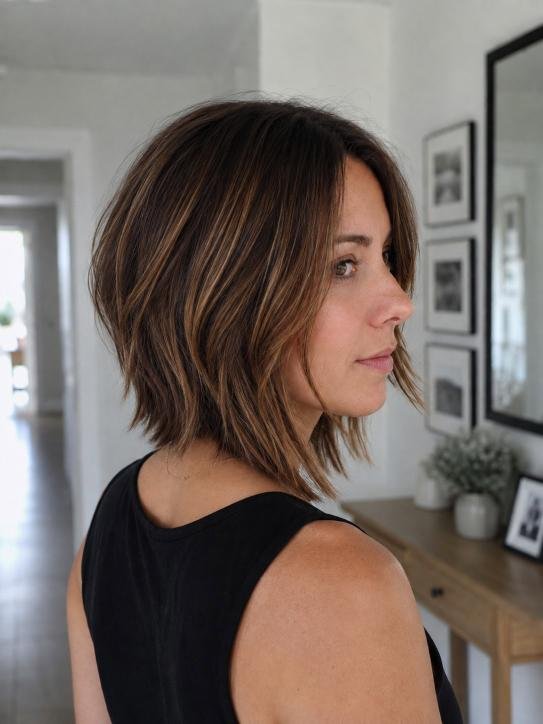
A rounded graduated choppy bob creates a soft curve around the back of the head, with layers that gradually blend into the longer sides. Unlike a sharply angled bob, this version has a more curved, balanced outline. Choppy ends add a modern finish and prevent the rounded shape from looking too uniform.
This haircut can work beautifully if you like volume around the back but prefer a softer profile than a heavily stacked style. It is particularly appealing on straight and gently wavy hair, where the graduation is easy to see. To keep the silhouette balanced, ask your stylist how the shape will sit at your natural hair density and whether you need internal layers to avoid excessive fullness.
U-Cut Choppy Bob
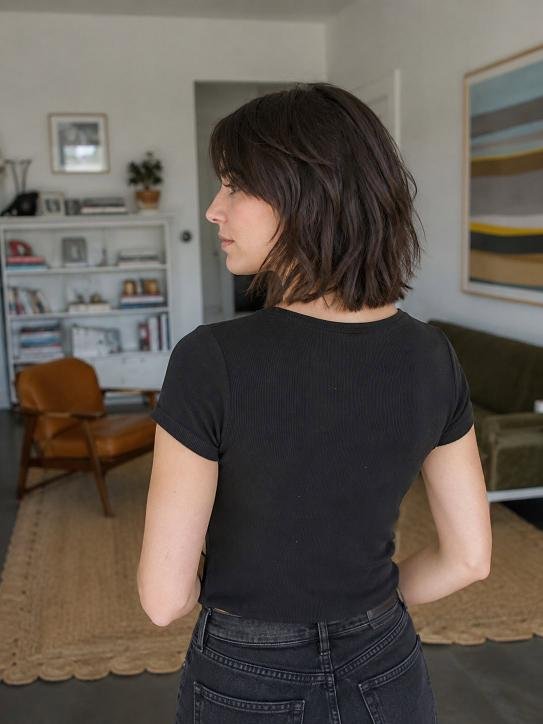
A U-cut choppy bob has a gently curved perimeter that dips slightly lower at the center back and rises toward the sides. The result is softer than a sharply angled A-line cut, giving shoulder-length hair a natural-looking outline. Lightly textured ends introduce movement while preserving enough length to keep the haircut versatile.
This option is worth considering if you like a balanced shape that looks good from the front and back. The curved perimeter can complement loose waves, straight strands, and softly layered hair without creating a dramatic change in length from one side to the other. For a relaxed finish, use a curling wand to create a few loose bends, or simply let your natural texture give the ends their own movement.
Flippy Choppy Bob
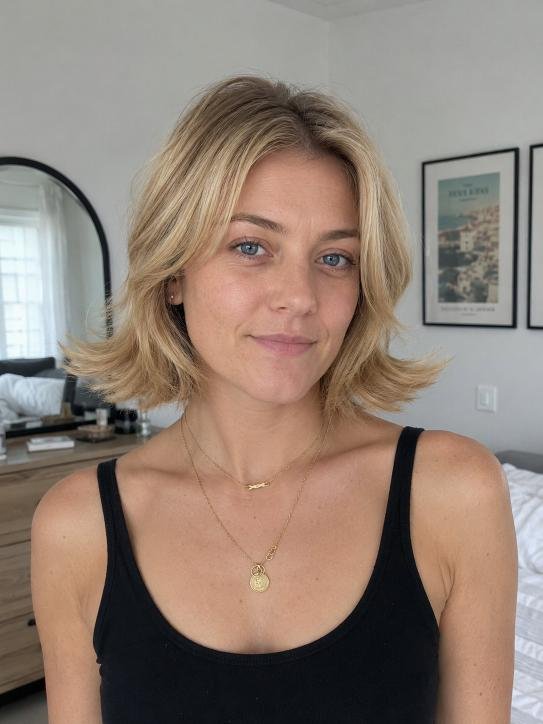
A flippy choppy bob brings a playful touch to shoulder-length hair by turning the ends outward. The flip can be subtle, with just the tips curving away from the neck, or more noticeable for a retro-inspired finish. Choppy layers help the ends move independently, making the style look light and lively.
This hairstyle works particularly well on straight and slightly wavy hair because the outward curve is easy to create and maintain. After blow-drying, use a round brush to direct the ends away from your face, or use a flat iron carefully to create a gentle outward bend. A flexible-hold hairspray can help the flip last without making the hair feel stiff, especially if your strands tend to fall flat during the day.
Middle-Part Choppy Bob
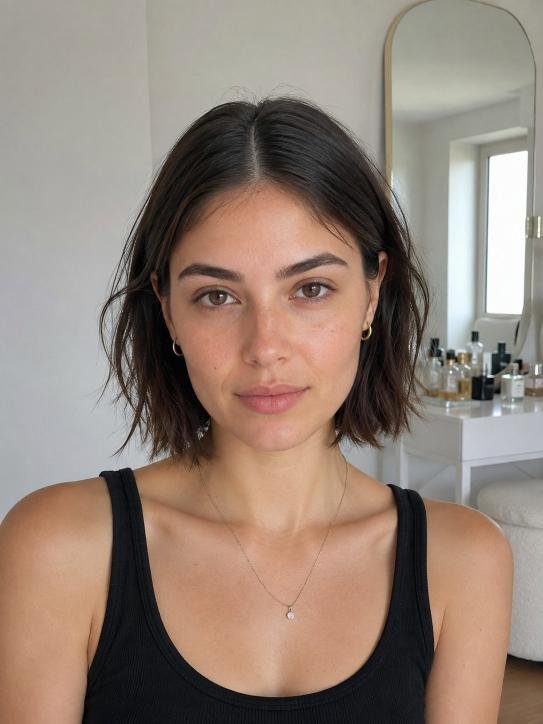
A middle-part choppy bob creates a balanced, symmetrical appearance, with the hair falling evenly on both sides of the face. The center part highlights the shape of the cut, while textured ends keep the overall look from feeling too severe. At shoulder length, the style feels modern and versatile enough for both casual outfits and more polished occasions.
This parting can be particularly appealing if you like your hair to frame your face evenly or want to show off a well-defined bob shape. If your hair naturally falls to one side, you may need to train the part gradually while the hair is damp. Add a lightweight smoothing product for a sleek finish or scrunch in a wave-enhancing cream if you prefer a more relaxed texture.
Deep-Side-Part Choppy Bob
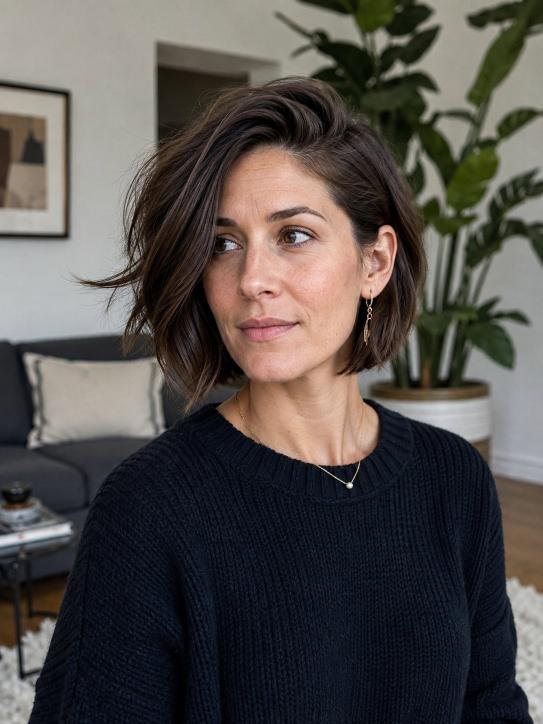
A deep side part changes the balance of a choppy bob by moving more hair to one side. This creates extra height at the roots and a sweeping shape that can make the haircut feel more dramatic. The uneven distribution of volume also highlights the texture of choppy ends, giving the style a soft, slightly glamorous finish.
This look can be useful if your hair tends to fall flat at the crown or you want a quick way to make your bob feel different without changing the cut. Apply a small amount of root-lifting product before blow-drying, then direct the hair across the top of your head. For a softer everyday version, tuck the lighter side behind your ear and allow the fuller side to fall naturally around your cheek.
Choppy Bob With Curtain Bangs
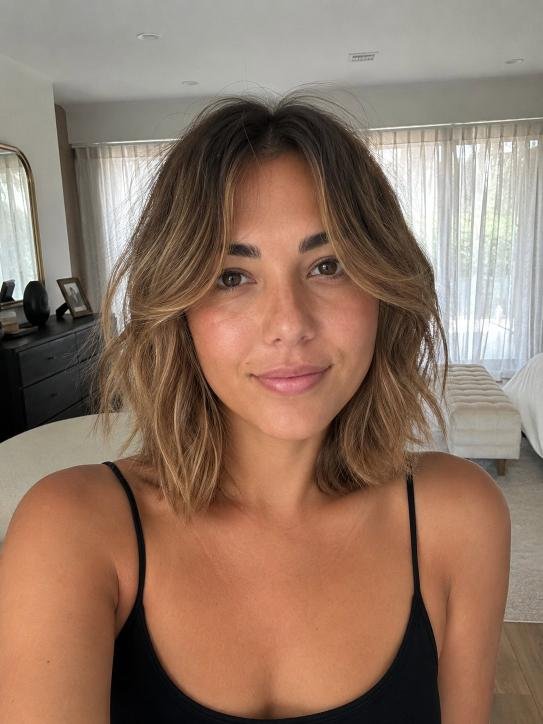
Curtain bangs pair beautifully with a shoulder-length choppy bob because they create a soft frame around the eyes and cheekbones. The fringe is generally shorter near the center and gradually gets longer toward the temples, blending into the surrounding layers. Combined with choppy ends, the look feels relaxed and current without requiring a heavy, straight-across fringe.
This style can work with straight, wavy, and some curly textures, but the bangs should be cut with your natural hair movement in mind. If your hair springs up when it dries, ask your stylist to leave enough length to account for shrinkage. Style the bangs by directing them away from the center part with a round brush, then finish the rest of your bob with a smooth blowout or loose waves.
Choppy Bob With Soft Bangs
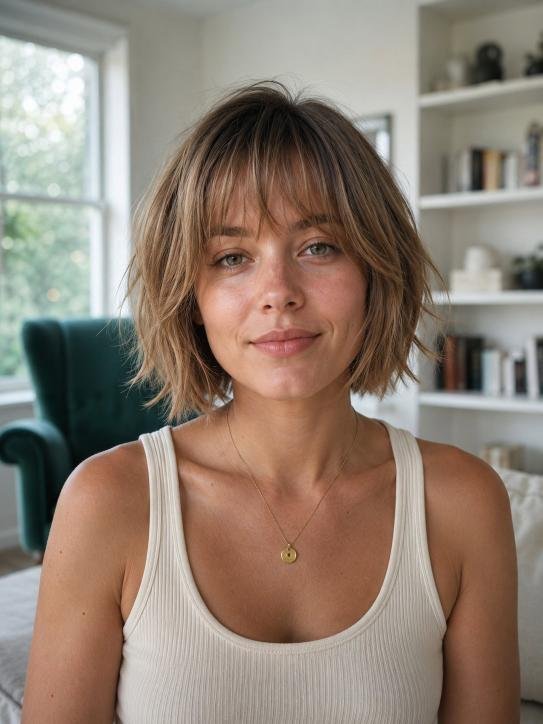
Soft bangs add a delicate detail to a choppy bob without creating the strong line of a blunt fringe. They may be wispy, lightly separated, or gently curved across the forehead, allowing some skin to show through. The texture of the bangs complements the irregular ends of the bob, creating a cohesive style that feels light and approachable.
This option can be a good fit if you want to change the appearance of your haircut without committing to thick bangs. Soft fringe can be styled straight, swept slightly to one side, or blended into the front layers as it grows. Use a small amount of lightweight styling product and avoid applying too much near the roots, which can make the bangs separate in a way you may not want.
Wavy Choppy Bob
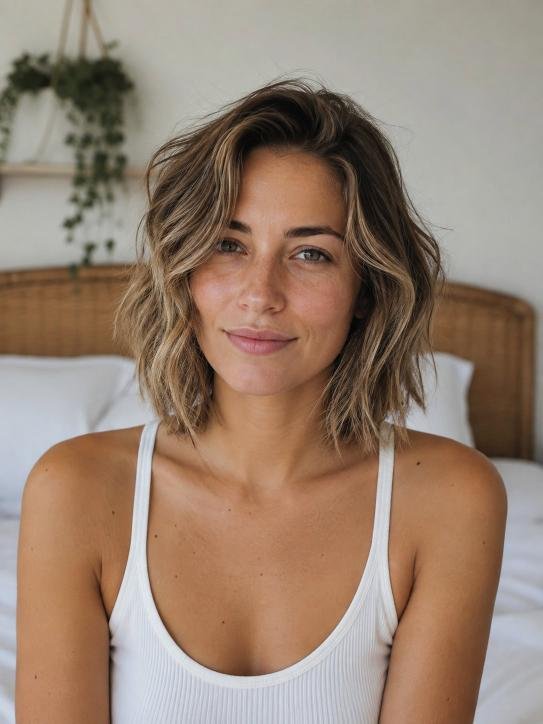
A wavy choppy bob is ideal if you love a hairstyle that looks relaxed without appearing unfinished. Natural waves bring movement to the layers, while textured ends give the haircut a beachy, effortless character. At shoulder length, the waves provide enough fullness to create a lively shape without overwhelming the face.
If your hair has a natural bend, apply a lightweight mousse or wave-enhancing cream to damp strands and scrunch gently. You can air-dry for a softer finish or use a diffuser to encourage more volume at the roots. If your hair is straight, a curling wand can create loose bends, but leave the ends slightly straighter to maintain that casual, choppy effect.
Sleek Straight Choppy Bob
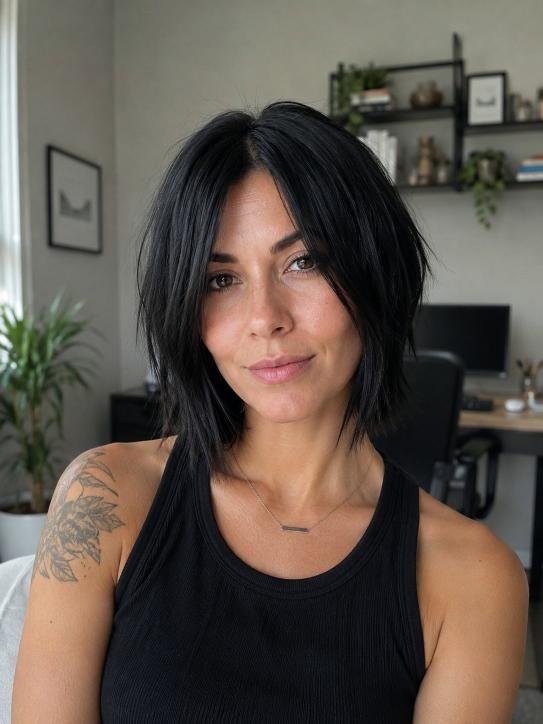
A sleek straight choppy bob offers a polished alternative to more tousled versions of the haircut. The overall shape remains smooth, but subtle texture at the ends adds dimension and prevents the cut from looking like a simple blunt line. The shoulder-length finish gives you enough hair to tuck behind your ears or style with a center or side part.
This style is especially easy to showcase on naturally straight hair, although other textures can achieve it with careful blow-drying. Apply a heat protectant before using hot tools, then smooth the hair in small sections with a blow-dryer or flat iron. A lightweight finishing serum can add shine, but use it sparingly so the ends remain airy rather than looking greasy or weighed down.
Curly Choppy Bob
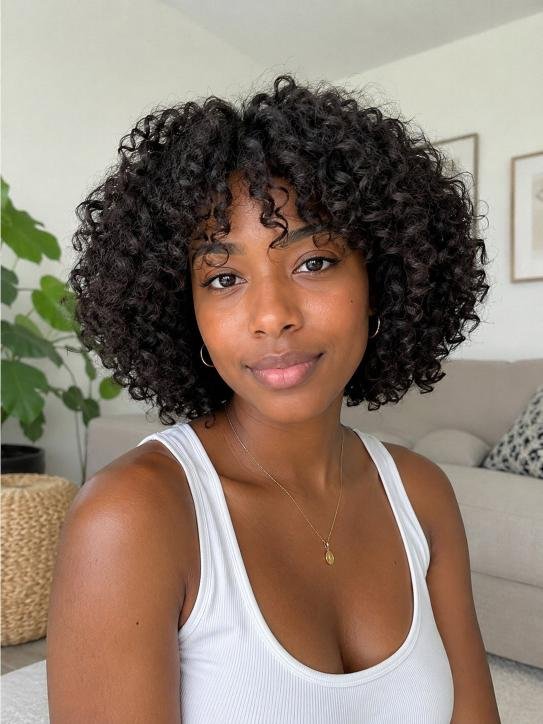
A curly choppy bob celebrates natural ringlets while giving them a defined shape around the shoulders. Carefully placed layers can help curls spring up and distribute volume more evenly, while textured ends prevent the silhouette from becoming too heavy. Because curly hair often shrinks as it dries, the finished cut may appear shorter than it looks when wet.
A stylist who understands curly cutting techniques can help determine where to place the layers based on your curl pattern and density. For everyday styling, apply curl cream or gel to damp hair and encourage the curls to form natural clumps before drying. If you want a fuller appearance, diffuse gently at the roots; for more definition, minimize touching the hair until it is completely dry.
Coily Choppy Bob
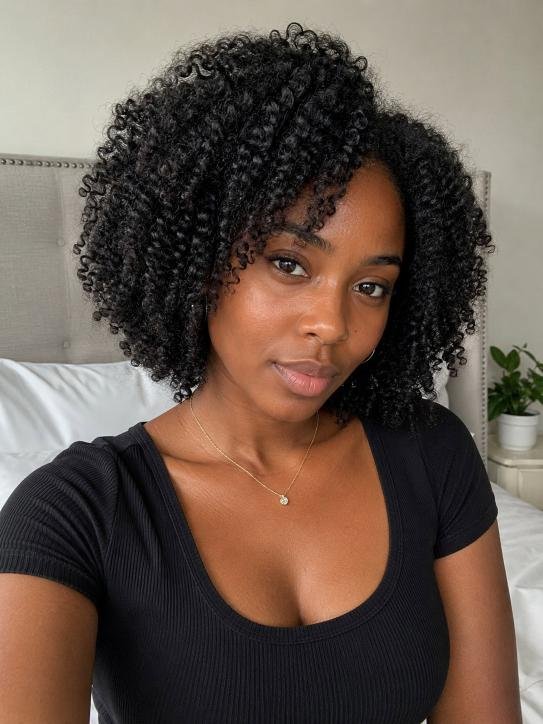
A coily choppy bob gives tightly textured hair a shaped, expressive silhouette while retaining enough length for different styling options. The cut may feature rounded layers, carefully shaped ends, or subtle variations in length that help create a balanced outline. On shoulder-length natural hair, the result can look full and sculptural, with the exact shape depending on shrinkage and density.
The most important part of this style is choosing a shape that works with your coils instead of fighting their natural movement. Discuss how your hair behaves when dry, how much shrinkage you experience, and whether you prefer a rounded or more elongated silhouette. Regular conditioning and gentle detangling can help maintain the hair’s flexibility, while twist-outs or braid-outs offer different ways to change the texture without heat.
Fine-Hair Choppy Bob
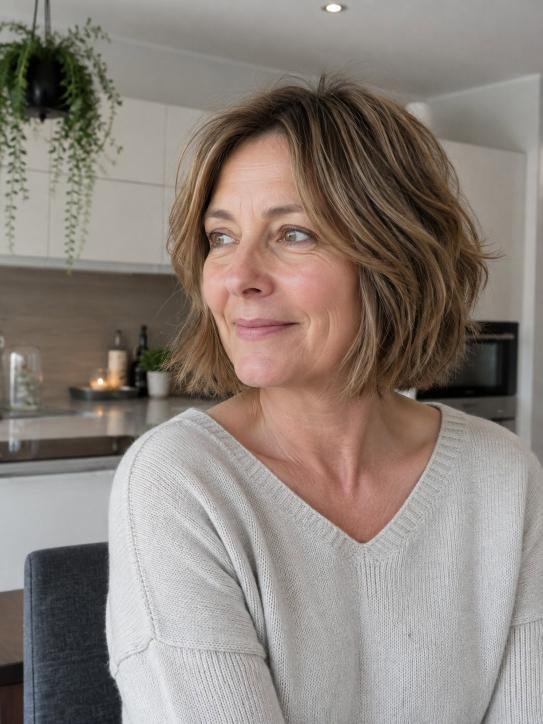
A choppy bob can make fine hair look more textured and lively, provided the layers are placed carefully. Too many short layers may remove the fullness from the ends, so the best approach is often a relatively solid perimeter with light texturizing around the surface. Shoulder length also provides enough hair to frame the face while keeping the overall cut manageable.
If your fine hair tends to fall flat, a side part or subtle crown layers may help create the appearance of lift. Use a lightweight volumizing mousse before blow-drying and avoid heavy oils or creams that can weigh the strands down. A round brush can add movement at the ends, while dry texture spray can create separation without requiring a highly layered haircut.
Thick-Hair Choppy Bob

Thick hair can look stunning in a shoulder-length choppy bob, but the cut needs to balance volume with movement. Strategic internal layers can remove some bulk, while choppy ends keep the outline from appearing too solid. The result can feel lighter and more manageable without sacrificing the fullness that makes thick hair so beautiful.
Your stylist should consider whether your hair is straight, wavy, or curly, since each texture responds differently to layering. Removing too much weight near the crown may create unwanted volume, while leaving every section too heavy can make the ends feel dense. At home, a smoothing cream can help control puffiness, or a wave-enhancing product can bring out natural texture without making the hair feel stiff.
Dimensional-Color Choppy Bob
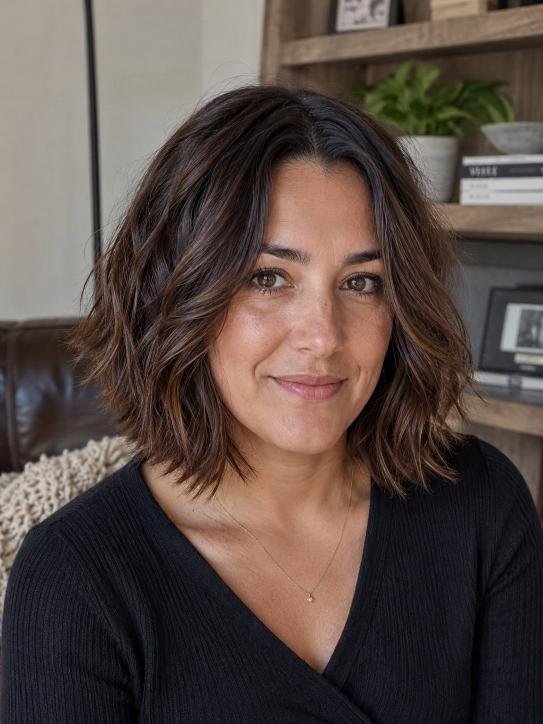
Dimensional color adds depth to a choppy bob by combining slightly different shades throughout the hair. For example, a brunette base with caramel ribbons can emphasize the layers, while a dark blonde base with lighter pieces can make the haircut look brighter and more textured. The contrast catches light on different sections, helping the choppy shape stand out.
Balayage and blended highlights are useful choices if you prefer a softer transition between salon visits. Your colorist can place lighter pieces around the face or through the ends to emphasize the areas where your haircut moves most. If you decide to lighten your hair, discuss its current condition and your maintenance preferences first, then use color-safe care products to help preserve shine and softness.
Copper Choppy Bob
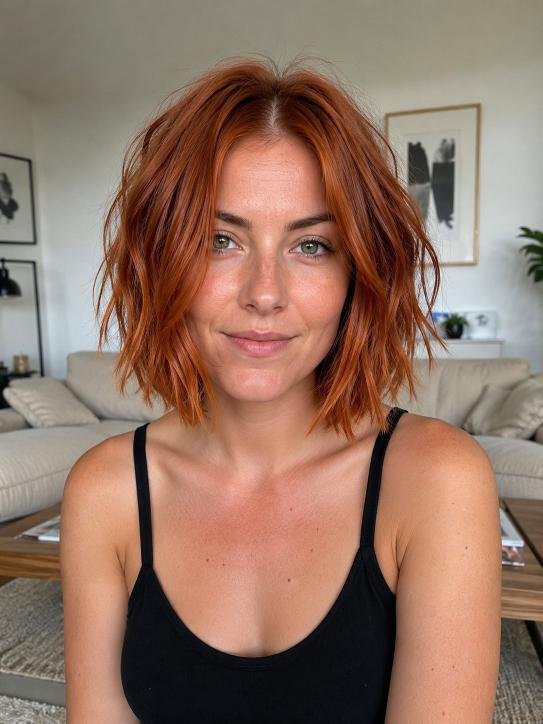
A copper choppy bob combines a textured shoulder-length haircut with a warm shade that can range from soft strawberry copper to rich auburn. The color brings attention to the movement of the layers, while the choppy finish gives the overall look a lively, modern edge. Depending on the tone you choose, it can feel subtle and natural or bold enough to become the main feature of your style.
When selecting a copper shade, consider your natural base color, how much upkeep you want, and whether you prefer a bright or muted result. Copper tones can fade over time, so your stylist may recommend color-safe products and a maintenance plan that suits your routine. You do not need dramatic layers to make the color stand out; even a simple shoulder-length bob with textured ends can create plenty of dimension.
Frequently Asked Questions
Are shoulder length layered bob styles good for all face shapes?
Shoulder-length layered bobs can be customized for many face shapes, but the most flattering version depends on where the layers fall and how the haircut frames your features. Longer front pieces can create a more elongated appearance, while curtain bangs and cheekbone-level layers can soften the overall shape. Rather than choosing a cut based only on a face-shape chart, discuss your preferred features, natural hair texture, and styling habits with your stylist.
Do choppy layers make hair look thinner?
Choppy layers do not automatically make hair look thinner, but removing too much weight can make the ends appear less full. Fine hair often benefits from subtle texturing and a stronger perimeter, while thick hair may need more internal layering to reduce bulk. The key is to match the amount of layering to your hair’s density and the shape you want to maintain.
How often should I trim a shoulder-length layered bob?
The ideal trim schedule depends on how sharply defined your haircut is and how quickly your hair grows. A strongly angled, stacked, or asymmetrical bob may need more frequent shaping to preserve its silhouette, while a softer layered bob can grow out more naturally. If you notice that the ends are losing their shape or the layers no longer sit as intended, it may be time to book a trim.
Can I style a choppy bob without heat?
Yes, many choppy bobs look great when air-dried, particularly if your hair has a natural wave or curl. Apply a lightweight styling product to damp hair, then scrunch or shape the ends with your fingers to encourage movement. You can also use overnight braids or twists to create texture, although the final result will depend on your hair’s natural pattern.
Which shoulder length layered bob is best for fine hair?
A blunt choppy bob with light texturing is often worth considering because it preserves fullness at the bottom while adding movement. A carefully placed side part or subtle layers around the crown can also help create the appearance of volume. Avoid removing too much hair from the ends, and ask your stylist to show you how the cut will look when styled with minimal effort.
Are shoulder-length choppy bobs still versatile enough for updos?
Shoulder-length hair can still be styled in plenty of ways, even if shorter layers escape from a traditional ponytail or bun. You can use claw clips, half-up styles, small buns, decorative pins, or loose twists to keep the hair away from your face. Leaving a few shorter pieces around the front can make these styles look intentional rather than untidy.
Conclusion
The best shoulder length layered bob styles combine a shape you love with a level of maintenance that fits your everyday life. A blunt choppy bob can keep fine hair looking full, an inverted or stacked cut can create more structure, and a wavy or curly version can highlight your natural texture. Details such as curtain bangs, a deep side part, copper color, or dimensional highlights can make the haircut feel even more personal.
Before your next salon appointment, save a few photos that show the cut from different angles and look for examples with a hair texture similar to yours. Talk with your stylist about how much volume you want, how often you are willing to trim your hair, and whether you prefer air-drying or heat styling. With the right combination of shape and texture, a shoulder-length layered bob can feel fresh, flattering, and easy to make your own.