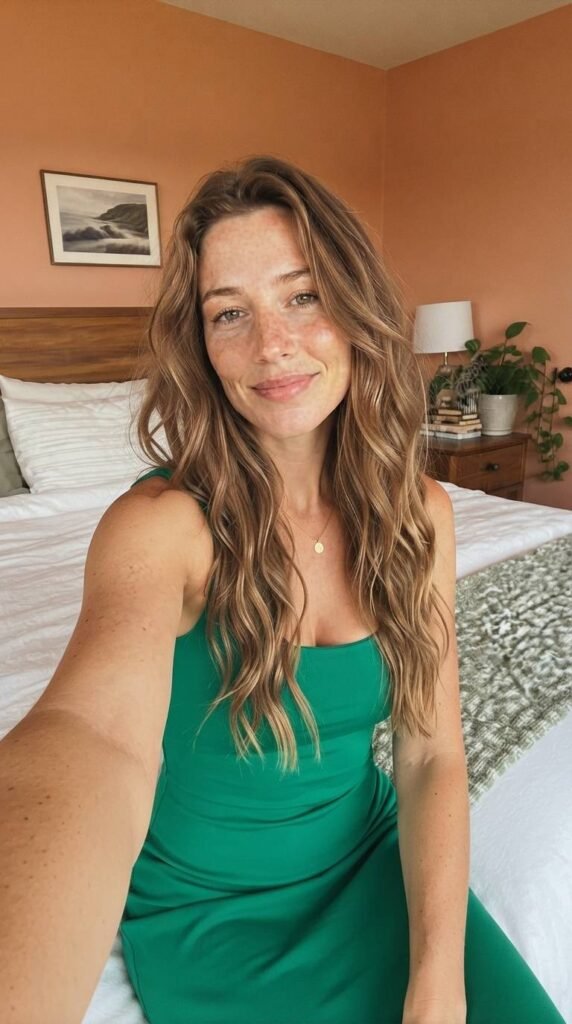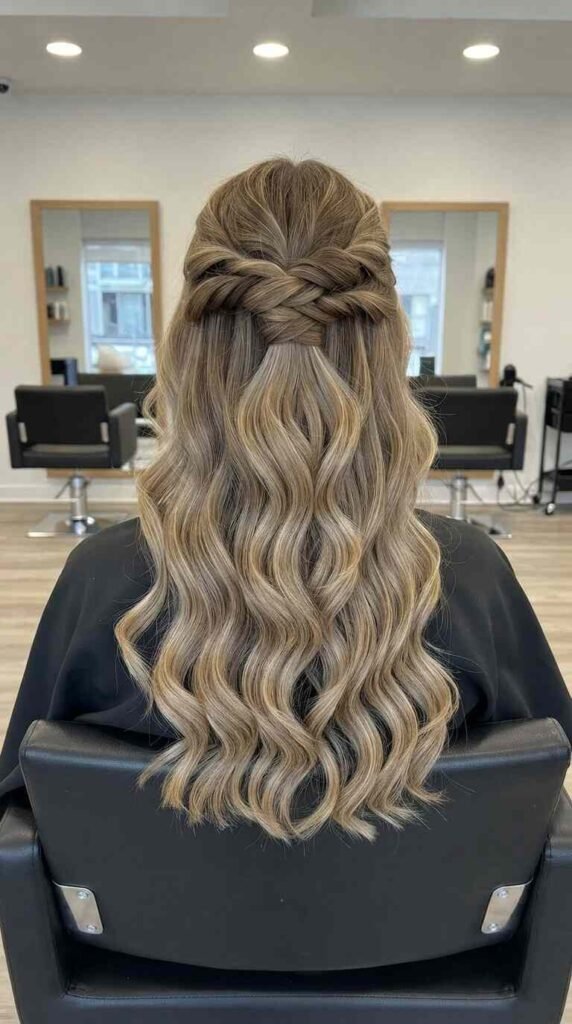
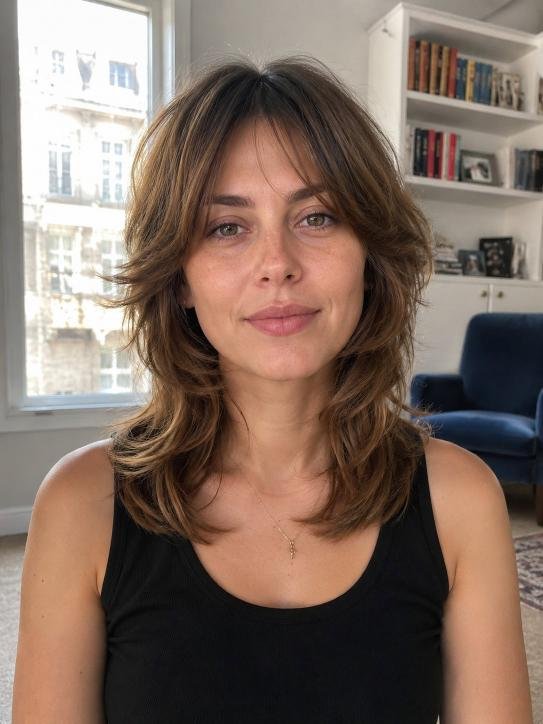
Want a haircut that looks stylish without requiring a perfect blowout every morning? Choppy shaggy shoulder length hairstyles are a great option if you love movement, natural texture, and a slightly undone finish. With layers that create volume at the crown and lighter, textured ends, these cuts can make everyday styling feel easier while giving your hair plenty of personality.
The beauty of a shoulder-length shag is its flexibility. You can choose a classic, ’70s-inspired shape, try a modern wolf cut, or keep things soft with curtain bangs and blended layers. The right version depends on your hair’s thickness, natural texture, and how much styling you want to do. Whether your hair is straight, wavy, curly, or coily, these 22 ideas offer inspiration for finding a shag that feels flattering and practical.
Classic ’70s Shag
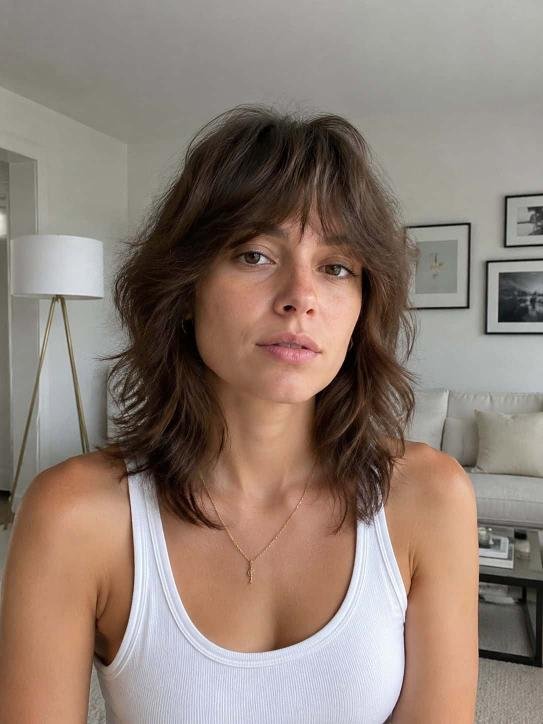
The classic ’70s shag is known for its layered crown, feathered ends, and relaxed rock-and-roll attitude. At shoulder length, it keeps the recognizable vintage shape without feeling overly dramatic or difficult to manage. The shorter layers create lift around the top, while the longer pieces frame the face and neck.
This haircut works especially well for naturally wavy hair because its texture helps the layers fall into place. If your hair is straight, a little mousse and a quick tousle can create a similarly relaxed finish. Pair the cut with wispy bangs or a soft fringe for an authentic retro look, or leave the forehead open for a more modern interpretation.
Modern Soft Shag

A modern soft shag offers the movement of a traditional shag with less contrast between the layers. Instead of dramatic, disconnected sections, the haircut uses blended shaping to create a softer silhouette. The result feels casual and wearable, making it a good choice if you want texture without an overly edgy appearance.
This style suits women who want a haircut that looks attractive when air-dried but can also be polished for work or special occasions. Ask your stylist for gentle crown layers and face-framing pieces that blend into the overall length. A lightweight styling cream can enhance natural movement without making the hair look stiff or overly separated.
Wolf Cut

The wolf cut combines the fullness of a shag with the longer, more tapered shape associated with a mullet. Shorter layers around the crown create volume, while longer sections at the back preserve the shoulder-length finish. Its deliberately tousled shape makes it a popular choice for anyone who likes an expressive, slightly rebellious haircut.
The amount of contrast between the layers can make a big difference in how this cut looks. A softer wolf cut is easier to grow out, while a more dramatic version creates stronger volume around the crown and sides. If you prefer a low-maintenance routine, discuss how the haircut will behave without daily heat styling before choosing especially short layers.
Razored Textured Shag
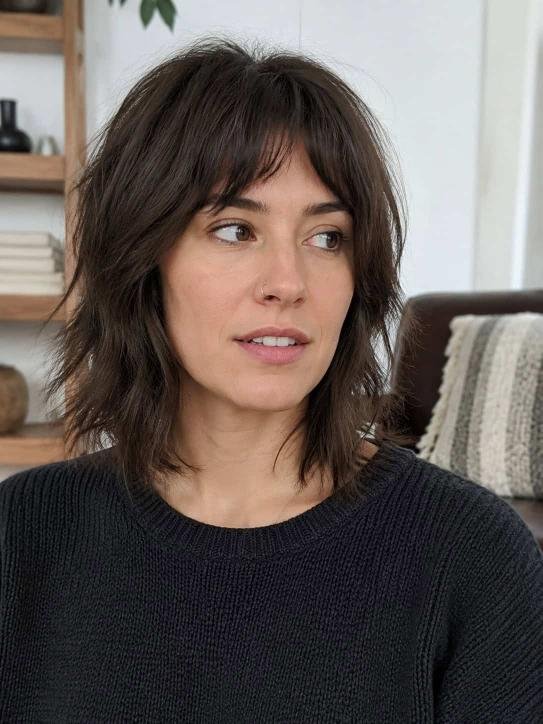
A razored textured shag uses a razor or carefully selected cutting techniques to create wispy ends and a lightweight, piecey finish. The texture helps the layers move independently rather than forming a solid, heavy shape. On shoulder-length hair, this can produce an airy haircut with plenty of movement around the face.
This approach can be particularly appealing if your hair is dense and you want a less bulky outline. However, razor cutting is not ideal for every texture or hair condition, so your stylist should consider whether it suits your strands. To style the finished cut, work a small amount of texturizing cream through the ends and let the layers fall naturally.
Choppy Shag With Choppy Bangs
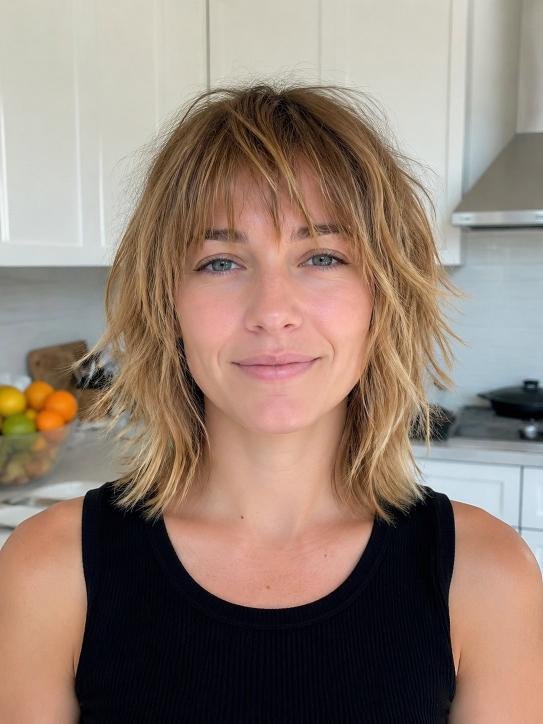
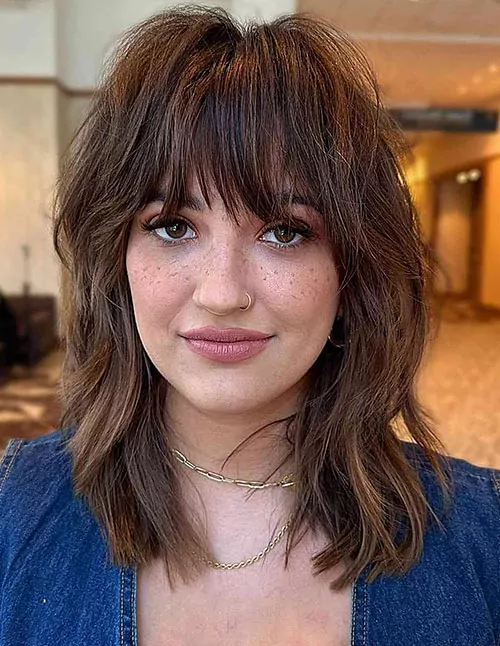
If you love a haircut with noticeable texture, pairing a shag with choppy bangs creates a bold, cohesive look. The fringe usually features separated, uneven pieces rather than a perfectly straight line, echoing the movement throughout the rest of the haircut. At shoulder length, the combination feels playful and slightly edgy without requiring extremely short hair.
Choppy bangs can work with straight, wavy, and some curly textures, but the right length is important. Hair that springs up as it dries may need a longer fringe than you initially expect, so discuss shrinkage and styling habits with your stylist. On busy mornings, a little water and a quick finger-style can help refresh the bangs without needing to restyle your entire head.
Shag With Curtain Bangs
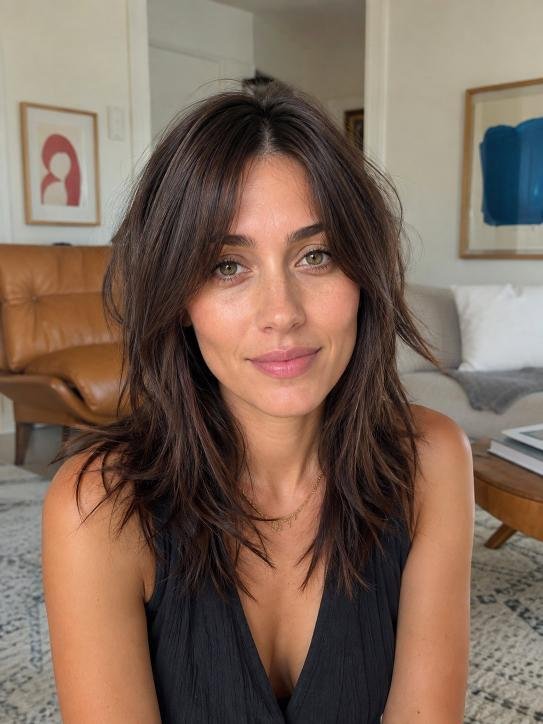
Curtain bangs are a natural match for shoulder-length shag hairstyles because they blend into the face-framing layers. Usually parted near the middle, the fringe sweeps outward and gradually lengthens toward the temples. This creates a soft frame around the eyes and cheekbones while keeping the overall haircut relaxed.
One advantage of curtain bangs is their flexibility as they grow. You can wear them more prominently when freshly trimmed or blend them into the longer layers between salon visits. For styling, use a round brush to direct the front sections away from your face, then let the rest of your hair retain its natural texture for an effortless finish.
Shullet
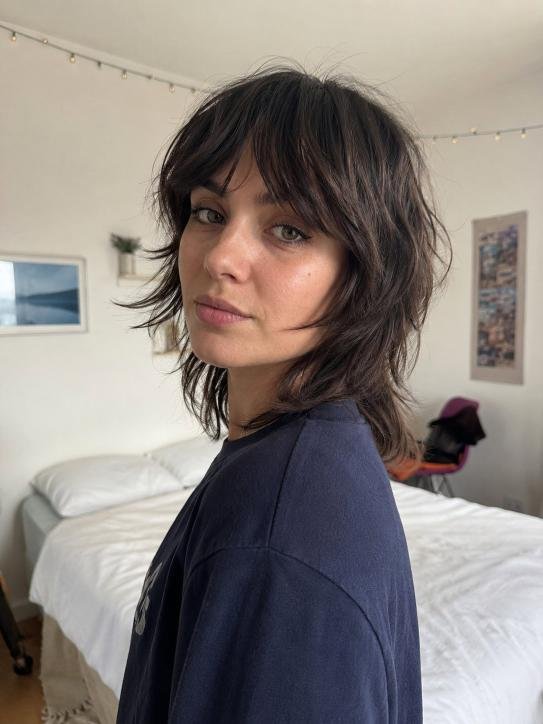
A shullet combines the layered texture of a shag with the longer back of a mullet. The result has shorter, fuller sections around the crown and sides, followed by a longer nape that keeps the overall shape distinctive. At shoulder length, the style can look daring while still offering enough length to experiment with waves, clips, and half-up hairstyles.
This haircut is a good fit if you enjoy alternative fashion or want something more individual than a conventional layered cut. You can make it softer by blending the sides into the back or emphasize the contrast for a more pronounced shape. Because the silhouette relies on the relationship between shorter and longer sections, occasional shaping trims can help it maintain its intended look.
Octopus Cut
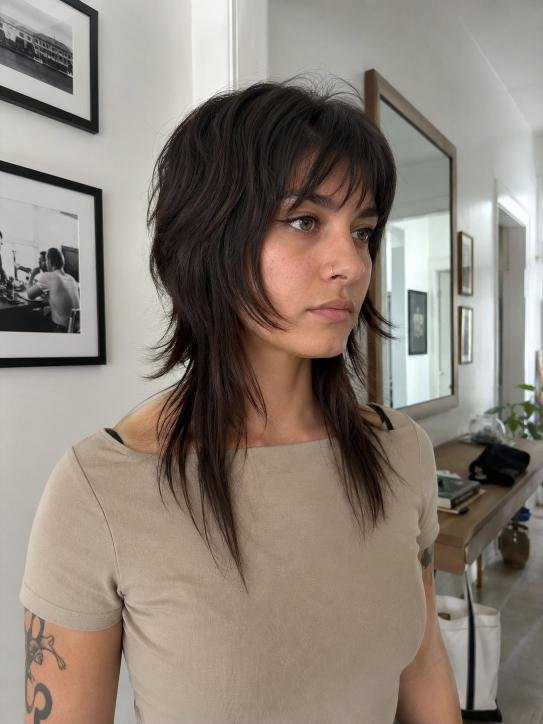
The octopus cut is recognizable for its rounded, voluminous crown and longer, separated layers that extend around the shoulders. The top sections create a fuller shape, while the lower lengths provide movement and a slightly wispy finish. It shares some features with a shag and wolf cut, but its rounded upper shape and distinct lower sections give it a character of its own.
This style can work well if you want volume near the crown without making the ends look too dense. Ask your stylist to adapt the layer placement to your hair thickness, since very short upper layers may create extra width on some hair types. A lightweight mousse can emphasize the shape, while natural waves help the lower sections fall into a relaxed, separated finish.
Butterfly Shag

A butterfly shag combines face-framing layers with the airy movement associated with a shag haircut. The shorter pieces around the face create the impression of a fuller, more voluminous style, while the longer layers maintain the shoulder-length silhouette. This is a lovely option if you want movement around your cheekbones without losing too much overall length.
The cut can look especially soft with a blowout, but it does not have to be perfectly styled every day. If your hair has a natural bend, use a lightweight cream to encourage the layers to fall away from your face. For a more polished finish, shape the front sections with a round brush and allow the ends to curve gently outward.
Beachy Wavy Shag
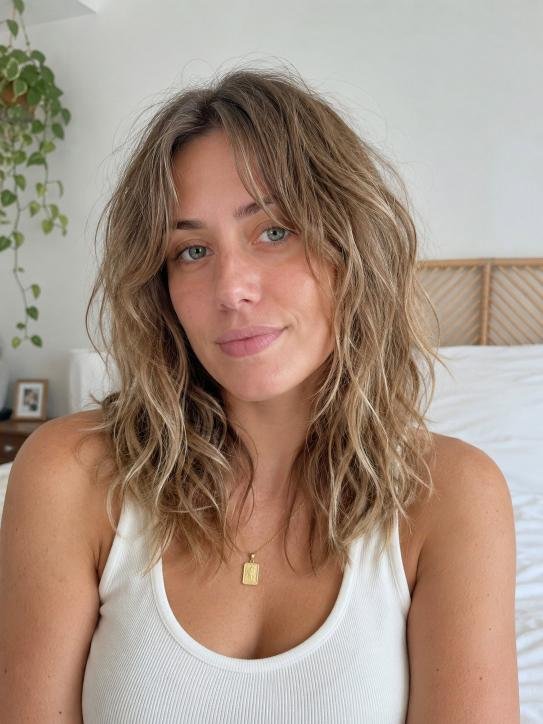
A beachy wavy shag is made for hair that naturally forms loose bends or waves. Its uneven layers create movement throughout the haircut, while the shoulder-length finish keeps the overall shape manageable. The result feels relaxed and textured, as if your hair has naturally fallen into place rather than being carefully arranged.
To bring out your waves, apply a lightweight mousse or wave-enhancing cream to damp hair and scrunch gently. You can let the hair air-dry or use a diffuser when you want more volume at the roots. If your hair is naturally straight, create a few loose bends with a curling wand, leaving some ends straighter to preserve the laid-back effect.
Rock-and-Roll Shag
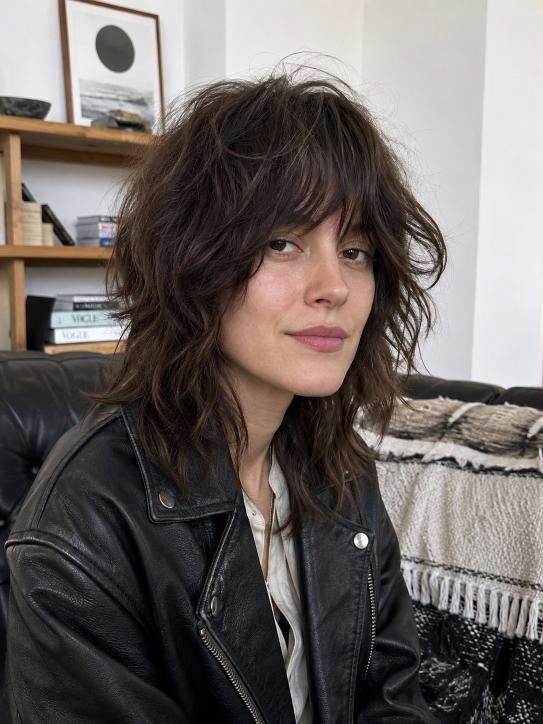
The rock-and-roll shag is a more dramatic take on the traditional layered cut. It often features choppy crown layers, textured ends, and a fringe that gives the hairstyle a bold, slightly rebellious character. At shoulder length, it pairs well with everything from casual denim to a more polished outfit that needs a little edge.
This haircut is particularly appealing if you do not want your hair to look overly smooth or symmetrical. A texturizing spray can bring out the separated layers, while a small amount of styling paste can define individual pieces around the face. If you want the look without a lot of upkeep, ask for a version that works with your natural texture instead of one that requires daily heat styling.
Curly Shag
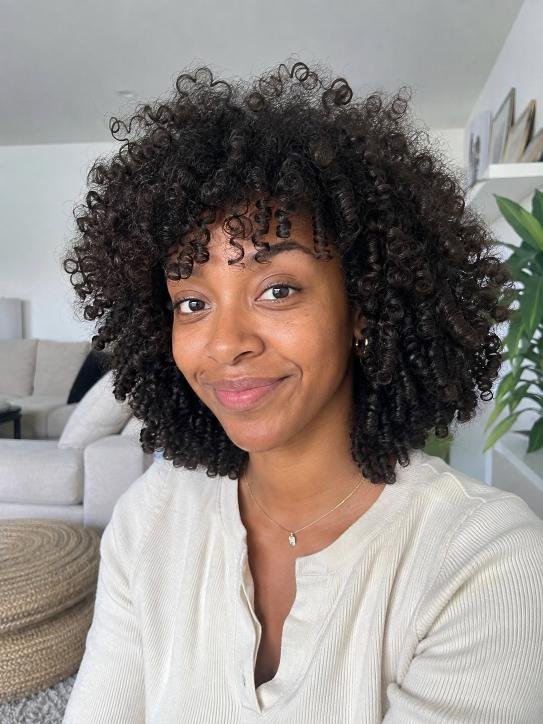
A curly shag uses carefully placed layers to let curls form a more balanced shape around the head. Shorter sections can add lift near the crown, while longer layers preserve enough length to frame the shoulders. This can help curls look more defined and lively instead of forming a heavy triangle.
Curly hair often shrinks as it dries, so the cut should be planned around how your curls behave in their natural state. A stylist experienced with curls can determine where to place layers based on density, curl pattern, and your preferred silhouette. After washing, apply a curl cream or gel to damp hair, scrunch gently, and let it air-dry or diffuse without repeatedly touching the curls.
Coily Shag
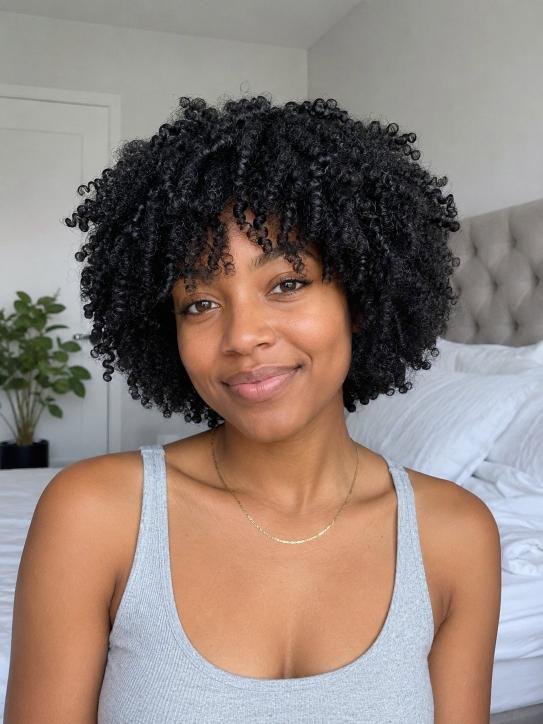
A coily shag brings shape and dimension to tightly textured hair while celebrating its natural volume. Layers can be arranged to create a rounded crown, a softer outline around the face, or a more elongated silhouette with textured ends. On shoulder-length natural hair, the result can look expressive and full without feeling like one solid shape.
The best approach depends on your shrinkage, density, and preferred styling routine. Discuss with your stylist how the haircut will look when dry, especially if you want to preserve enough length for twist-outs, braid-outs, or stretched styles. A moisturizing leave-in product can support softness, while gentle detangling and protective nighttime habits help maintain the hair between wash days.
Straight Shag
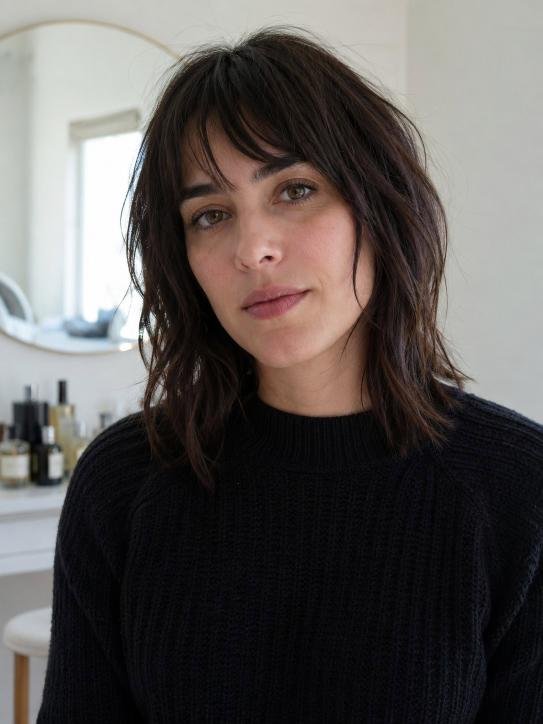
A straight shag adds movement to hair that naturally falls in a smooth line. Its layers break up the outline, creating texture around the crown, sides, and ends without requiring curls or waves. This makes it a useful option if you like the relaxed character of a shag but prefer to wear your hair straight most of the time.
The placement of the layers is especially important on straight hair because the haircut’s shape is easy to see. Ask for a version that creates movement without leaving the ends too thin, particularly if your hair is fine. A lightweight volumizing product at the roots and a small amount of texture spray through the lengths can help bring out the layers without making the hair feel rough.
Thick-Hair Shag
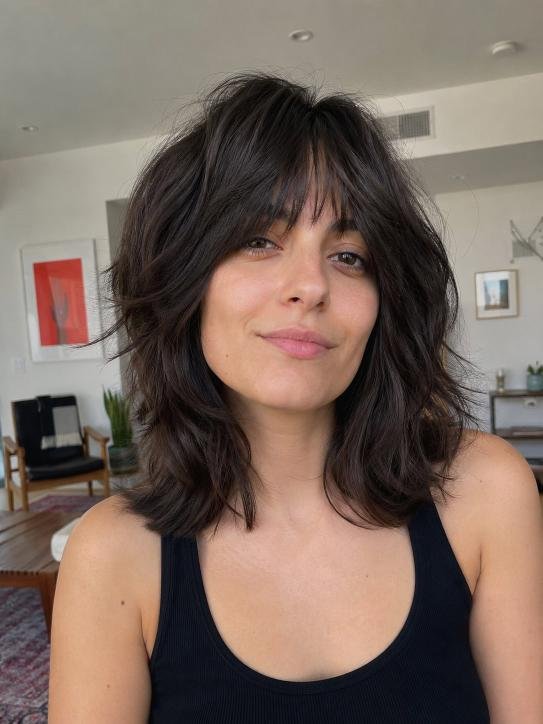
Thick hair can be an excellent match for a shoulder-length shag because the layers help distribute volume and create movement. Without thoughtful shaping, dense hair can feel heavy through the sides and ends, but strategic layering can make the silhouette more balanced. Choppy ends also prevent the haircut from looking too solid or overly rounded.
The key is to remove weight in the right places without creating unwanted bulk at the crown. Your stylist may use internal layers, surface texture, or a combination of techniques depending on whether your hair is straight, wavy, or curly. At home, a smoothing cream can help control excess puffiness, while a diffuser or air-drying routine can preserve natural movement.
Fine-Hair Shag

A shag can give fine hair a more textured appearance, but it needs to be cut carefully to maintain fullness. Too many short layers may leave the ends looking thin, so a softer shape with selective crown layers is often a better starting point. Shoulder-length hair provides enough length for a flattering outline while allowing the shorter sections to create the impression of lift.
For everyday styling, use a lightweight mousse or root-lifting spray rather than heavy creams and oils that can flatten the hair. Blow-drying with your head tilted forward or lifting sections at the roots can create extra volume without an elaborate routine. If you prefer air-drying, ask your stylist for a cut that still looks balanced when the hair is not styled with a brush.
Balayage Shag
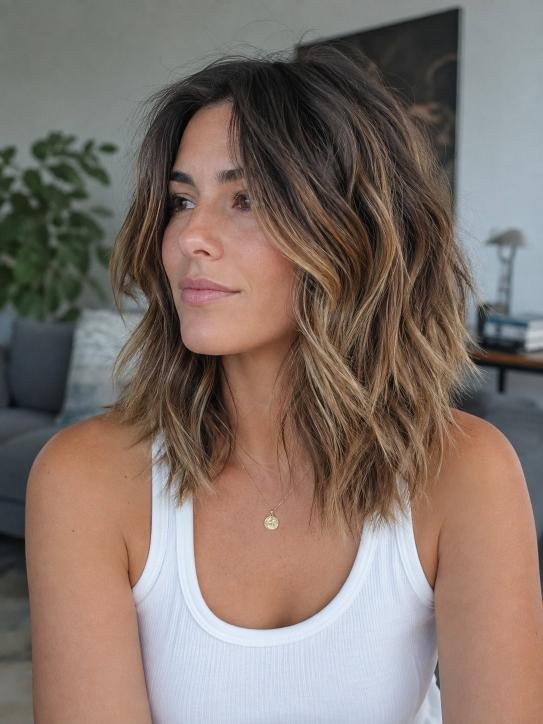
Balayage adds dimension to a shoulder-length shag by placing lighter tones through selected sections of the hair. Caramel ribbons in brunette hair, honey blonde accents, or soft beige highlights can make the layers more visible and give the haircut a sun-kissed finish. Because the color is blended rather than applied as a uniform block, it can enhance the movement of a textured cut.
Your colorist can concentrate lighter pieces around the face, through the mid-lengths, or toward the ends, depending on the effect you prefer. A subtle balayage creates a natural-looking result, while stronger contrast can make the layers stand out more clearly. If your hair is lightened, use color-safe care products and discuss a maintenance schedule that suits your budget and desired level of brightness.
Lived-In Root-Melt Shag
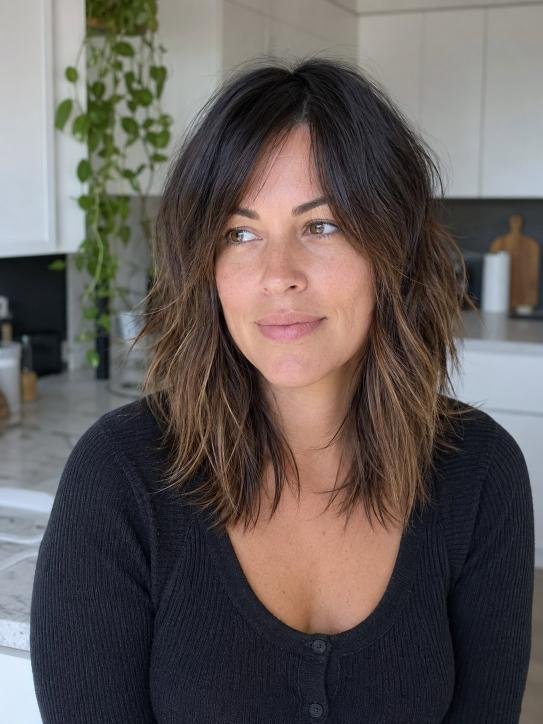
A lived-in root-melt shag pairs textured layers with a gradual transition from darker roots to lighter lengths. The blended color creates depth near the scalp and a softer finish through the ends, making the haircut look dimensional without requiring a sharply defined root line. It is a good option if you want a color-treated shag that can grow out naturally.
This style can work with many color combinations, from dark brunette roots with caramel lengths to deeper blonde roots with lighter ends. The exact transition should be customized to your natural color and the amount of contrast you enjoy. To maintain the look, ask your colorist about glossing or toning appointments when needed, rather than assuming the haircut itself requires frequent salon visits.
Silver Shag
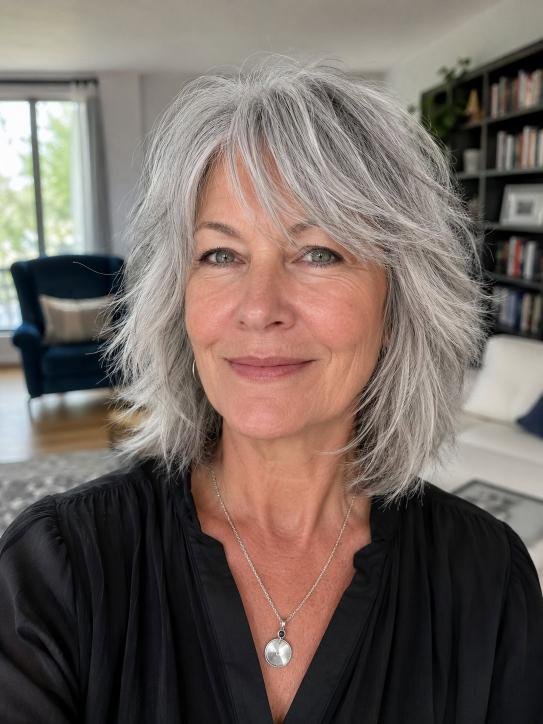
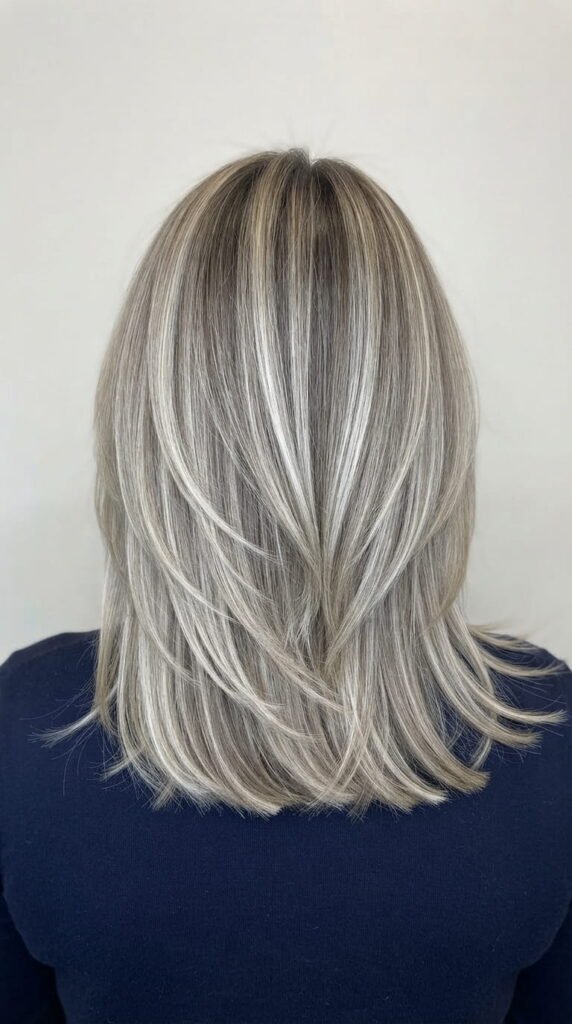
A silver shag combines a textured, layered cut with silver, steel-gray, or cool smoky tones. The layers give the color movement, while the shade creates a distinctive look that can feel modern and sophisticated. It is also an option for people embracing their natural gray who want a haircut that gives their texture more shape.
If you are coloring your hair silver, remember that reaching a very light shade may require significant lightening, depending on your starting color. Discuss the condition of your hair and the maintenance involved before committing to a dramatic transformation. Purple shampoo or other toning products may help manage unwanted warmth when appropriate, but follow your colorist’s advice to avoid over-toning or drying out the hair.
Grown-Out Shag

A grown-out shag is perfect if you like layered texture but do not want to maintain a sharply defined haircut. As the shorter layers lengthen, the silhouette becomes softer and the ends blend more naturally into the overall shape. The result can feel casual and slightly undone, with less emphasis on a precise, freshly cut outline.
This version is especially practical if you are growing your hair longer or prefer to visit the salon less frequently. You can keep the style looking intentional with occasional trims around the face and ends, rather than completely reshaping the haircut each time. A little styling cream or texture spray can refresh the layers, while air-drying allows the grown-out shape to retain its relaxed character.
Bronde Lived-In Shag
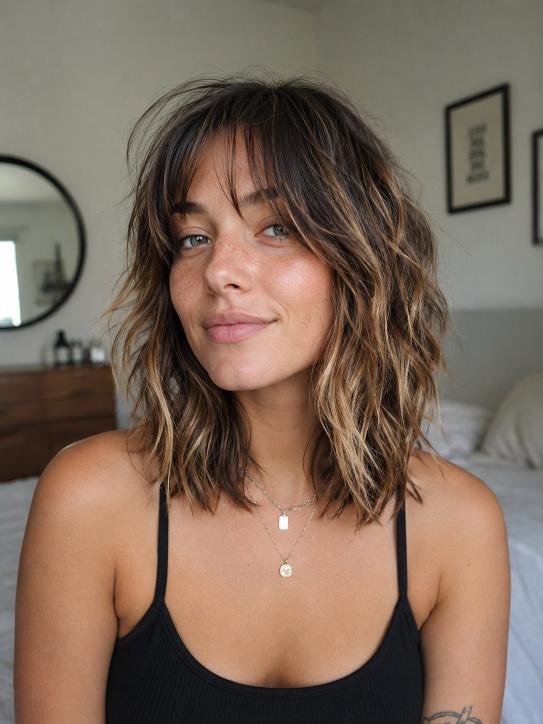
A bronde lived-in shag combines brown and blonde tones with a layered, textured haircut. The color creates subtle dimension, while the shag shape adds movement through the crown and ends. Because bronde sits between brunette and blonde, it can offer a softer change than an all-over light shade.
The result can be customized with warm caramel pieces, neutral beige highlights, or cooler tones depending on your preferred finish. Blended roots help the color transition naturally as your hair grows, which can make upkeep more flexible. Ask your stylist to place highlights where they will complement the layers, especially around the face and through the sections that catch the light.
Boho Shag With a Money-Piece
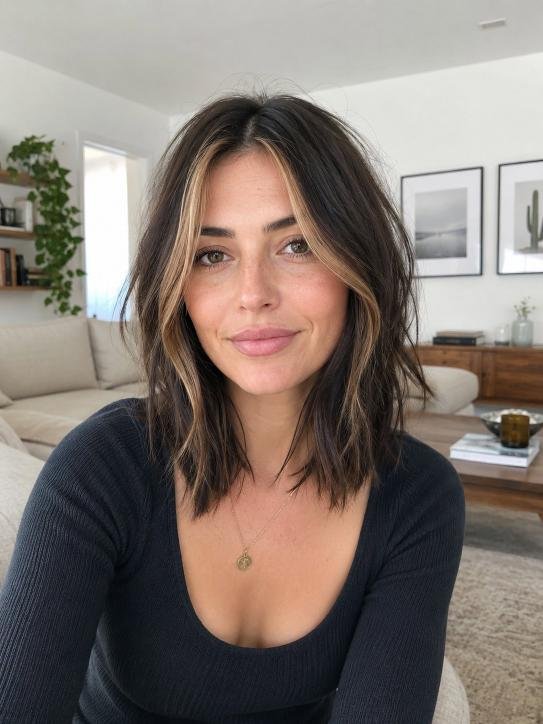
A boho shag with a money-piece combines relaxed, textured layers with brighter sections around the face. The shag creates natural-looking volume and movement, while the lighter front pieces draw attention to the eyes and cheekbones. This combination feels playful and modern, especially when worn with loose waves or a slightly tousled finish.
You can choose a subtle money-piece that is only a few shades lighter than your base or a higher-contrast look for a more noticeable effect. Your stylist should blend the front color into the rest of your hair so it complements the haircut rather than looking disconnected. For everyday styling, use a wave-enhancing product or lightly twist a few sections while damp, then let the layers fall naturally.
Frequently Asked Questions
Are choppy shaggy shoulder length hairstyles low maintenance?
They can be, particularly when the haircut is designed around your natural texture. Wavy and curly hair may fall into the layered shape with minimal styling, while straight hair may need a little mousse or texturizing product to show the separation between layers. The easiest version for you is one that looks good without requiring a daily blowout or extensive use of hot tools.
Which shag haircut is best for fine hair?
A modern soft shag or a fine-hair shag with subtle layers can add movement while preserving fullness at the ends. Very short crown layers and excessive texturizing may make fine hair look thinner, so it is important to explain your volume goals to your stylist. Lightweight styling products can help lift the roots without weighing the strands down.
Do shag haircuts work for thick or curly hair?
Yes, shag haircuts can be adapted for thick, curly, and coily hair. Strategic layers can distribute bulk, enhance the natural pattern, and create a more balanced silhouette. The cut should be customized to your density and shrinkage, so choosing a stylist who understands your specific texture is especially helpful.
Do shoulder-length shag hairstyles need frequent trims?
The schedule depends on how defined the haircut is and how quickly your hair grows. A dramatic wolf cut or shullet may need more regular shaping to preserve its contrast, while a soft or grown-out shag can remain attractive as the layers lengthen. If the crown becomes too bulky or the face-framing pieces stop sitting the way you like, a trim can restore the shape.
Can I air-dry a choppy shag?
Absolutely. Many choppy shags are designed to work with natural movement, making air-drying a practical option. Apply a suitable styling product to damp hair and shape the layers with your fingers, then let the hair dry without repeatedly disturbing it. If your hair is straight and you want more texture, a lightweight styling cream or texturizing spray can help create a more defined finish.
What is the difference between a shag, wolf cut, and octopus cut?
A traditional shag usually features blended layers, crown volume, and textured ends. A wolf cut often has more pronounced contrast between the shorter upper layers and longer lower sections, while an octopus cut typically emphasizes a rounded, fuller crown with longer, separated pieces around the shoulders. The styles overlap, so the best choice depends on how dramatic you want the shape to look and how much styling you prefer.
Conclusion
Choppy shaggy shoulder length hairstyles offer plenty of ways to refresh your look without giving up the convenience of medium-length hair. A classic shag brings retro texture, a soft shag creates a more subtle shape, and cuts like the wolf, shullet, and octopus offer a bolder silhouette.