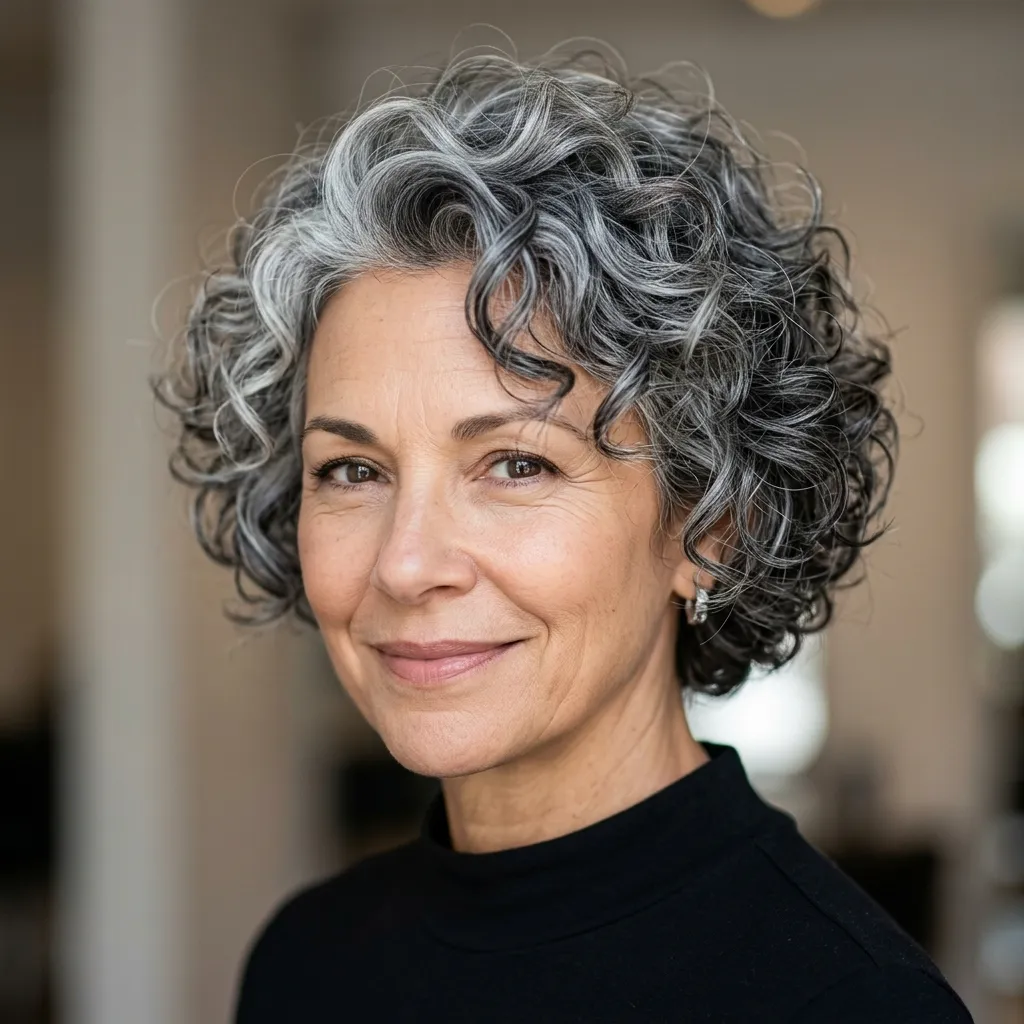
Curly hair has a personality of its own, but finding a short haircut that brings out its best qualities can feel tricky, especially when your texture, density, or curl pattern changes over time. You might want more volume at the crown, a shape that frames your face, or a style that looks lovely without spending half the morning in front of the mirror. The good news is that Short Curly Hairstyles for older women offer plenty of options, whether you prefer natural silver curls, a polished bob, or a playful pixie.
The secret is choosing a cut that works with your curls instead of trying to control every strand. The right shape can help curls sit beautifully, reduce unnecessary styling, and bring attention to your favorite features. From wash-and-go cuts to classic roller sets, these hairstyle ideas can help you find a look that feels comfortable, modern, and genuinely you.
1. Curly Pixie
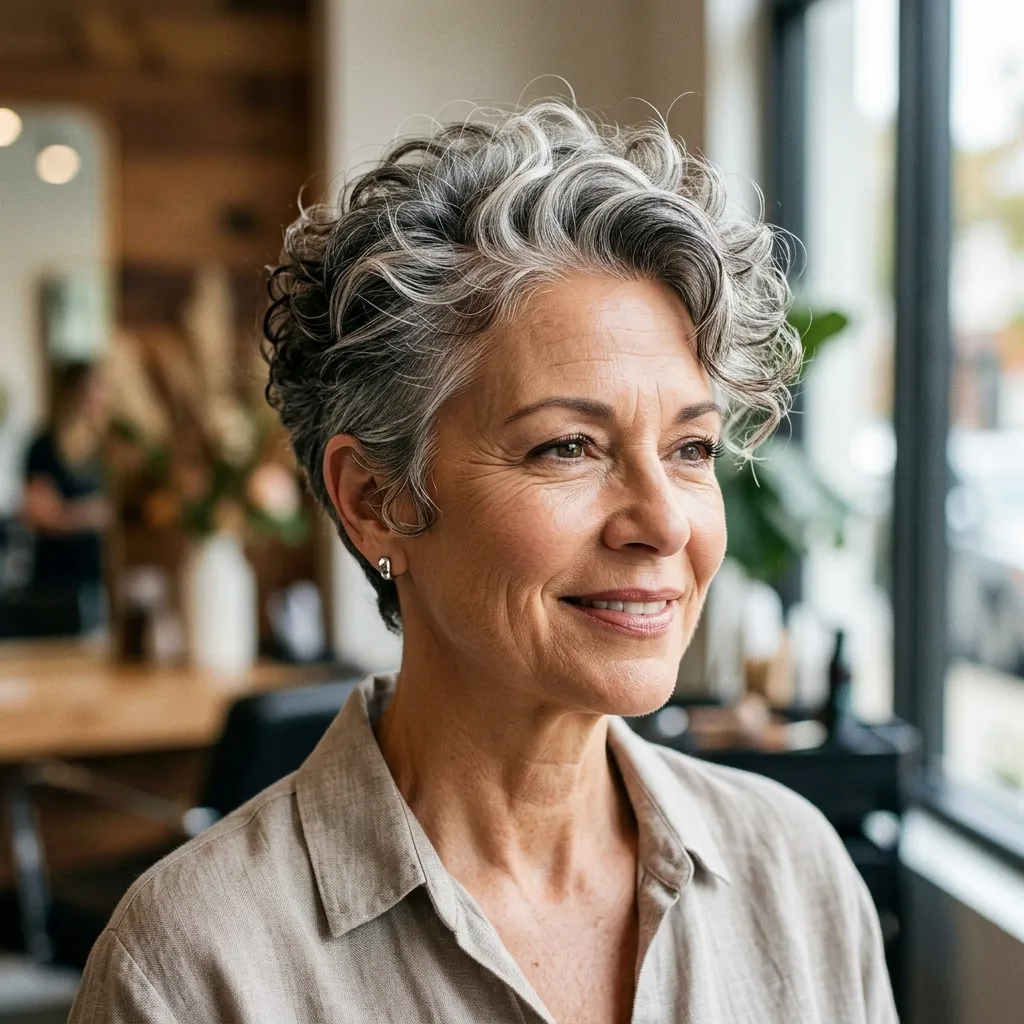
A curly pixie is a beautiful choice if you want a short hairstyle with plenty of personality and minimal fuss. The sides and back can be trimmed close while the top retains enough length for your curls to form a soft, textured shape. This contrast creates definition around the face while allowing your natural texture to take center stage.
For older women, a curly pixie can be tailored to suit everything from loose waves to tight coils. Keeping a little extra length at the crown can create lift, while softer edges around the ears and neckline help the haircut feel balanced. After washing, apply a lightweight curl cream or leave-in conditioner and allow the curls to dry naturally or with a diffuser. A good pixie should work with your natural growth pattern, so discuss your curl shrinkage with your stylist before deciding how short to go.
2. Short Curly Bob
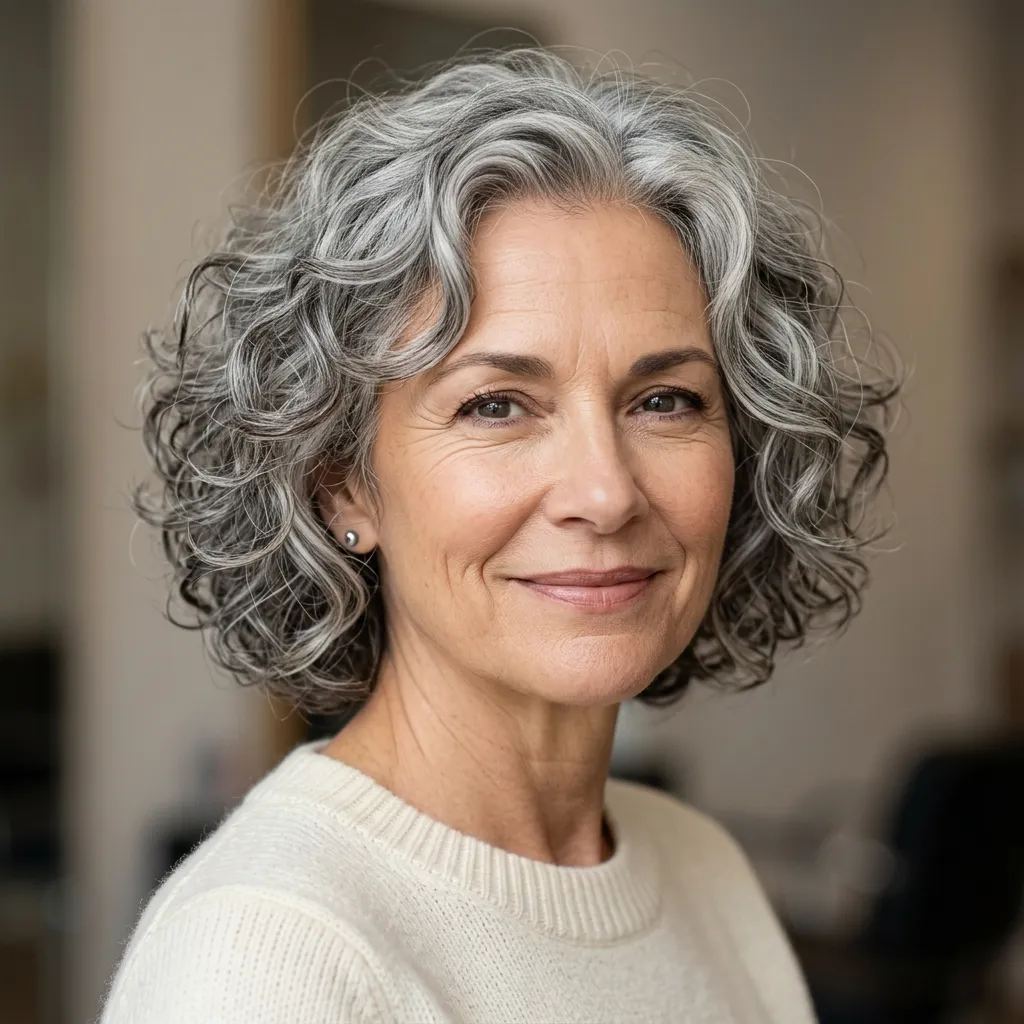
A short curly bob offers a classic shape that feels polished without looking overly formal. Usually cut around the chin or just above it, this style gives curls enough room to form a rounded silhouette while keeping the overall length manageable. It can work beautifully with natural gray, salt-and-pepper strands, or a rich brunette shade.
The most important part is getting the shape right for your curl pattern. Curly hair can spring up considerably when dry, so your stylist should account for shrinkage rather than cutting only according to its wet length. Soft layers can help curls sit evenly, while too much layering may make the ends appear thin if your hair lacks density. For everyday styling, scrunch in a curl-defining product and let the curls settle into their natural pattern.
3. Curly Shag

A curly shag is perfect if you like movement, texture, and a slightly undone finish. This haircut uses layers throughout the crown and sides to create a lively shape, often paired with soft bangs or face-framing pieces. Rather than making every curl sit in a uniform outline, the shag allows different sections to move independently.
For older women, a well-shaped curly shag can add visual lift around the crown and keep the sides from feeling too heavy. It is especially appealing if your curls look flat at the roots but become fuller toward the ends. Ask your stylist for layers that complement your natural curl pattern instead of removing too much weight from the perimeter. A small amount of mousse or curl cream can enhance separation while preserving the relaxed finish that makes this haircut so appealing.
4. Salt-and-Pepper Curls
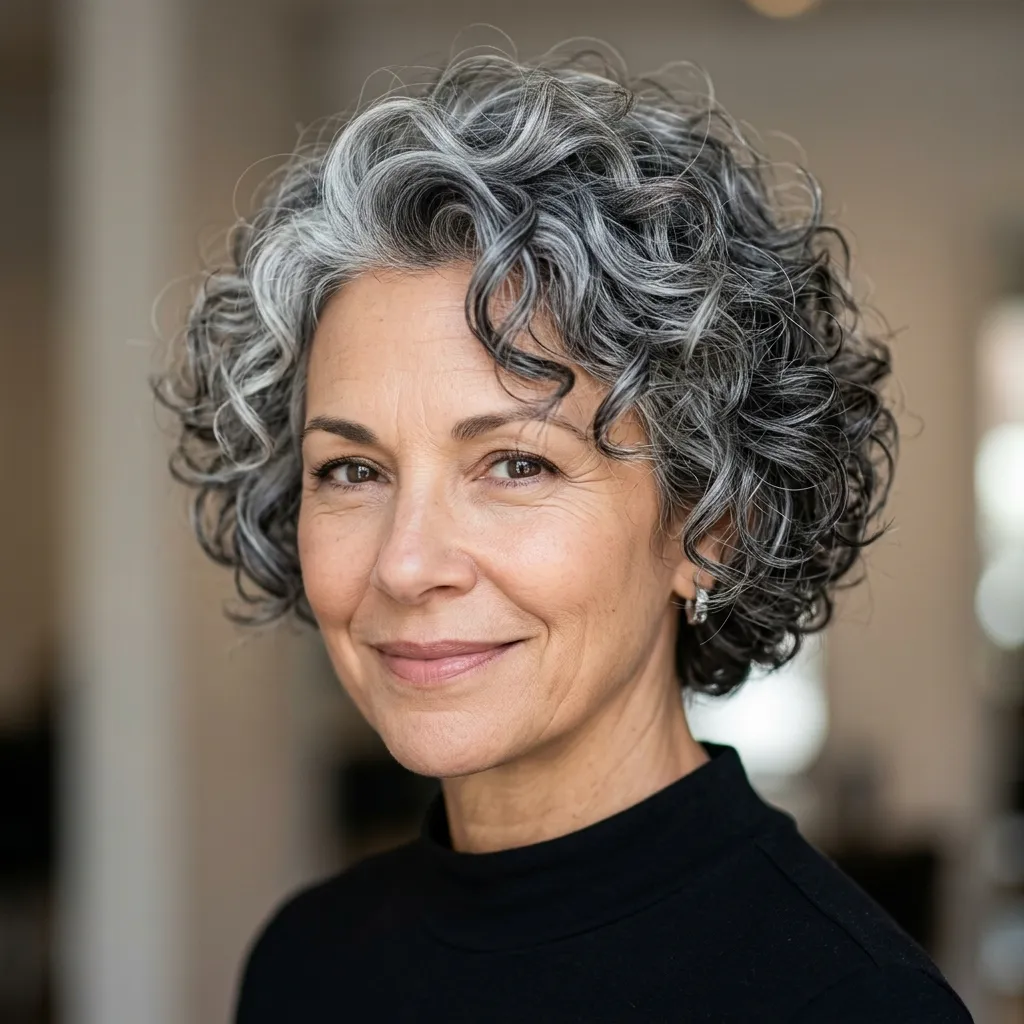
Salt-and-pepper curls combine naturally gray and darker strands for a dimensional look that does not rely on a single hair color. The contrast can make individual curls stand out, especially when the haircut has a clear shape and healthy-looking definition. Whether your hair is tightly coiled or loosely curled, this color pattern can look striking in a short bob, pixie, or softly layered crop.
You do not need to cover every gray strand to make your hair look intentional. A suitable haircut and a consistent moisturizing routine can help natural silver and darker curls look well cared for. If your gray strands feel coarser or drier than the rest of your hair, try a hydrating conditioner and a lightweight leave-in product. The goal is to keep the curls flexible and defined while allowing the natural variation in your color to become part of the style.
5. Curly French Bob

The curly French bob combines a short, jaw-skimming shape with a relaxed, softly rounded finish. It often includes bangs or loose curls around the forehead, giving the haircut a distinctive appearance without looking too rigid. On older women, this style can feel elegant and modern while keeping the natural texture visible.
The best version does not need to look perfectly symmetrical. A few curls can fall naturally around the cheeks, while the ends create a compact outline near the jaw. If you have tighter curls, your stylist may leave a little extra length to account for shrinkage and prevent the finished bob from becoming shorter than expected. Use a lightweight curl product and avoid brushing the hair once it has dried, since that can disrupt the curl pattern and create unwanted frizz.
6. Wash-and-Go

A wash-and-go is less about a specific haircut and more about styling your natural curls with minimal manipulation. It works particularly well when your cut already has a shape that allows your curls to fall attractively without much heat styling. For women who prefer a practical morning routine, this approach can make short curly hair feel easier to maintain.
Start with clean, conditioned hair and apply a curl cream or gel while the strands are still damp. Distribute the product evenly with your fingers, then scrunch gently to encourage your natural curl pattern. You can let your hair air-dry or use a diffuser on a gentle setting if you want more volume at the roots. The result depends on your individual texture, so experiment with product amounts until you find a balance between definition, softness, and movement.
7. Silver Curls

Silver curls can look beautiful in a short haircut because the natural color variation adds interest to every curve and coil. A rounded bob, curly pixie, or softly tapered cut can all highlight silver hair in different ways. The key is choosing a shape that lets the curls sit comfortably instead of forcing them into a style that requires constant adjustment.
Gray and silver hair can sometimes feel drier or more resistant to styling, so moisture becomes especially important. Use a gentle shampoo and a conditioner suited to your hair’s needs, and consider a leave-in treatment if your curls feel rough after washing. Purple shampoo may help reduce yellow tones for some people, but it should be used according to the product directions and only as needed. With the right care, silver curls can look soft, defined, and full of natural character.
8. Curly Bixie
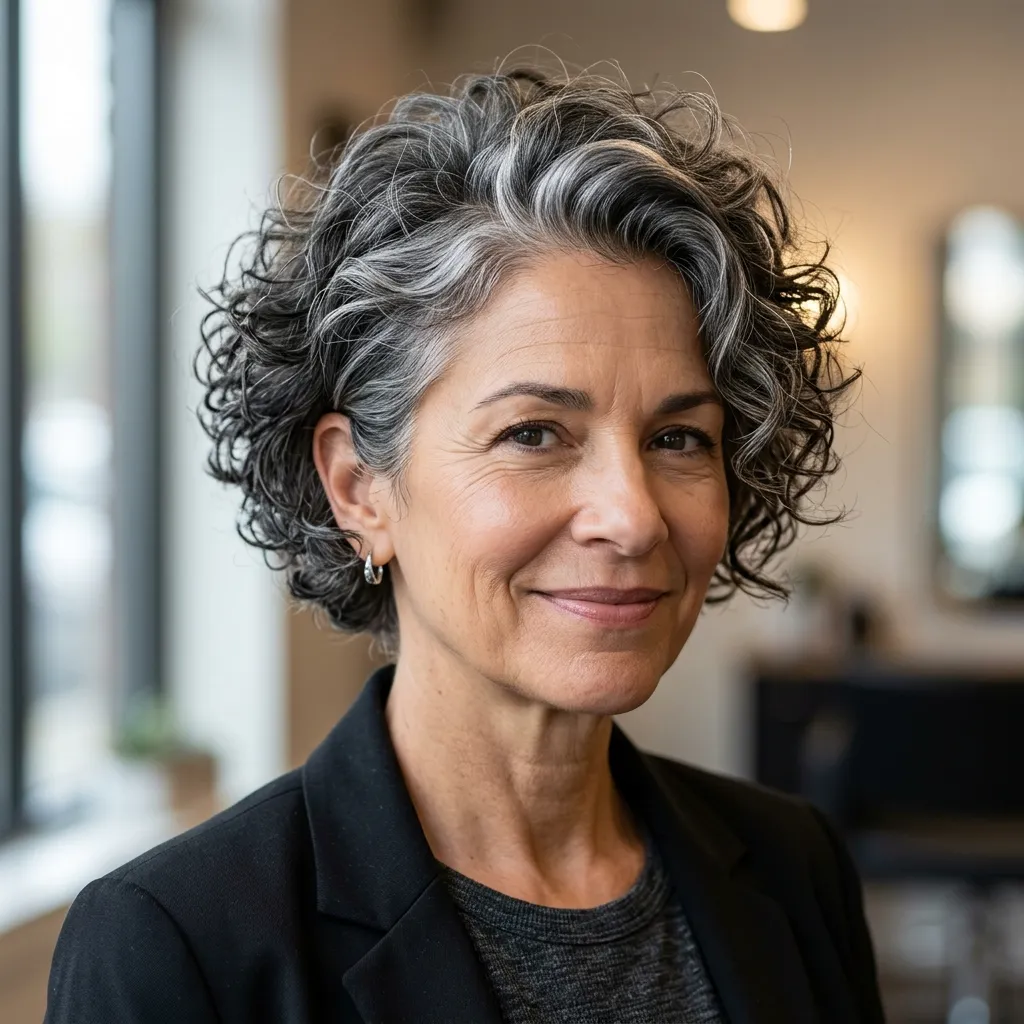
A curly bixie combines the shorter shape of a pixie with some of the length and softness of a bob. It usually features a shorter back, slightly longer sides, and enough length on top for curls to create movement. This makes it a flexible option if you want a short haircut but are not ready for a very close-cropped pixie.
The bixie can be especially flattering when your curls need room to form a soft outline around the face. It can also be adjusted to create more volume at the crown or more coverage around the temples, depending on your preferences. Styling is usually straightforward: apply a small amount of curl cream to damp hair and shape the curls with your fingers. If your hair is fine, ask for a lighter shape that preserves fullness instead of creating too many short layers.
9. Curly A-Line Bob

A curly A-line bob is shorter at the back and gradually becomes longer toward the front. The angled outline creates a defined silhouette while allowing curls to frame the cheeks and jaw. It is a lovely choice if you want a structured haircut that still feels soft and natural.
With curly hair, the angle needs to be planned around how the curls spring up when dry. A dramatic difference between the front and back may look striking, while a subtle angle can be easier to maintain and style. Ask your stylist to check the shape with your natural curl pattern in mind so the front sections do not become unexpectedly short. This haircut pairs well with a side part, natural silver coloring, or a few softly defined curls around the face.
10. Perm Rod Set
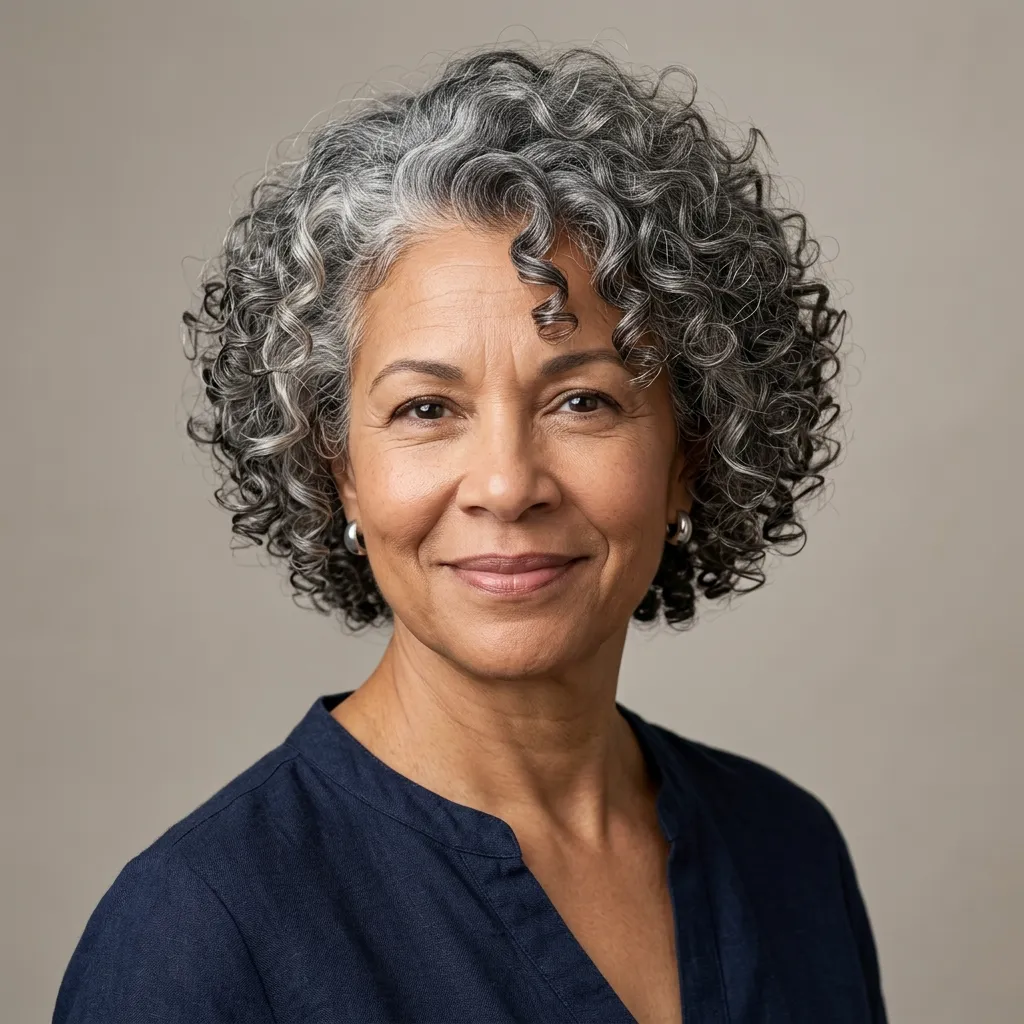
A perm rod set creates defined curls by wrapping damp hair around small or medium rods and allowing it to dry completely. It is a useful styling option for women who want a more uniform curl pattern or additional definition without relying on a curling iron for every section. On short hair, the rod size and placement determine whether the result looks tight and springy or soft and rounded.
The technique can be adapted to natural textured hair and other hair types, although the products and preparation may differ. Use a setting product that suits your hair and avoid removing the rods before the hair is fully dry, since damp curls may lose their shape quickly. Once the set is complete, separate the curls gently with your fingers and use a little oil on your hands if your hair tolerates it well. A perm rod set can take some time initially, but the finished curls may offer several days of styling flexibility with appropriate nighttime protection.
11. Twist-Out

A twist-out creates definition by twisting damp or moisturized hair into sections, allowing it to dry, and then carefully unraveling the twists. The result is often a soft pattern of curls or waves with more visible separation and volume. For older women with natural textured hair, a short twist-out can provide a flexible alternative to wearing the hair in its untouched curl pattern every day.
The size of each twist affects the final appearance. Smaller twists generally produce more defined sections, while larger twists tend to create a looser, fuller finish. Use a leave-in conditioner and a suitable styling cream, but avoid applying so much product that the hair feels coated or takes too long to dry. When unraveling the twists, work slowly with dry hands to reduce frizz and preserve the shape you created.
12. Soft Body-Wave Perm

A soft body-wave perm can give naturally straight or slightly wavy hair a gentle bend and more visible movement. Rather than producing tight ringlets, the goal is a relaxed wave that adds texture to a short bob or cropped style. This option may appeal to women who want a softer finish but do not naturally have much curl.
A perm is a chemical service, so it is important to assess your hair’s condition before making a decision. Fine, fragile, heavily colored, or previously damaged hair may not be suitable for every perm technique. A qualified stylist can explain the likely result, maintenance requirements, and alternatives for creating waves without a chemical process. If you proceed, use products designed for your hair’s needs and avoid additional chemical or heat treatments that could leave the strands overly dry.
13. Curly Stacked Bob
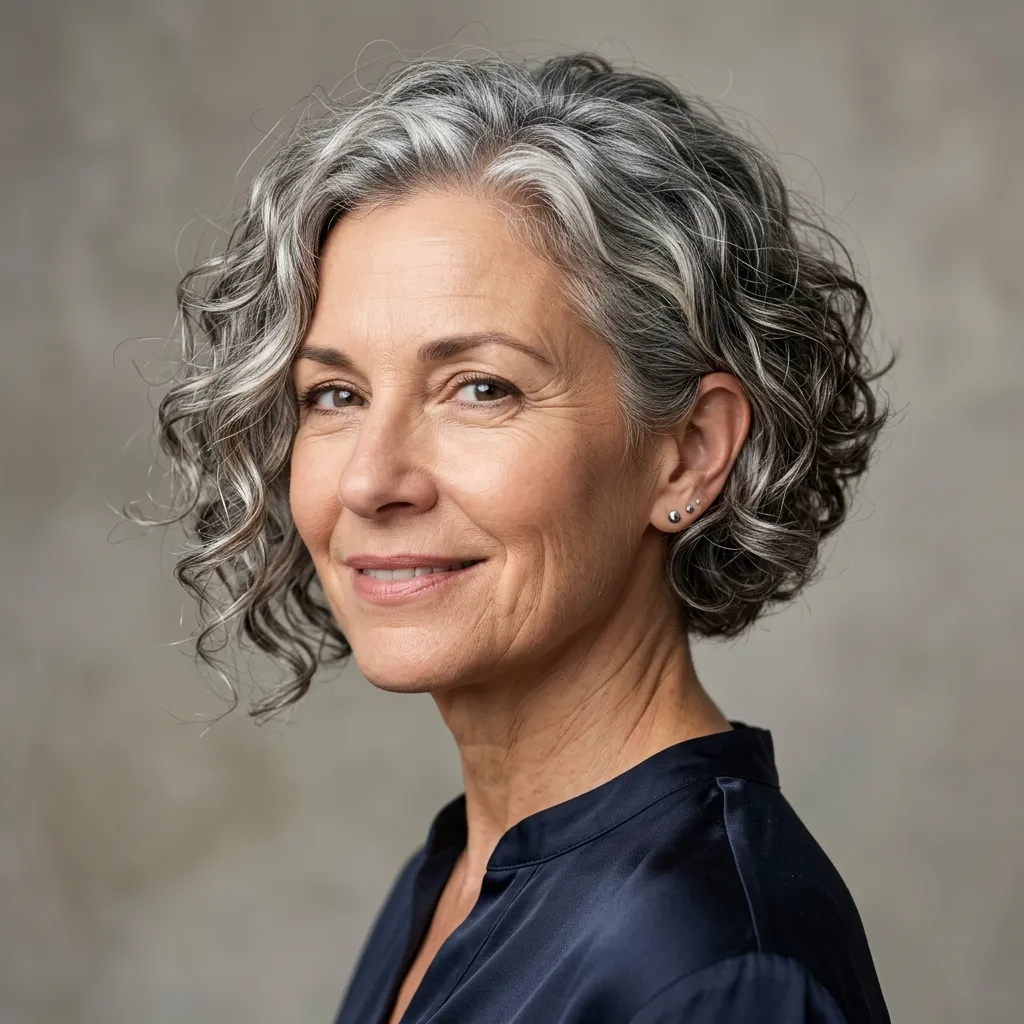
A curly stacked bob uses shorter layers at the back to build a rounded shape, with more length left around the sides and front. The graduated silhouette can create the appearance of lift at the crown while keeping the neckline neat. It is a practical choice if you enjoy a defined haircut but still want your curls to look soft and full.
The shape should be adjusted to your curl density and the way your hair grows at the nape. Too much stacking may create a bulky area or make the curls sit unevenly, while too little graduation may leave the back looking flat. A stylist experienced with curly hair can shape the cut to maintain balance from the side and back views. For styling, use a curl-enhancing product and gently lift the roots while diffusing to help the stacked shape show through.
14. Tapered Curly Cut
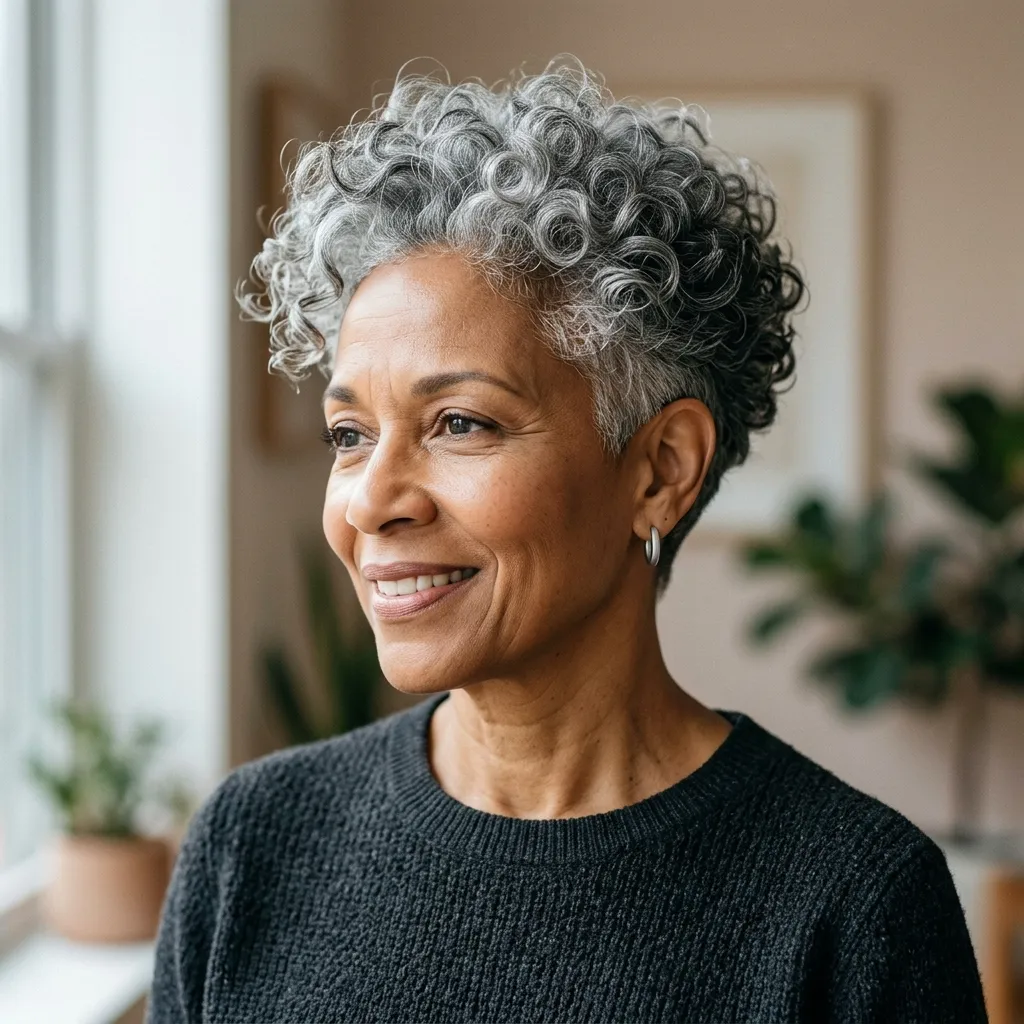
A tapered curly cut keeps the sides and back shorter while leaving more length on top. This creates a clean outline and allows the curls at the crown to provide the main visual interest. It is especially useful if you prefer a low-maintenance style that feels light around the ears and neckline.
The amount of taper can range from subtle to quite close, so you can choose a finish that suits your personal style. A softer taper creates a gentle transition, while a more defined one offers a sharper, contemporary look. If you have tight coils, the longer top section can show off their natural spring and shape. Moisturize regularly and use a small amount of curl cream to define the top without making it stiff or weighed down.
15. Diffused Voluminous Curls
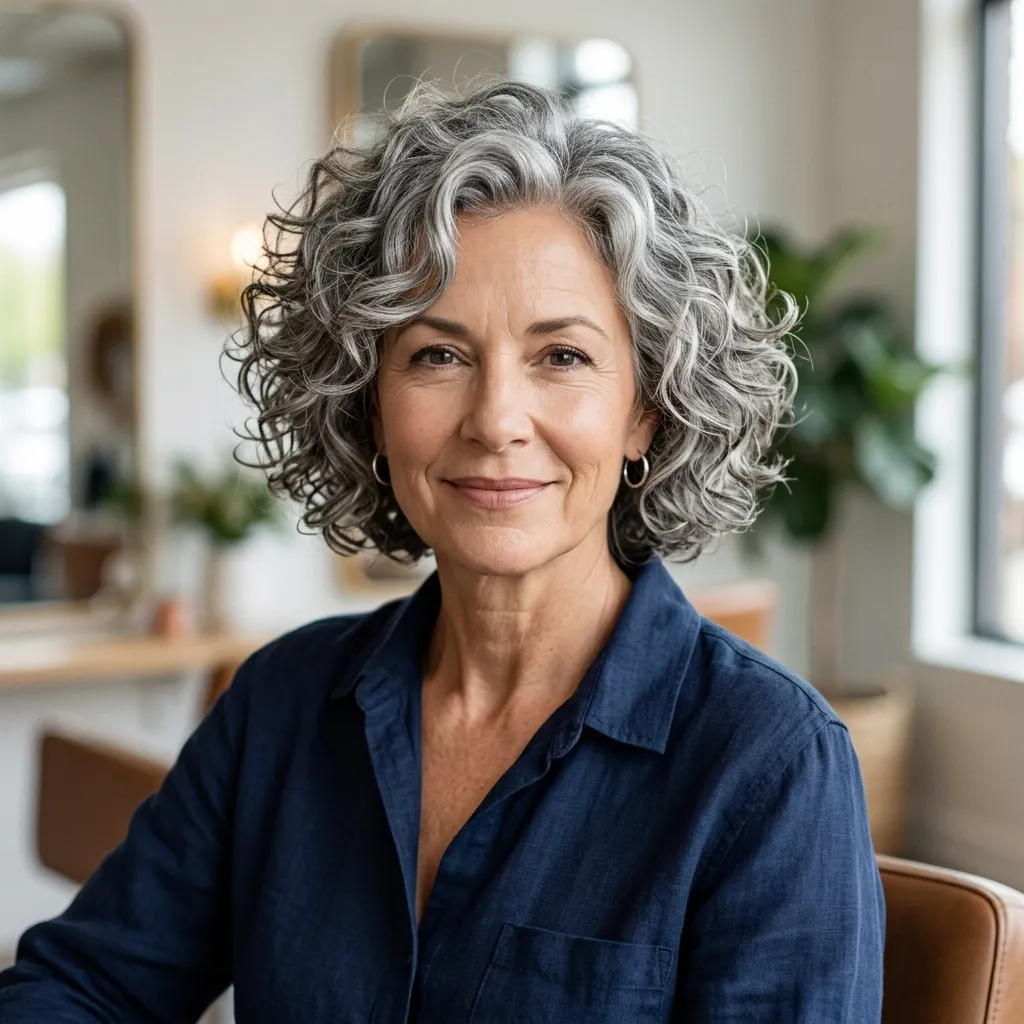
Diffusing is a styling technique that uses a special hair-dryer attachment to spread airflow more gently around the curls. It can help encourage volume and definition while reducing the direct force of a standard dryer. For older women who want their short curls to look fuller, diffusing can be useful when paired with a haircut that already supports natural lift.
Begin with damp hair and distribute your usual curl product evenly. Place sections of hair gently into the diffuser rather than constantly moving the curls around, and use a low or moderate heat setting that feels comfortable for your hair. Focus on lifting the roots if your main concern is flatness at the crown. Once the hair is completely dry, avoid excessive touching, which can disturb the curl pattern and create frizz.
16. Short Curly Cut with Curly Bangs
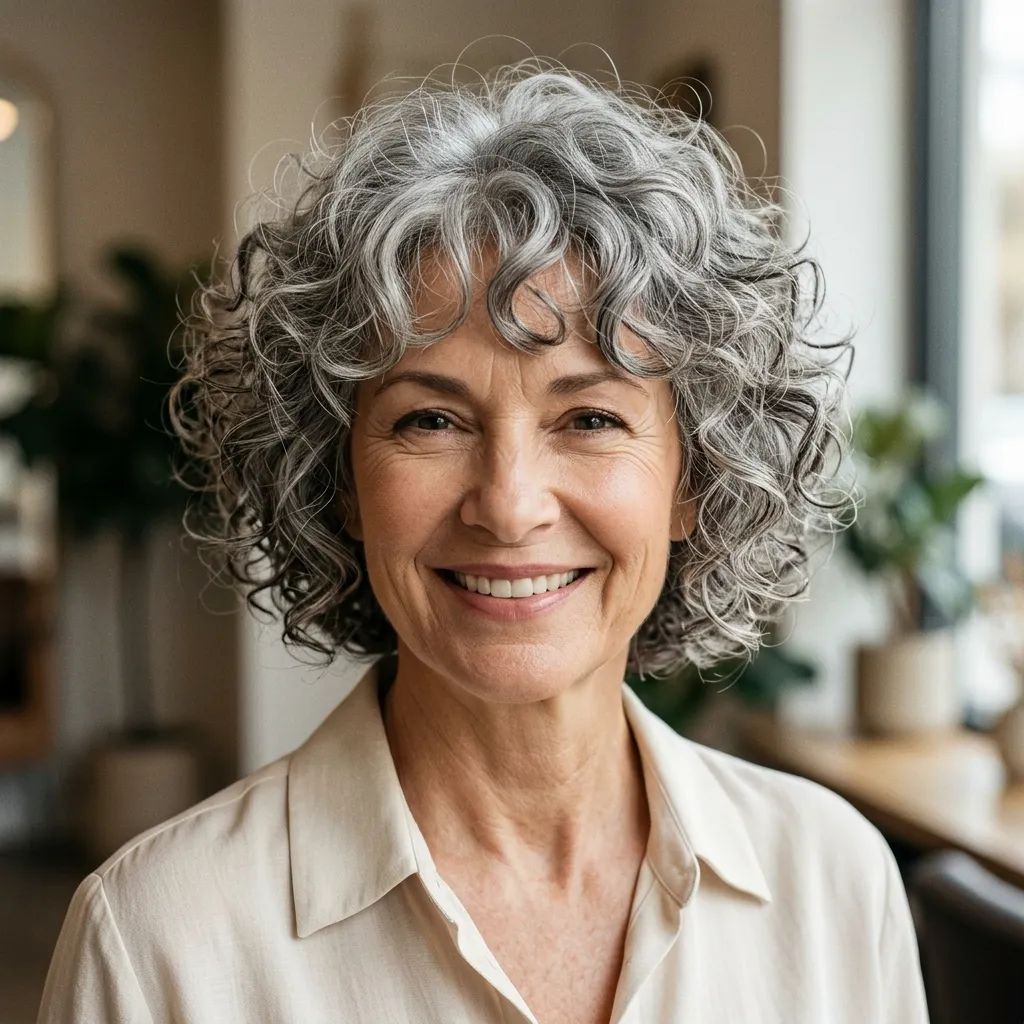
Curly bangs bring the natural texture forward, creating a soft frame across the forehead. Paired with a short curly cut, they can make the hairstyle feel playful and cohesive rather than overly formal. The fringe may sit above the eyebrows or fall closer to them, depending on your curl pattern and how much length you prefer.
Curly bangs require careful cutting because the hair may shrink significantly once dry. Your stylist should assess your natural curl pattern before deciding how short the fringe needs to be. You can keep the bangs defined with a small amount of curl cream, then allow them to dry without repeatedly combing through them. If you are unsure about committing to a full fringe, longer curly pieces around the forehead offer a softer way to try the look.
17. Finger Coils
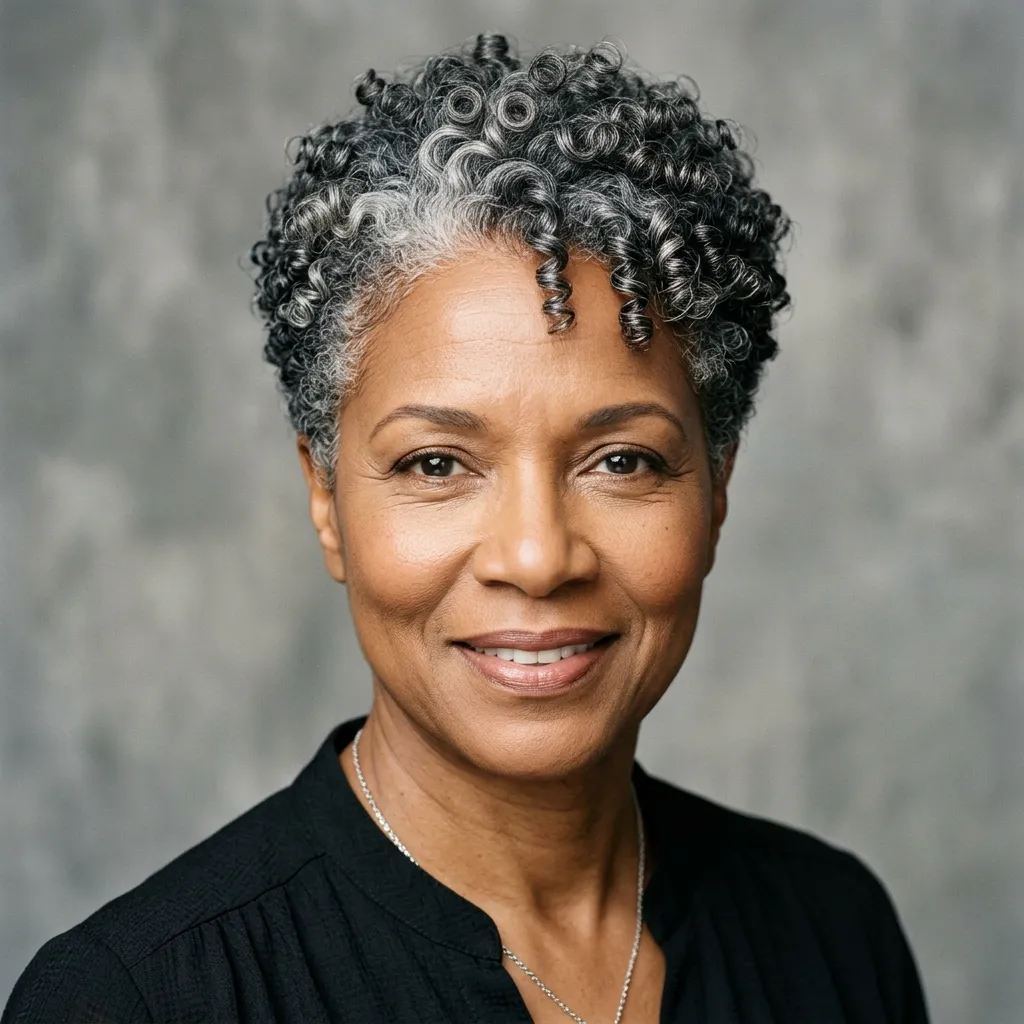
Finger coils are created by wrapping small sections of damp hair around a finger to encourage individual curls to form a defined spiral. This technique works particularly well for natural curls and coils, including short styles where each section can be shaped carefully. The finished look can feel neat and intentional while still celebrating the hair’s natural texture.
To create finger coils, apply a suitable leave-in conditioner and styling product, then work through small sections one at a time. Keep the tension gentle and follow the direction your hair naturally wants to curl instead of forcing every coil into the same pattern. Allow the hair to dry completely before separating or fluffing the roots. Although the technique can take longer than a wash-and-go, it offers more control over definition and can be a useful option for special occasions or when you want a particularly polished finish.
18. Curly Crop

A curly crop is a short, close-fitting haircut that lets your natural texture create the shape. It can be cut evenly around the head or customized with a little extra length on top for added dimension. This is a good option if you want to spend less time styling and prefer a haircut that feels light and uncomplicated.
The crop can work with loose curls, tight coils, or a mix of textures, provided the shape is tailored to your hair. If you prefer a softer appearance, ask for a slightly longer top and gentle edges around the temples. For a more defined look, a closer cut can emphasize the natural pattern of your curls. Keep your scalp and hair moisturized as needed, and schedule trims when the shape begins to lose its definition.
19. Short Curls with Side-Swept Bangs
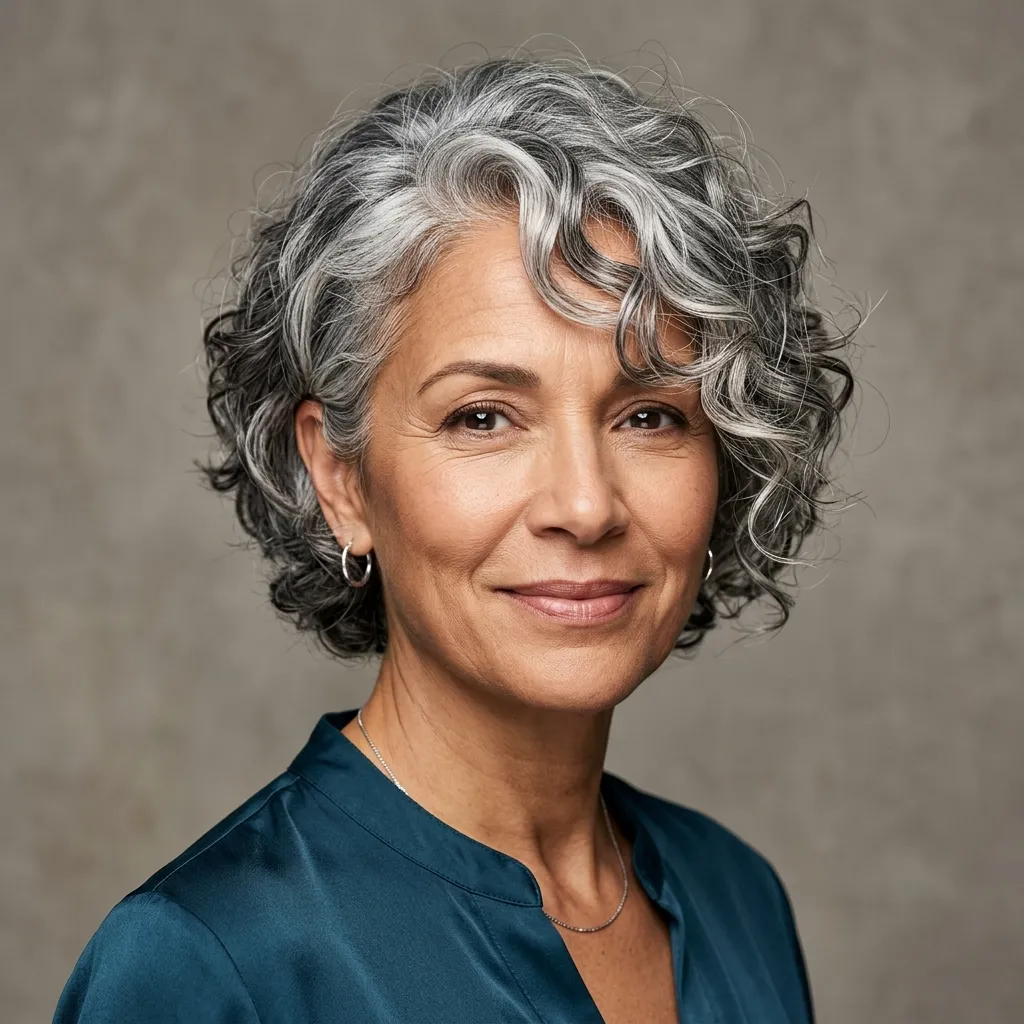
Side-swept bangs introduce an angled line that can soften the forehead and blend naturally into short curls. They work well with curly bobs, bixies, and layered crops because the longer front section creates movement without requiring a full fringe. This is a useful option if you want a little extra framing but prefer not to have curls sitting directly across your forehead.
Your stylist can adjust the fringe so it follows the direction of your natural part and blends into the side sections. Because curls tend to spring up when dry, leave enough length to prevent the bangs from becoming too short. Style the front with a small amount of curl cream and guide the curls gently to one side while damp. Once dry, avoid combing through the fringe so it keeps its shape and natural definition.
20. Curls with a Deep Side Part
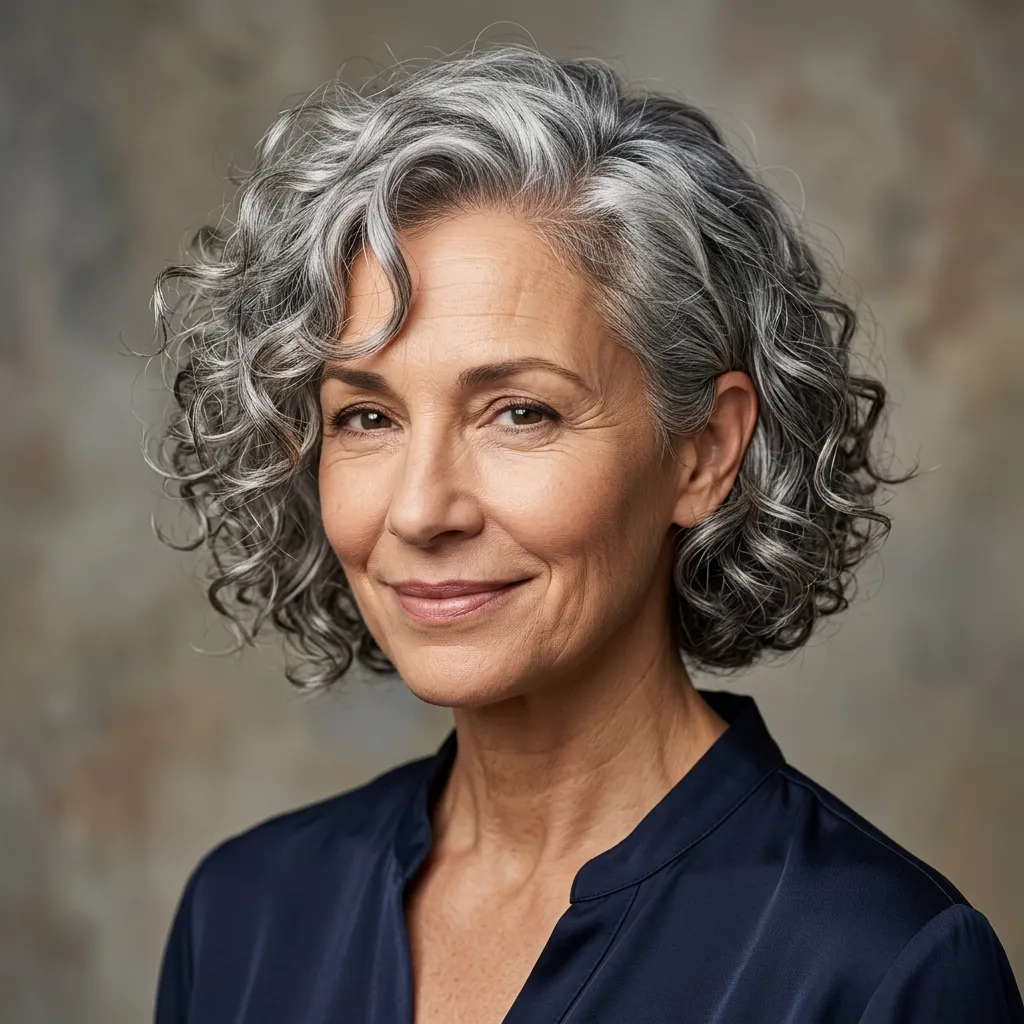
A deep side part can transform short curly hair without changing the haircut itself. By shifting the part away from the center, you create an asymmetrical shape that adds visual interest and can make the roots look more lifted. This technique works with many curl patterns and is easy to experiment with before committing to a new cut.
For a soft finish, allow the curls to fall naturally on both sides rather than forcing them into a perfectly smooth arrangement. If your hair usually separates in the middle, change the part while the hair is damp and use clips at the roots until it begins to dry. A little lightweight mousse can help the new direction hold, although some hair may naturally return to its usual pattern. The result can be an elegant everyday style that feels different with almost no extra length or cutting.
21. Pin-Curl Set
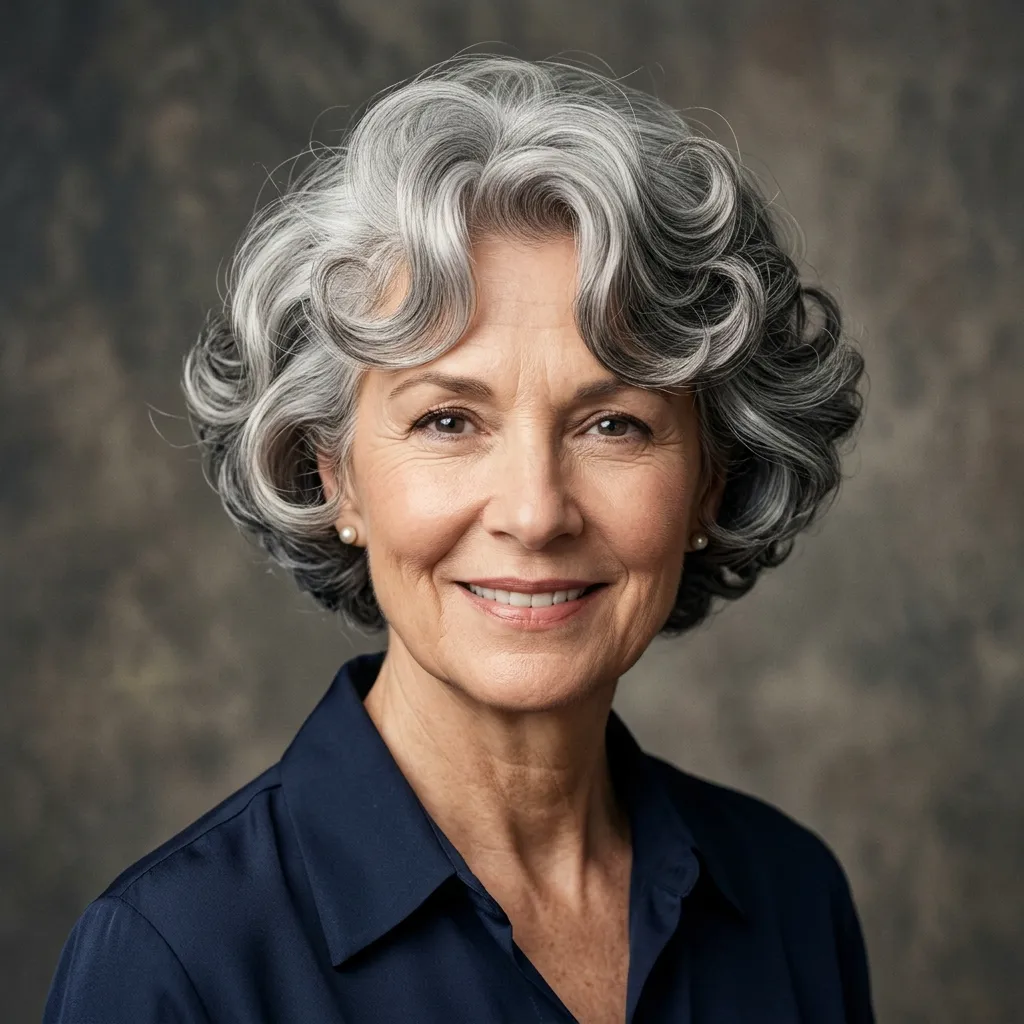
A pin-curl set creates curls by winding sections of hair into small loops and securing them close to the head while they dry. Once released, the curls can form a soft, vintage-inspired shape with plenty of movement. On short hair, pin curls are particularly useful for creating a polished finish without needing a large curling iron.
The final look depends on the size of the sections and how the curls are arranged. Smaller pin curls create tighter definition, while larger sections can produce softer waves. Apply a suitable setting lotion or styling product, make sure the hair dries fully, and release the pins gently to preserve the shape. You can brush the curls lightly for a softer, more blended finish or leave them separated for a more defined appearance.
22. Soft Highlights on Curls

Soft highlights can add dimension to short curls by creating gentle variations in color throughout the hairstyle. When lighter strands catch the light along the curves of the hair, the curl pattern may appear more defined. This technique works with many base colors, from deep brown and black to natural gray and dark blonde.
The most flattering result often comes from placing highlights where they complement the haircut rather than applying the same amount of color everywhere. A few lighter pieces near the face can brighten the overall look, while subtle highlights through the crown can create a more dimensional finish. Because curly hair can be prone to dryness, discuss your hair’s condition with your colorist before lightening it. Follow with a moisturizing routine and avoid excessive heat styling to help preserve softness and shine.
23. Auburn Curls
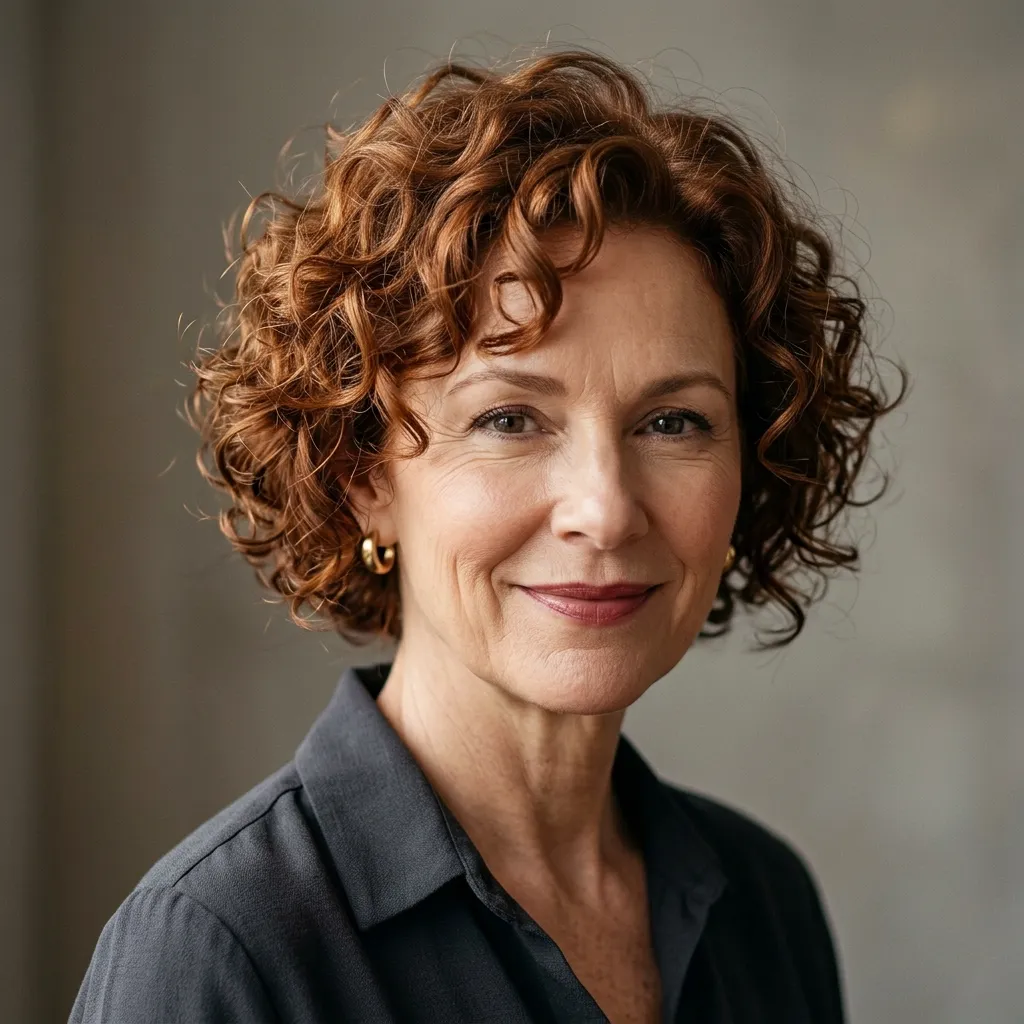
Auburn curls combine warm reddish-brown tones with the natural movement of curly hair. Depending on the shade, the color can look subtle and earthy or more vivid and coppery. On a short curly bob or pixie, auburn tones can add warmth and help individual curls stand out without changing the haircut itself.
When choosing an auburn shade, consider your natural base color, skin tone, and how much upkeep you are comfortable with. A deeper auburn may blend more naturally with dark hair, while a brighter copper-auburn finish can create a more noticeable change. Your stylist can help select a shade that complements your complexion and works with your hair’s condition. Use color-safe products and protect your hair from unnecessary heat to help the tone remain vibrant between salon visits.
24. Short Curls with a Headband
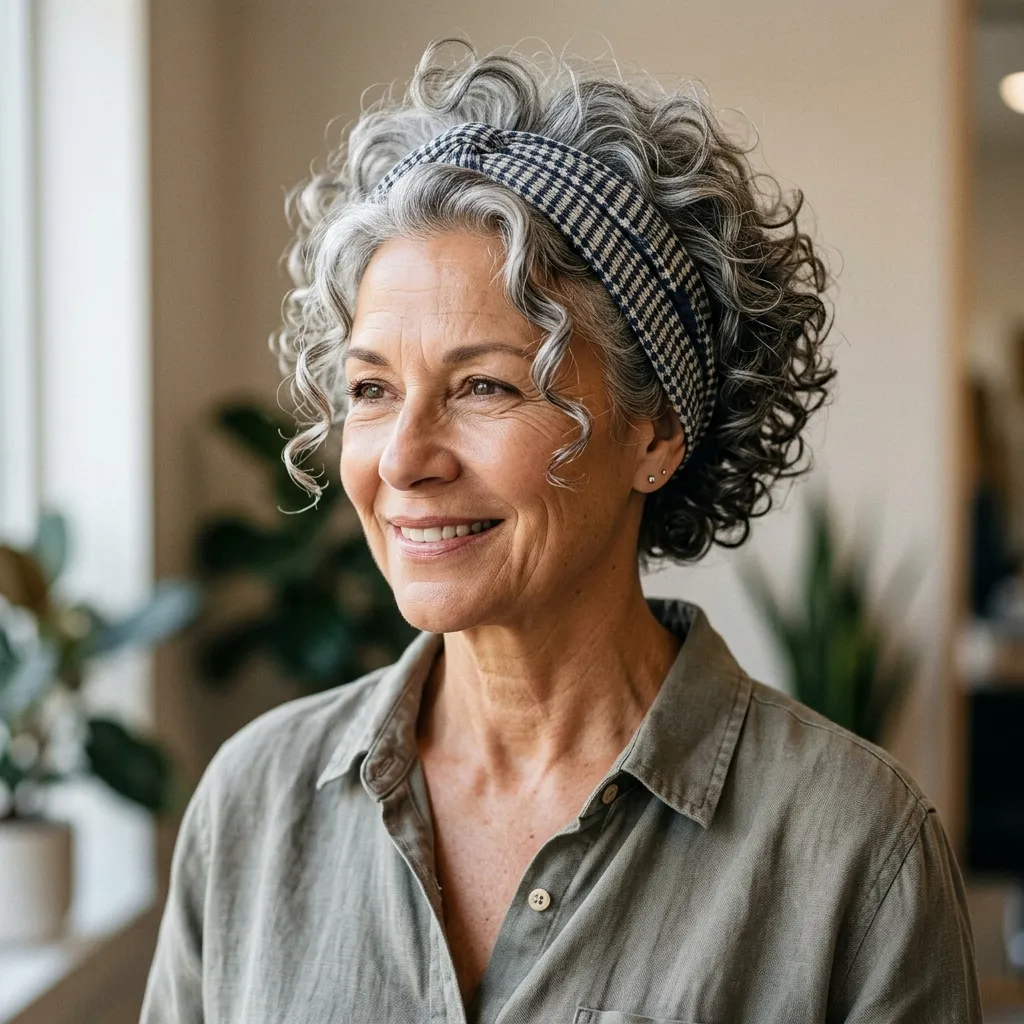
A headband is a simple way to change the look of short curls without cutting or coloring your hair. It can keep curls away from the forehead, create a neat outline, or add a small accent to an everyday style. This option is especially useful on mornings when your curls need a little reshaping but you do not want to start your entire styling routine again.
Choose a headband that feels comfortable and does not pull tightly at the hairline. Soft fabric styles can be gentle for everyday wear, while a slim decorative band can add a polished detail for lunch, work, or a family gathering. You can wear your curls loose around the crown or gently guide the front sections back for a cleaner shape. If your hair is prone to breakage, avoid accessories that grip too tightly or repeatedly rub against the same area.
Frequently Asked Questions
Which short curly hairstyle is best for older women?
The best style depends on your curl pattern, hair density, face shape, and preferred maintenance routine. A curly pixie is a good option if you want a short, lightweight cut, while a short curly bob offers a little more length and framing around the face. A curly shag can provide extra movement, and a tapered cut can keep the sides and back neat. Ask your stylist to recommend a shape that works with your natural curls rather than requiring you to reshape them every morning.
Do short curly hairstyles make older women look younger?
A haircut cannot guarantee that someone will look younger, but a well-shaped style can help you look refreshed and feel more confident. Soft curls around the face, natural movement, and a shape that suits your features can create a flattering overall effect. The most important thing is choosing a haircut that reflects your personality and feels comfortable to wear. You do not need to hide gray hair or follow a particular trend to look stylish.
Are short hairstyles easier to maintain for naturally curly hair?
They can be, especially when the cut follows your natural curl pattern and does not depend on daily heat styling. However, shorter hair may need more frequent trims to maintain its shape, and some defined styles still require regular moisturizing or setting. A wash-and-go or tapered curly cut may be easier for everyday wear than a carefully arranged pin-curl set. Your ideal routine depends on how much styling you enjoy and how your hair responds to different products.
How can older women add volume to short curly hair?
Start with a haircut that supports lift at the crown and avoids unnecessary weight in areas where the hair tends to lie flat. Lightweight mousse, a suitable curl cream, and gentle diffusing can help create volume without making the curls stiff. Changing your part can also give the roots a different direction. Avoid using too much heavy product near the scalp, since buildup or excess weight may reduce movement.
Should older women keep their natural gray curls?
Keeping natural gray or silver curls is a personal choice, and there is no single right answer. Natural gray can look beautiful in a short pixie, bob, or tapered cut, particularly when the shape and curl definition are well maintained. If you prefer a different color, subtle highlights or warm shades such as auburn can also complement short curls. Choose the option that fits your preferences, hair condition, and maintenance budget.
What products work best for short curly hair?
The right products depend on whether your hair is fine, coarse, loose-curled, or tightly coiled. A moisturizing conditioner and a lightweight leave-in product are useful starting points for many curl patterns. Curl creams can help soften and define the hair, while gels or mousses may provide additional hold when you want a longer-lasting style. Start with small amounts and adjust as needed so your curls remain flexible instead of feeling coated or weighed down.
Can women with thinning hair wear short curly hairstyles?
Yes, women with thinning hair can wear short curly hairstyles, but the haircut should be customized to their hair density and areas of concern. A softly shaped pixie, a compact curly bob, or a gentle crop may help create a balanced outline without removing too much fullness. Avoid assuming that more layers always create more volume, since excessive layering can make some areas look thinner. A stylist experienced with your hair type can help choose a shape that supports the appearance you want.
How often should short curly hair be trimmed?
Trim frequency depends on the haircut, how quickly your hair grows, and how clearly you want the shape defined. A close crop or tapered cut may need regular shaping to maintain its outline, while a relaxed curly bob may grow out more gradually. If your ends become tangled or the curls stop forming their usual shape, it may be time to discuss a trim. Your stylist can recommend a schedule that suits both your haircut and your hair’s condition.
Conclusion
The best Short Curly Hairstyles for older women celebrate natural texture while making everyday styling feel manageable. A curly pixie can provide a light, modern shape, a short curly bob offers timeless versatility, and a curly shag adds movement for women who prefer a relaxed finish. Silver curls, auburn color, soft highlights, and simple accessories provide even more ways to make a familiar haircut feel personal.
Before your next salon appointment, think about how your curls behave after washing, where you want the most volume, and how much time you want to spend styling them. Bring reference photos that resemble your natural curl pattern, and ask your stylist to account for shrinkage before cutting. With a shape that suits your hair and a routine that feels realistic, you can enjoy short curls that look defined, flattering, and completely your own.