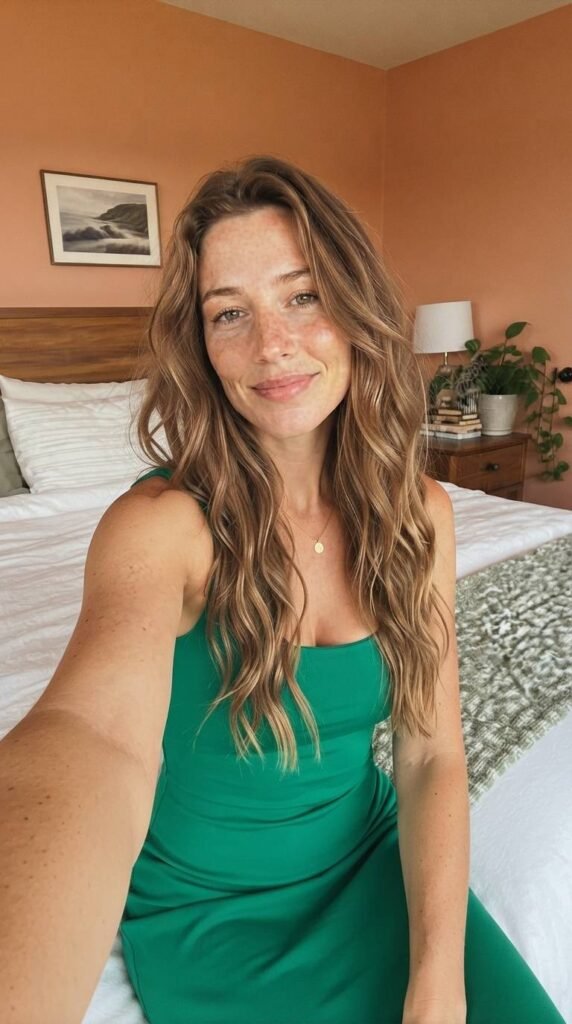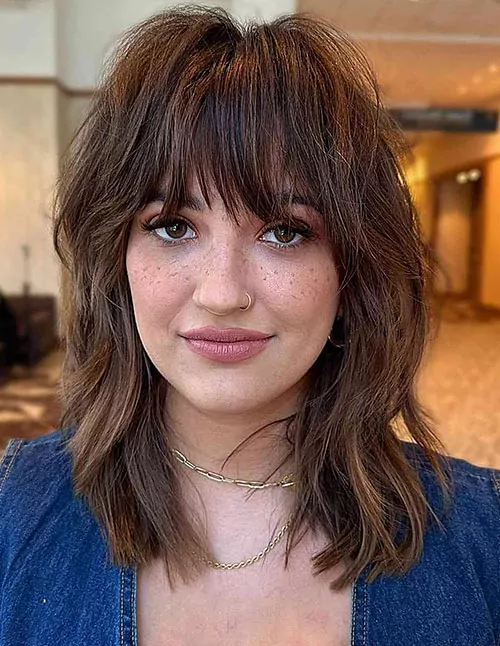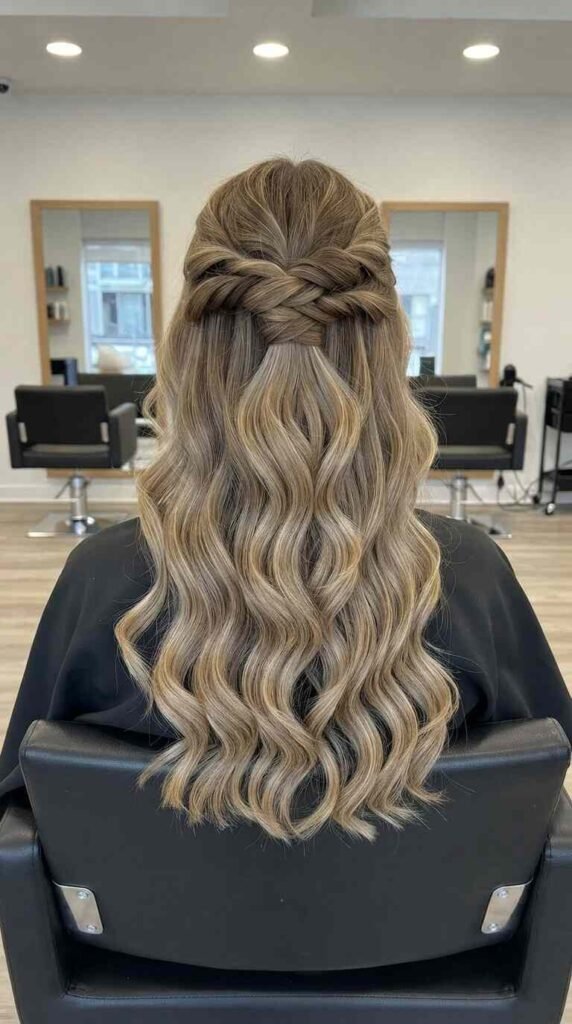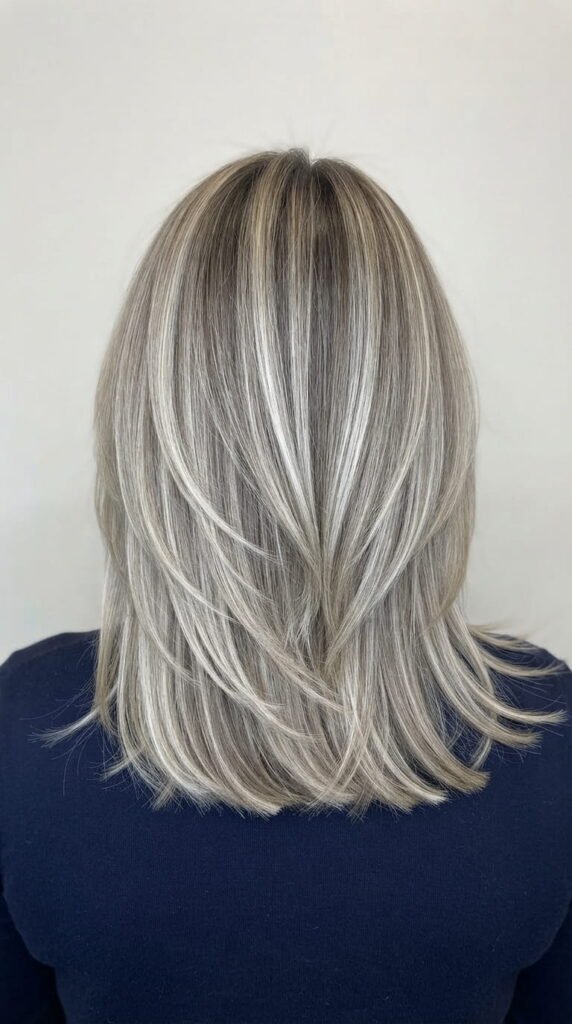
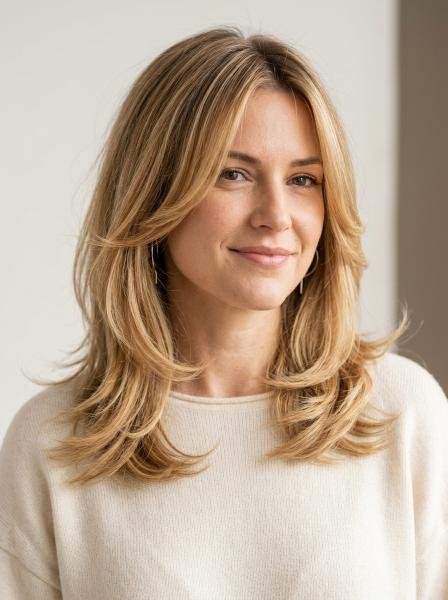
Sometimes, your hair does not need a dramatic chop or a completely new color to feel different. A few well-placed layers can add movement, soften your features, and give your shoulder-length haircut a fresh shape without sacrificing much length. Shoulder length hair with layers is a versatile choice for women who want a style that feels modern, looks flattering, and works with their everyday routine.
The beauty of layered hair is that no two cuts need to look alike. Long layers create subtle movement, choppy layers add texture, and face-framing pieces can highlight your cheekbones and jawline. Whether your hair is straight, wavy, curly, fine, thick, or naturally coily, the right layering technique can help you make the most of your natural texture.
You can also customize the finish to match your lifestyle. Some layered haircuts look beautiful with a quick air-dry, while others shine with a bouncy blowout or loose beach waves. If you are looking for inspiration before your next salon appointment, these 24 shoulder-length hairstyles will help you find a cut that suits your hair type, personal style, and preferred level of maintenance.
Long Layers
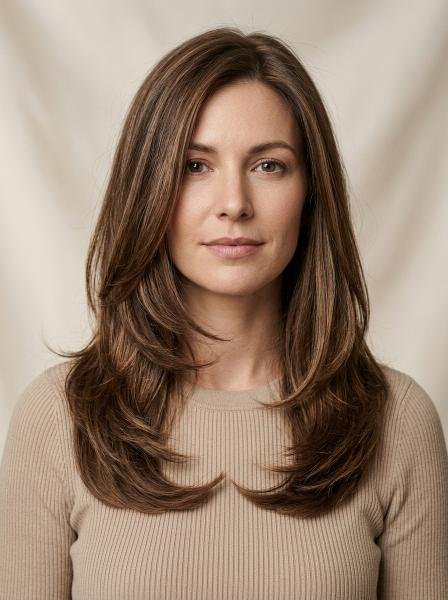
Long layers are perfect if you want to add movement without making your shoulder-length haircut look dramatically different. The stylist keeps most of the hair at a similar length while introducing longer, blended sections that help the ends move naturally. This creates a soft silhouette that feels polished without looking overly styled.
One of the biggest advantages of long layers is their versatility. Straight hair gains a little more shape, while naturally wavy hair can show off its texture without becoming too bulky. If you have fine hair, ask your stylist to keep the layers subtle and preserve the density around the ends so your haircut continues to look full.
For everyday styling, you can simply blow-dry your hair with a round brush or let it air-dry if your natural texture cooperates. Adding a few loose bends around the face creates extra movement without requiring a full curling routine. Long layers are especially suitable if you want a flattering haircut that grows out naturally.
Choppy Layers
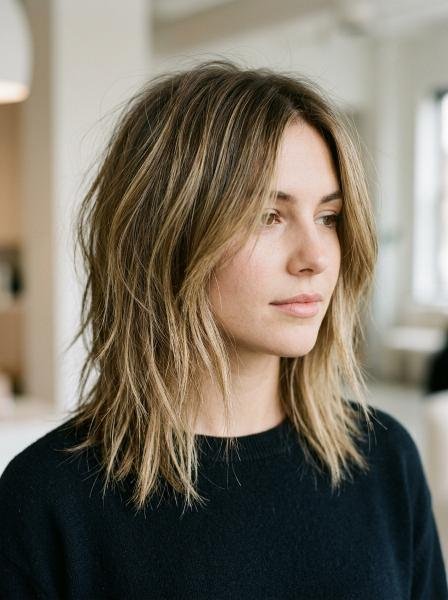
Choppy layers bring texture and personality to shoulder-length hair. Instead of blending every section seamlessly, this haircut uses varied lengths to create separation and a slightly undone finish. It is a great option if you prefer a modern, relaxed hairstyle rather than a perfectly smooth, traditional cut.
The amount of texture should depend on your hair density. Thick hair can usually support more noticeable choppy pieces, while fine hair often looks better with carefully placed texture that does not remove too much weight. A good stylist will balance the layers so your ends retain their shape while the rest of your hair gains movement.
To style choppy layers, apply a small amount of lightweight texturizing cream to the mid-lengths and ends. You can scrunch the hair if it is naturally wavy or use a curling wand to create irregular bends. The finished look should feel flexible and effortless rather than stiff or overly defined.
Modern Shag
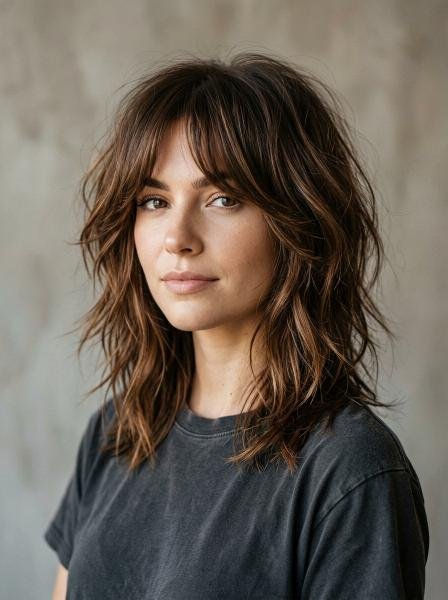
The modern shag combines layered volume around the crown with textured ends and a relaxed, slightly tousled silhouette. Unlike some traditional shag haircuts, contemporary versions can be customized to feel soft and wearable rather than heavily disconnected. At shoulder length, the cut offers a balance between movement and enough length for ponytails or half-up hairstyles.
This haircut is particularly flattering for women with natural waves because the layers encourage the hair to move without requiring perfect styling. Straight hair can also wear a modern shag, although a little mousse or texturizing spray may help bring out the shape. If your hair is fine, ask for a softer version that creates lift without making the ends look sparse.
Styling can be surprisingly simple when the haircut suits your natural texture. Apply a lightweight product to damp hair, scrunch gently, and allow it to dry or use a diffuser. For a smoother finish, use a round brush to lift the crown while keeping the ends relaxed.
Wolf Cut
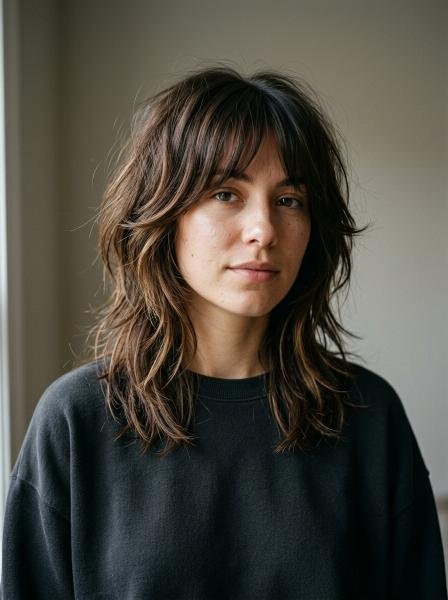
A shoulder-length wolf cut combines the textured layers of a shag with a more pronounced contrast between the crown and the ends. The upper sections are usually shorter and fuller, while longer pieces remain around the bottom. This creates a bold silhouette with plenty of movement and a slightly rebellious feel.
The wolf cut can be customized for different hair types, but the placement of the shorter layers matters. Thick hair may carry a dramatic version well, while fine hair can benefit from a softer cut that preserves enough fullness. If you prefer a style that looks good without being perfectly smooth, this haircut is worth considering.
To bring out the layers, work a small amount of mousse through damp hair and encourage any natural waves with your fingers. A diffuser can add definition, while a curling iron can create extra bends if your hair is naturally straight. The goal is to emphasize texture without spending too much time making every section look identical.
Butterfly Layers
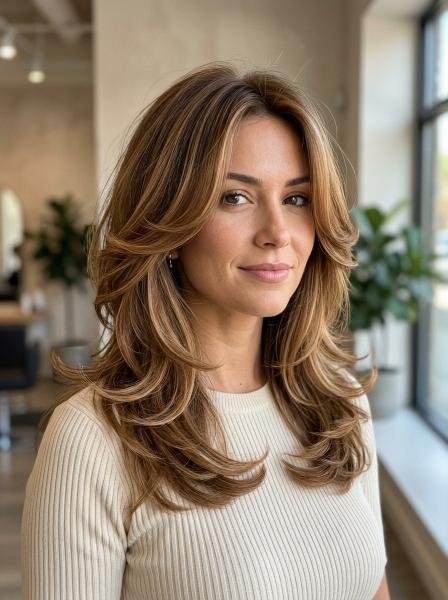
Butterfly layers create a flowing, voluminous effect through a combination of shorter face-framing pieces and longer sections throughout the hair. The shorter layers give the appearance of a more defined shape around the face, while the remaining length keeps the hairstyle versatile. Adapted to shoulder-length hair, this technique can provide movement without requiring a short bob.
This style works particularly well if you enjoy a bouncy, salon-inspired finish. Layers around the cheekbones and jawline can frame your features, while the longer pieces create a soft transition toward the shoulders. If your hair is fine, ask for a customized version that maintains enough weight through the ends.
A round brush or large rollers can help create the signature volume. You can also use a curling iron to bend the front sections away from your face for a softer, lifted appearance. For a more casual finish, wear the layers with a natural wave rather than trying to create a perfectly polished blowout.
Feathered Layers
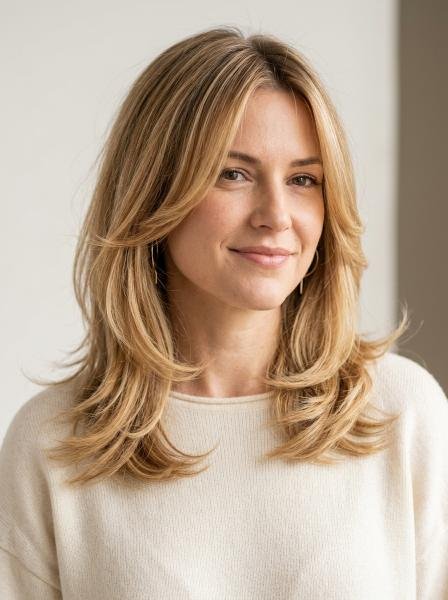
Feathered layers feature soft, tapered ends that blend into one another instead of creating strong, visible lines. The result is a light, flowing hairstyle that moves naturally when you turn your head. For shoulder-length hair, feathering can add softness without making the cut feel overly textured.
This technique can be especially useful for thick hair that feels heavy around the sides and ends. Fine hair can also benefit from feathered layers, but the stylist should avoid removing too much density. A few softly feathered pieces around the face may be enough to create movement while keeping the overall haircut balanced.
For a classic finish, blow-dry the hair with a round brush and gently curve the ends. If you prefer a more relaxed style, let your hair air-dry and use your fingers to separate the layers. Feathered hair looks particularly attractive when it has natural movement rather than a stiff, heavily sprayed finish.
V-Cut Layers
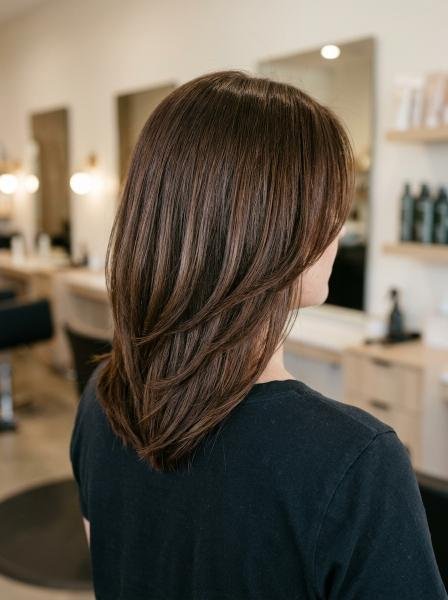
V-cut layers create a shape that gradually narrows toward the center of the back, forming a subtle or pronounced V. Although this silhouette is often associated with longer hair, it can be adapted to shoulder-length styles when the length allows enough room for the shape to show. The angled outline adds direction and creates a different look from a straight, even perimeter.
This cut is ideal if you like a flowing hairstyle with a little extra definition from the back. The layers can help the hair move more freely, while the pointed outline adds visual interest. However, a very pronounced V may make the ends look less dense, so women with fine hair may prefer a softer version.
Ask your stylist to assess how the shape will fall at your current length before committing to a dramatic angle. Loose waves can highlight the V-shaped outline, while straight styling makes the overall silhouette easier to see. The best version is one that complements your hair density instead of removing more fullness than you want.
U-Cut Layers
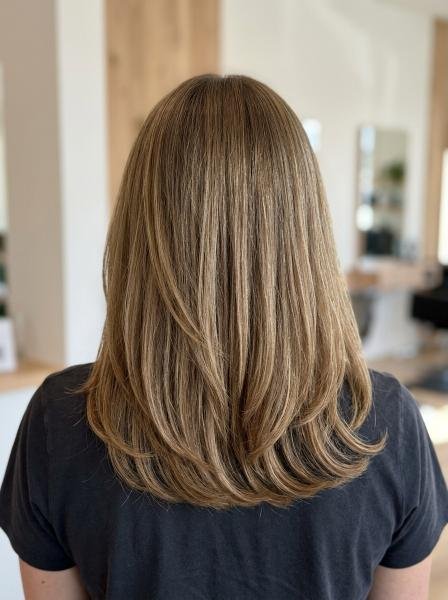
U-cut layers create a rounded outline at the back, with the hair curving gently rather than forming a central point. This makes them a versatile choice for shoulder-length hair because the shape looks balanced and natural. Combined with subtle layers, the cut offers movement while preserving a softer, fuller-looking perimeter.
A U-shaped outline can work well if you want your hair to look shaped without appearing sharply angled. The technique suits straight, wavy, and lightly curly textures, although the exact result depends on how the hair falls naturally. Your stylist can add more or less layering depending on whether you want extra volume, reduced bulk, or simply a smoother shape.
For everyday styling, blow-dry the ends with a round brush or allow your hair to dry naturally. Loose waves can bring out the rounded outline, while a sleek finish creates a more polished appearance. If you prefer a haircut that looks good from the back without demanding elaborate styling, U-cut layers are a practical option.
Face-Framing Layers
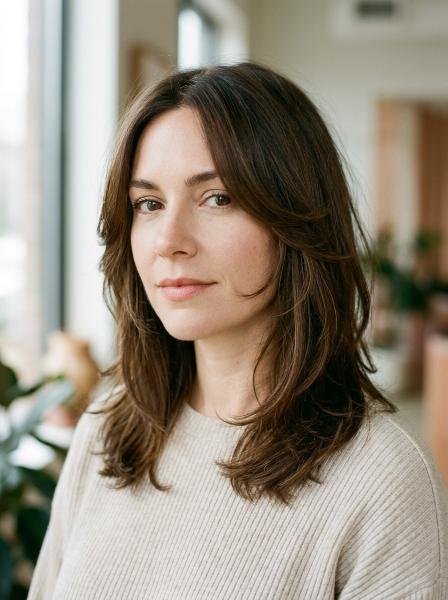
Face-framing layers are shorter sections around the front of the hair that gradually blend into the remaining length. They draw attention to features such as the eyes, cheekbones, and jawline while giving a shoulder-length haircut a softer outline. This is one of the easiest ways to refresh your look without removing much length.
The placement of these layers can change the overall effect. Pieces beginning around the cheekbones create a noticeable frame, while longer sections near the jaw offer a more subtle transition. If your hair is fine, keeping the face-framing layers connected to the main length can help preserve fullness.
You can style the front pieces away from your face for a lifted effect or let them fall naturally for a softer finish. The rest of your hair can remain straight, wavy, or curly, making this cut easy to personalize. It is especially useful if you want a visible change without committing to bangs.
Curtain Bangs With Layers
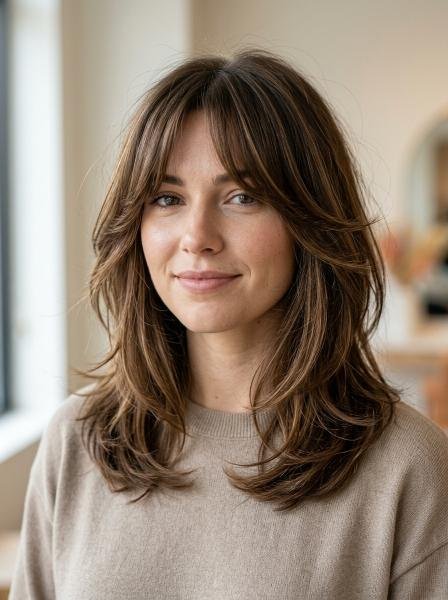
Curtain bangs part near the center and sweep outward, blending into the layers around the sides of the face. Paired with shoulder-length hair, they create a soft, relaxed hairstyle that feels current without looking too formal. This combination works well if you want to add interest around your face while maintaining a versatile overall length.
The bangs can be cut shorter around the brows and gradually lengthened toward the cheekbones. Your stylist should consider your natural part, forehead, and hair texture because these factors influence how the fringe sits. A lighter curtain fringe may work particularly well for fine hair, while thicker hair can support a fuller version.
To style curtain bangs, use a round brush to direct the roots away from the center part. The remaining layers can be blow-dried for volume or left slightly wavy for an effortless finish. If you prefer low-maintenance hair, ask for a length that still looks attractive when the bangs are not perfectly styled.
Bottleneck Bangs With Layers
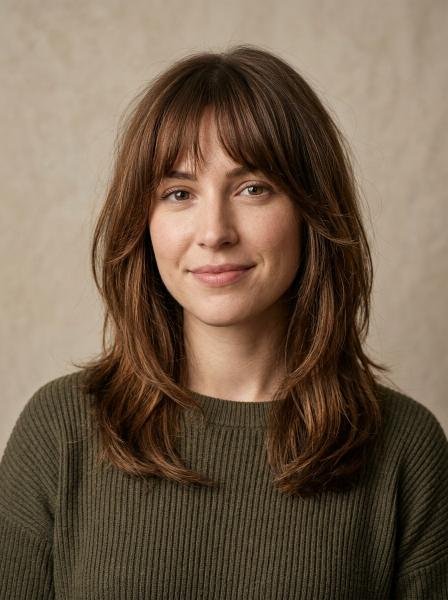
Bottleneck bangs combine a shorter, rounded section in the center with longer pieces that widen toward the cheekbones. This creates a soft, face-framing shape that sits somewhere between a traditional fringe and curtain bangs. When paired with shoulder-length layers, the result feels modern and adds interest without making the haircut look too heavy.
This fringe can be especially appealing if you want to highlight your eyes while keeping the sides soft. The longer sections blend naturally into the surrounding layers, creating a gradual transition rather than a sharp line. For fine hair, ask your stylist to keep the fringe light enough that it does not take too much fullness from the rest of the haircut.
Styling usually involves a quick blow-dry with a small round brush. You can direct the center section forward and guide the longer pieces outward to create the characteristic shape. Once the fringe is set, the remaining hair can be worn naturally or styled with loose waves.
Side-Swept Layers
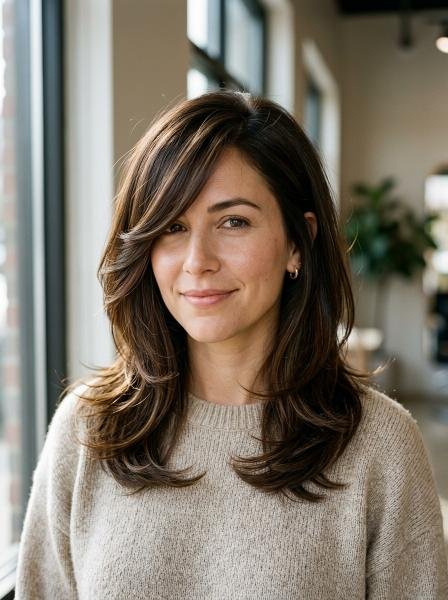
Side-swept layers create a diagonal flow across the face, often enhanced by a side part. The front sections move toward one side, adding softness and giving the haircut a slightly asymmetrical appearance. This is a useful option if you want a change from a center part without choosing a dramatic haircut.
The style can be adapted to different hair densities and textures. A deeper side part can create the appearance of extra root lift in fine hair, while longer side-swept sections can soften the outline of thick hair. The key is ensuring the front layers blend naturally into the rest of the haircut.
For a polished finish, blow-dry the front pieces in the direction you want them to fall. If you prefer a casual style, let them settle naturally and use a little lightweight styling cream to control flyaways. Side-swept layers are versatile enough for everyday outfits, office wear, and special occasions.
Layered Beach Waves
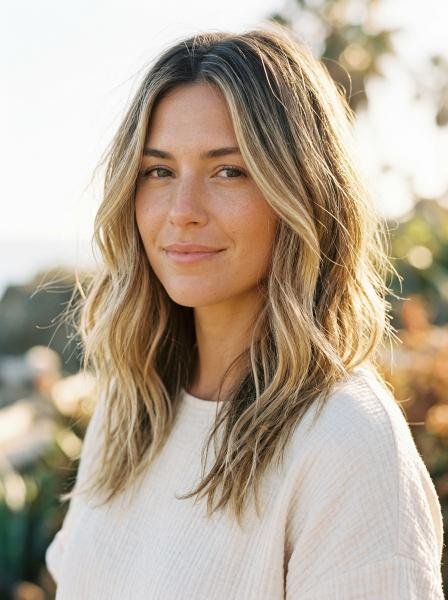
Layered beach waves create a relaxed, textured appearance that feels casual without looking unfinished. The layers help separate the waves and allow the hair to move, while the shoulder-length cut keeps styling manageable. This combination is ideal if you want your hair to look fuller and more dimensional without a perfectly curled finish.
The cut should preserve enough weight at the ends to maintain a balanced shape. Too many short layers can make the hair look uneven when the waves separate, particularly if your strands are fine. If your hair already has a natural wave pattern, a stylist can shape the layers to enhance it instead of requiring you to use heat every day.
To create beach waves, apply a lightweight styling product to damp hair and scrunch gently as it dries. You can also use a curling wand, alternating the direction of the bends for a more natural result. Finish by separating the waves with your fingers rather than brushing them into uniform curls.
Layered Curly Hair
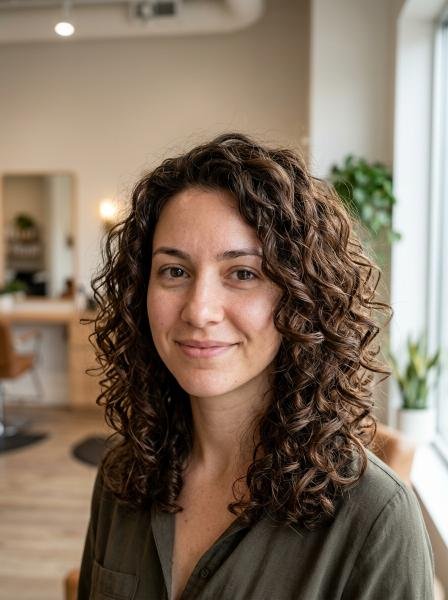
Layered curly hair can look beautifully balanced when the cut follows the natural shape of your curls. The right layers distribute volume, help curls form more distinct sections, and prevent the ends from appearing too heavy. At shoulder length, this creates a versatile hairstyle that offers movement without requiring excessive length.
Curly hair needs a different approach from straight hair because individual curls can shrink as they dry. A stylist should consider your curl pattern, density, and preferred finished length before deciding where to place each layer. Too few layers may leave the haircut bulky at the bottom, while poorly placed short layers can create unwanted volume around the crown.
For everyday care, use a suitable conditioner and a lightweight curl cream or gel to support definition. Detangle gently while the hair is wet, then allow the curls to dry with minimal disturbance. A diffuser can enhance volume and definition, but air-drying also works well if your curls form naturally.
Layered Natural Coils
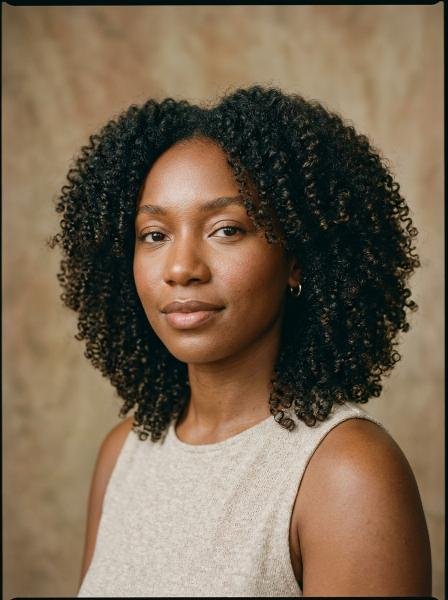
Shoulder-length natural coils can look full, expressive, and beautifully shaped when the layers work with the hair’s natural pattern. Strategic shaping helps distribute volume and creates a silhouette that complements the density of the hair. Depending on your coil pattern, the finished length may appear shorter than shoulder level when the hair shrinks naturally.
The most important consideration is maintaining healthy, defined coils while achieving the shape you want. Layers should complement how your hair grows and moves rather than remove too much length from areas that need fullness. A stylist experienced with natural hair can help determine whether a dry cut, wet cut, or combination technique is suitable for your goals.
A manageable routine starts with gentle cleansing, conditioning, and products that support moisture without weighing the hair down. Protective nighttime styling can help reduce friction and preserve definition between wash days. With thoughtful shaping and consistent care, layered natural coils can offer plenty of styling flexibility.
Razor-Cut Layers
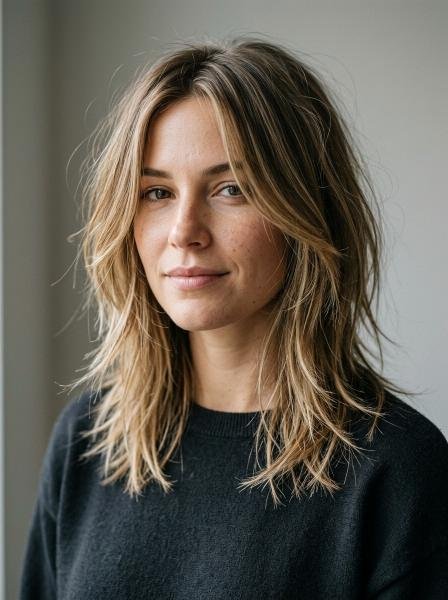
Razor-cut layers use a razor to create soft, tapered sections that give the hair a textured, slightly undone finish. The technique can make shoulder-length hair feel lighter and more fluid than a sharply defined cut. It is particularly appealing if you like hairstyles with movement rather than a perfectly uniform outline.
However, razor cutting is not suitable for every hair type. Some strands, especially hair that is delicate, dry, or prone to frizz, may look overly wispy after aggressive razor texturizing. Your stylist should assess your hair’s condition and natural texture before deciding whether this method will deliver the result you want.
If your hair responds well to razor cutting, styling can be straightforward. Work a small amount of texturizing cream through the ends and let the layers fall naturally. For a smoother finish, use a round brush while allowing a little movement to remain at the ends.
Sleek Straight Layers
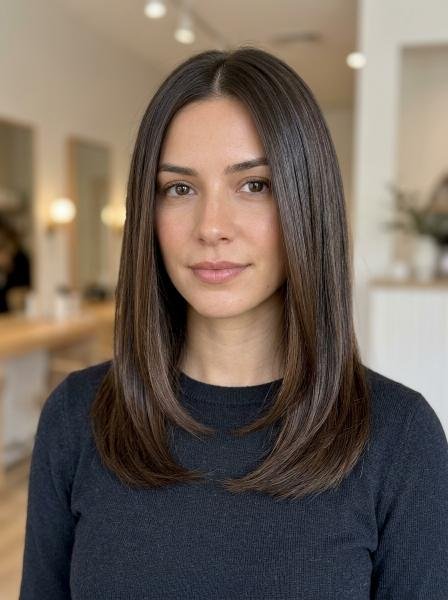
Sleek straight layers combine a smooth finish with carefully blended sections that prevent shoulder-length hair from looking too heavy. The layers provide subtle movement while maintaining a polished silhouette. This is a great choice if you like straight hairstyles but want something more dimensional than a completely one-length cut.
The placement of the layers matters because they become more visible when the hair is straight. Fine hair usually benefits from minimal shaping that preserves density, while thick hair may support more layers to reduce bulk. Ask your stylist to ensure the sections blend naturally rather than creating obvious gaps between lengths.
For styling, apply heat protectant and use a blow-dryer with a nozzle to smooth the hair. A flat iron can refine the finish when needed, but avoid excessive heat that may leave the ends dry. A small amount of lightweight serum can add shine without making the roots look flat.
Voluminous Blowout Layers
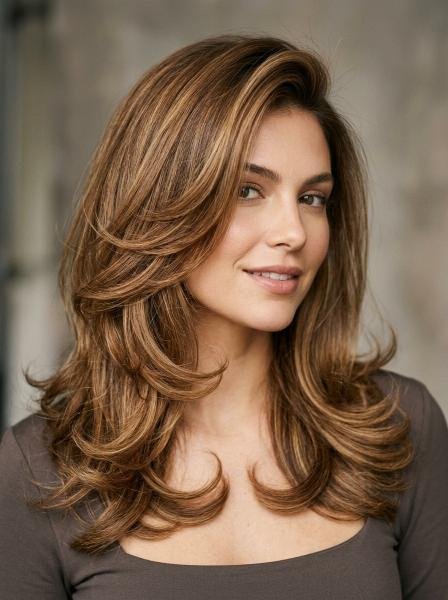
Voluminous blowout layers are designed to create bounce, lift, and a salon-inspired finish. The layers help the hair curve around the face and shoulders, while round-brush styling adds volume at the roots. This look is especially appealing if you enjoy a fuller hairstyle with soft, flowing movement.
The haircut should be tailored to your hair density. Fine hair often needs restrained layering to preserve fullness, while thick hair may benefit from more shaping to reduce heaviness. Face-framing sections can add extra movement and create a smooth transition around the cheeks.
To style this haircut, apply a lightweight volumizing product to damp roots and blow-dry in manageable sections with a round brush. Velcro rollers can help set the shape while the hair cools, but they are optional if you prefer a faster routine. Finish with a flexible-hold spray that keeps the hair moving rather than making it stiff.
Flipped-Out Ends
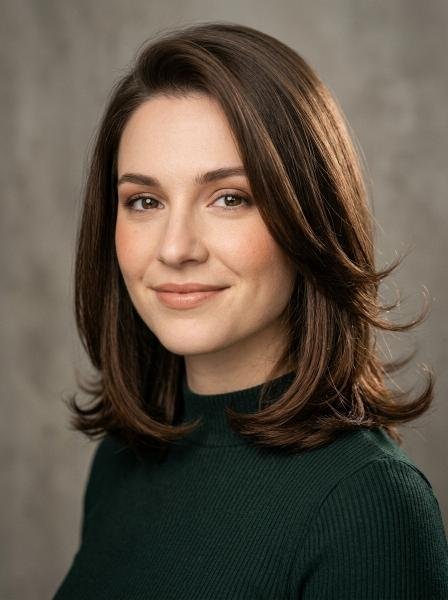
Flipped-out ends add a playful, retro-inspired touch to shoulder-length layered hair. Instead of curving inward, the ends are directed outward to create a noticeable flick around the shoulders. This small styling change can make a familiar layered haircut feel fresh without requiring a different length or major cut.
The style works particularly well when the haircut already has layers that encourage movement around the ends. Fine hair may benefit from the visible separation, while thick hair might need more shaping to prevent the flipped sections from appearing bulky. The finish can be subtle for everyday wear or more dramatic for a special occasion.
Use a round brush or flat iron to bend the ends outward, working in small sections. Keep the curve soft if you want a modern look rather than a strongly retro finish. A light styling spray can help the ends maintain their direction without making the rest of the hair feel stiff.
Invisible Layers
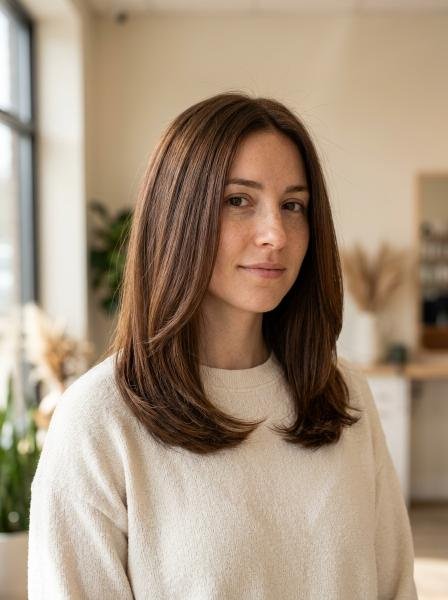
Invisible layers are blended into the haircut so they add movement without creating obvious steps in the length. They are ideal if you like a relatively solid silhouette but want your hair to feel lighter and less bulky. At shoulder length, this technique can create a natural finish that works with straight, wavy, or lightly curly textures.
Rather than removing large sections from the outside, the stylist strategically shapes selected areas to encourage movement. This can help thick hair feel more manageable while maintaining a smooth outline. For fine hair, the technique should be used carefully to avoid removing too much density from the ends.
One of the best features of invisible layers is that they do not demand a particular styling method. You can wear your hair naturally, create loose waves, or smooth it with a blow-dryer. If you want movement without an obviously layered appearance, this understated technique is an excellent option.
Layers for Fine Hair
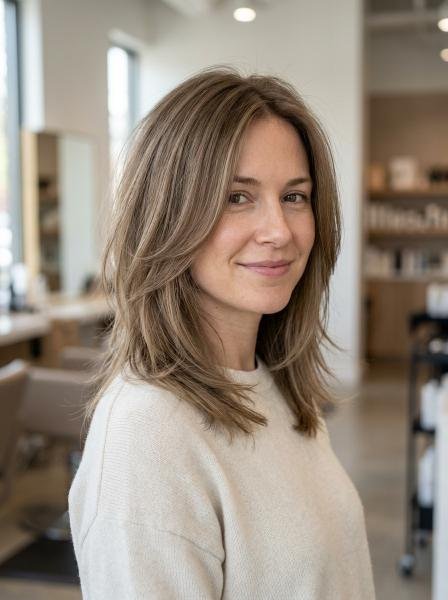
Layering fine hair requires a careful balance between creating movement and preserving fullness. Since individual strands are delicate, removing too much weight from the ends can make the haircut look sparse. Long, subtle layers and gentle face-framing sections are often useful because they add shape without sacrificing too much density.
Shoulder length is a practical option for fine hair because it provides styling flexibility without the weight of very long strands. A softly blunt perimeter can help the ends look fuller, while minimal shaping near the crown can create a little lift. Your stylist should consider whether your main concern is flat roots, thin-looking ends, or a lack of movement.
For everyday styling, choose lightweight products that support volume without coating the strands. Root-lifting mousse, a gentle blow-dry, or loose heatless waves can make the hair look more dimensional. A cut that works with your natural texture will usually be easier to manage than one that requires constant heat styling.
Layers for Thick Hair
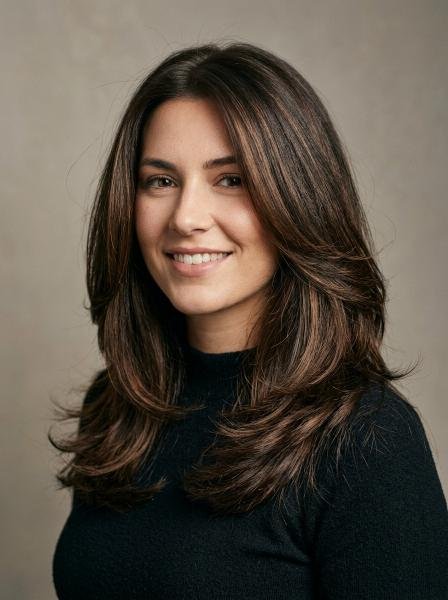
Thick hair can support a wide range of shoulder-length layered cuts, from long blended layers to textured shags and wolf cuts. The right placement distributes weight and allows the hair to move more naturally instead of forming a heavy, solid shape. This makes layers particularly useful when you want to retain length while making your hair easier to style.
Your stylist may recommend internal layers, face-framing sections, or more noticeable shaping depending on how your hair grows. However, removing too much weight from the wrong areas can create unwanted volume or leave the ends looking thin. A balanced approach maintains the overall silhouette while reducing bulk where it is needed.
For everyday styling, you can air-dry your hair if its natural texture falls into place or use a blow-dryer to smooth the layers. A lightweight leave-in product can help manage frizz without weighing the hair down. The amount of maintenance you need will depend on your chosen cut and how quickly your hair grows.
Balayage on Layered Hair

Balayage adds hand-painted color variation that blends into your natural or base shade. When combined with shoulder-length layers, lighter sections can emphasize the movement and shape of the haircut. Depending on your chosen colors, the result can look softly sun-kissed or more noticeable and dimensional.
This technique works well with long layers, modern shags, and textured shoulder-length cuts. Lighter pieces around the face can brighten the overall appearance, while color through the mid-lengths and ends can make the layers more visible. Remember that highlights create visual dimension rather than physically increasing hair thickness.
The best balayage placement depends on your natural color, complexion, and willingness to maintain the result. Ask your colorist how much lightening is necessary and what care your hair will need afterward. A blended finish can make regrowth less noticeable than a sharp color line, although maintenance varies with the contrast and technique.
Money-Piece With Layers
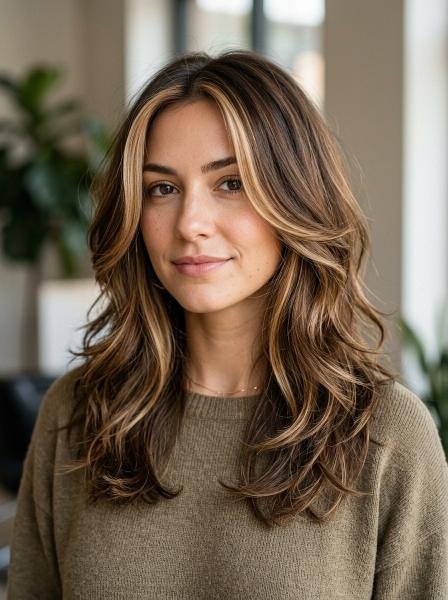
A money-piece hairstyle features lighter sections around the front of the hair, creating a bright accent that draws attention to the face. When paired with shoulder-length layers, these pieces emphasize the movement around the cheekbones and jawline. It is a simple way to update a layered haircut without changing its overall shape.
The color contrast can be subtle or bold, depending on your preference. Choosing highlights only a little lighter than your base shade creates a natural effect, while brighter front sections make a stronger statement. Your stylist can blend the color into the surrounding hair so it complements the layers rather than appearing disconnected.
The placement works particularly well with curtain bangs or longer face-framing pieces because the color follows the shape of the haircut. A middle part creates a balanced appearance, while a side part gives the lighter sections a sweeping effect. Use suitable color-care products and discuss maintenance before choosing a high-contrast look.
Frequently Asked Questions
Is shoulder length hair with layers suitable for every face shape?
Shoulder length hair with layers can be customized for many face shapes, but the most flattering layer placement varies from person to person. Longer face-framing pieces create a different effect from shorter cheekbone layers, while curtain bangs can soften the forehead and frame the eyes. Share your preferences with your stylist so the haircut complements your features and feels comfortable to wear.
Do layers make shoulder-length hair look thicker?
Layers can create the appearance of extra movement and volume, but they do not increase the actual thickness of your hair. Fine hair often benefits from long, subtle layers that preserve fullness at the ends, while thick hair can support more shaping to reduce bulk. The best technique depends on your hair density and natural texture.
Which layered haircut is easiest to maintain?
Long layers, invisible layers, and softly blended face-framing cuts are often convenient because they grow out naturally. A modern shag can also be easy to manage if your hair already has texture. Bangs and sharply structured shapes may require more frequent trims to maintain their intended appearance.
Are shoulder-length layers good for curly hair?
Yes, shoulder-length layers can help curly hair form a balanced shape and distribute volume more evenly. Your stylist should account for shrinkage, curl pattern, and density when deciding where to place each layer. A stylist experienced with curly hair can help create a cut that works with your natural texture instead of fighting it.
Should I get layers if I have fine hair?
You can absolutely wear layers with fine hair, but a restrained approach is often best if you want to preserve fullness. Long blended layers and invisible layers can add movement without removing too much weight from the ends. If your hair is also low in density, discuss a softly blunt perimeter with your stylist before choosing a heavily layered cut.
How can I style shoulder-length layered hair at home?
The easiest styling method depends on your natural texture and the finish you prefer. A round brush can create smoothness and bounce, a diffuser can enhance curls or waves, and a lightweight styling cream can define textured ends. You can also air-dry your hair when the cut works well with its natural behavior.
Are layered haircuts still in style?
Layered haircuts remain versatile because they can be adapted to different lengths, textures, and personal preferences. Long layers offer a classic look, while modern shags and wolf cuts create more noticeable texture. The best choice is one that complements your features and suits the amount of styling you want to do.
How often should I trim shoulder-length layers?
Your ideal trim schedule depends on the haircut, your hair’s condition, and how quickly you want the shape to change as it grows. Bangs and highly structured cuts may need more frequent attention than long or invisible layers. If you are growing your hair longer, ask your stylist how to maintain the shape while preserving as much length as possible.
Conclusion
Shoulder length hair with layers offers a versatile way to refresh your appearance without sacrificing a practical length. From soft long layers and butterfly cuts to modern shags, natural curls, and sleek straight styles, there are options for almost every hair type and personal preference. The right haircut can introduce movement, create a more balanced silhouette, and make everyday styling feel easier.
Before choosing your next look, think about what you want your haircut to accomplish. Fine hair may benefit from subtle layers that preserve fullness, while thick hair can often handle more shaping to reduce weight. If you prefer a low-maintenance routine, choose a cut that works with your natural texture instead of one that depends on a professional-style blowout every morning.
Save a few reference photos that match your hair type and desired length, then discuss them with your stylist. Small adjustments to the layer placement, fringe, or color can make a familiar shoulder-length haircut feel completely new. With the right shape and a manageable styling routine, you can find a layered hairstyle that feels flattering, comfortable, and genuinely suited to your everyday life.