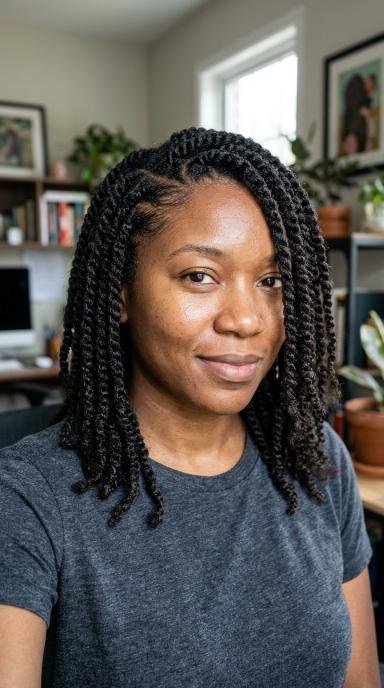
Finding a hairstyle that looks beautiful while helping you care for your natural hair can feel like a balancing act. You want something stylish enough for work, weekend plans, vacations, and special occasions, but you also want to spend less time manipulating your hair every morning. That is where Protective Hairstyles for Black Women come in, offering plenty of options for different hair textures, lengths, and personal styles.
From classic box braids and soft twists to elegant braided updos and crochet styles, protective hairstyles can help keep your ends tucked away and reduce daily styling. Some looks are sleek and polished, while others have a relaxed, textured finish that feels effortlessly chic. The best choice depends on your lifestyle, your hair’s condition, and how much time you want to spend maintaining your style.
Before choosing a look, remember that a protective hairstyle should feel comfortable rather than tight or painful. Gentle installation, a healthy scalp, and regular moisturizing matter just as much as the finished appearance. Here are 25 beautiful options to inspire your next hairstyle.
1. Box Braids
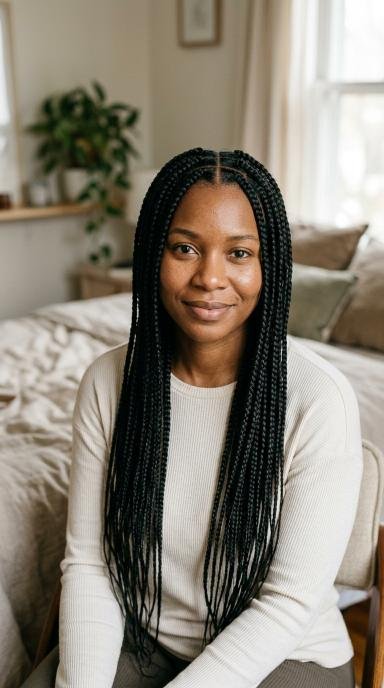
Box braids remain one of the most versatile protective hairstyles for Black women because they work with different braid sizes, lengths, and finishes. You can choose short bob-length braids for an easy everyday look or long braids that fall past your waist for a more dramatic style. Classic black is always elegant, but dark brown, burgundy, honey-blonde accents, and subtle ombré shades offer plenty of ways to personalize the look.
One of the biggest advantages of box braids is their styling flexibility. You can wear them loose, pull them into a high ponytail, create a half-up hairstyle, or gather them into a bun when you need your hair away from your face. To keep them looking fresh, gently cleanse your scalp, moisturize your natural hair, and avoid adding excessive weight with very long or heavy extensions. Make sure the braids are not installed too tightly, especially around your hairline.
2. Knotless Braids

Knotless braids are a popular alternative to traditional box braids because the stylist gradually feeds extension hair into the braid instead of starting with a large knot at the root. This creates a flatter, more natural-looking base that can feel lighter when properly installed. The finished style usually moves freely, making it a lovely choice if you prefer braids that do not look bulky at the scalp.
You can wear knotless braids in small, medium, or jumbo sizes depending on your preferred maintenance routine and the overall look you want. Medium knotless braids are especially versatile because they can be worn down, styled into a bun, or swept into a ponytail. Although they may reduce some tension compared with certain traditional braiding techniques, knotless braids can still cause damage if they are too tight or heavy. Ask your stylist for a comfortable installation and speak up immediately if you experience pain.
3. Jumbo Braids

Jumbo braids are ideal when you want a bold protective style without sitting through a long installation session. Their thick, noticeable sections create a striking appearance, whether you choose classic box-shaped parts, knotless techniques, or large feed-in cornrows. They also make a statement with simple outfits, so you do not need complicated styling to look put together.
Because jumbo braids contain more hair in each section, their weight deserves attention. Choose a length and extension amount that your natural hair can comfortably support, particularly if your strands are fine or your edges are fragile. A shorter jumbo-braid bob can offer the same eye-catching effect with less weight than extra-long braids. Keep your scalp clean and avoid pulling the braids into tight styles every day.
4. Cornrows
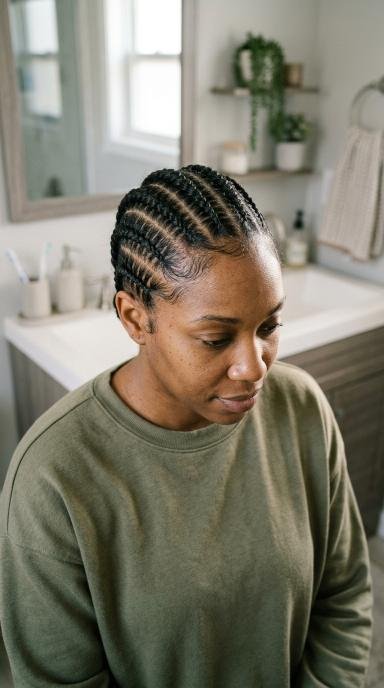
Cornrows are a timeless protective hairstyle created by braiding hair close to the scalp in neat, continuous rows. Depending on your preference, the rows can run straight back, curve into creative patterns, or follow geometric designs. This makes cornrows suitable for everything from a simple everyday look to an intricate style for a wedding, vacation, or special event.
Straight-back cornrows are especially convenient when you want a low-fuss hairstyle that stays close to your head. You can also choose designs that leave some length loose at the back or combine cornrows with extensions for extra versatility. The most important consideration is tension, because tightly braided rows can irritate the scalp and place stress on the hairline. Ask for a gentle installation, avoid repeatedly wearing tight cornrows, and give your scalp a break between styles.
5. Fulani Braids

Fulani braids are known for their distinctive combination of scalp braids, center or side parts, and individual braids that frame the face. Many versions feature a braid running down the center of the head, with additional braids extending toward the sides and back. Beads, cuffs, and carefully placed accessories can add personality without requiring an elaborate outfit.
This hairstyle is a wonderful option if you enjoy detailed braiding but want something different from a full head of traditional box braids. You can keep the look understated with black braids and a few subtle accessories or choose warm brown extensions for extra dimension. Because Fulani styles often include several braided sections near the hairline, make sure the front braids are not too tight. Remove accessories that pull on individual strands, and choose lightweight decorations that feel comfortable throughout the day.
6. Lemonade Braids

Lemonade braids are typically styled in long, sweeping cornrows that travel toward one side of the head. Their side-swept direction creates a dramatic shape while keeping the hair neatly secured against the scalp. They can look sleek and sophisticated with a simple outfit or more playful when finished with curls, cuffs, or subtle color.
This style works particularly well if you enjoy a polished appearance and want your hair to remain organized throughout your daily routine. The length can be customized, and the braids may be made with natural hair alone or with added extensions. However, the sweeping pattern should never come at the expense of scalp comfort. If the braids pull when you turn your head, feel sore around your temples, or create bumps along your hairline, ask your stylist to loosen them.
7. Goddess Braids

Goddess braids are often larger, more prominent braids that create an elegant and sculpted appearance. Depending on the technique, they may be worn close to the scalp in curved patterns or arranged into an updo that highlights the shape of the braids. Their size makes them visually striking, while their clean lines can give the hairstyle a refined finish.
A goddess-braid updo is a beautiful choice for formal occasions, while curved scalp braids can be easier to manage during a busy week. You can keep the style simple or incorporate a few accessories for extra detail. If you choose an updo, make sure the braids are not pulled too tightly toward the crown or temples. A protective style should help reduce unnecessary manipulation, not create constant tension that leaves your scalp uncomfortable.
8. Feed-In Braids
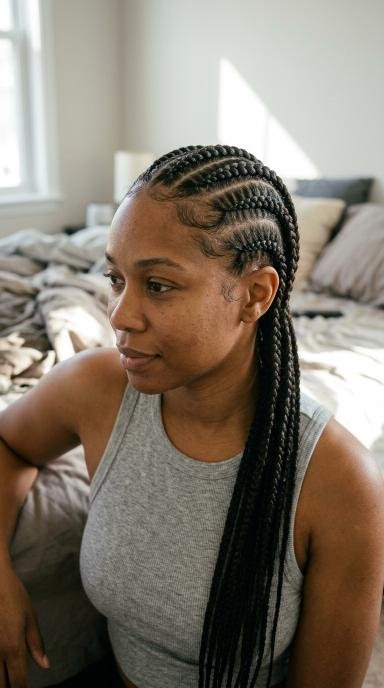
Feed-in braids are created by gradually adding small amounts of extension hair as the braid progresses. This technique can create a natural-looking beginning and a smooth transition from your own hair into the added length. It is commonly used for straight-back cornrows, ponytail styles, and more elaborate patterns.
One reason to consider feed-in braids is their flexibility. You can choose a few larger rows for a bold look or several smaller rows for a more intricate design. The result can be sleek enough for a professional setting while still feeling stylish for evenings and weekends. Be mindful of how much extension hair is added, because excessive weight and tight braiding can stress your natural hair. A skilled stylist should prioritize comfortable tension and avoid repeatedly pulling the same areas.
9. Stitch Braids

Stitch braids stand out because of the clean, defined parting lines that create a stitched appearance between the rows. The technique gives cornrows a precise finish, making even a simple straight-back pattern look detailed and intentional. You can wear a few large stitch braids for a bold effect or choose smaller rows for a more intricate style.
Stitch braids are particularly appealing if you like neat hairstyles that look polished without requiring daily restyling. They can be worn in straight lines, curved designs, or combined with a ponytail for extra height and movement. Since the look depends on clear parting and controlled tension, choose a stylist who can create the pattern without pulling too firmly at the roots. Keep the scalp moisturized with lightweight products, and avoid scratching or picking at the parts.
10. Boho Knotless Braids
Boho knotless braids combine the lightweight appearance of knotless braids with loose curls or wavy pieces woven throughout the style. The result is softer and more textured than traditional braids, giving the hairstyle a relaxed, romantic finish. It works beautifully with long lengths, shoulder-grazing styles, and warm colors such as chocolate brown or caramel.
This look is a great option if you want protective braids that feel less uniform and more expressive. The loose pieces add movement around the face and throughout the lengths, making the hairstyle especially attractive when worn down. Those curly sections usually need extra care because they can tangle or become frizzy more quickly than the braided sections. Gently separate tangles with your fingers, use a suitable lightweight leave-in product, and protect the style while sleeping. Avoid pulling the loose curls forcefully when detangling.
11. Halo Braid

A halo braid wraps around the head, creating the appearance of a braided crown. It can be made with natural hair when the length and texture allow, or adapted with added hair for extra fullness. The finished style looks elegant without needing elaborate accessories, making it suitable for family gatherings, celebrations, work events, and everyday wear.
If you enjoy keeping your hair away from your face, a halo braid offers a graceful alternative to a standard ponytail or bun. It also pairs nicely with soft edges and a few loose face-framing strands, provided those details do not require excessive pulling. The braid should sit securely without pressing painfully against your scalp. If your natural hair is short or difficult to gather comfortably, ask your stylist about a version that uses minimal added hair and gentle tension.
12. Braided Bun

A braided bun gathers braids into a rounded shape at the back or top of the head. It is an easy way to transform box braids, knotless braids, or other long braided styles into a neat updo. A low bun can look understated and professional, while a high bun creates a more dramatic silhouette.
This hairstyle is especially useful on mornings when you want to look polished without spending time restyling every braid. You can secure the bun with a soft scrunchie or suitable hair-friendly pins, making sure the base is not pulled too tightly. If your braids are long or heavy, a lower bun may be more comfortable than piling everything onto the crown. Alternate your parting and updo placement when possible so the same areas do not experience constant tension.
13. Cornrow Ponytail

A cornrow ponytail combines neat scalp braids with a gathered length at the back of the head. The cornrows can run straight toward the crown or follow curved patterns that lead into the ponytail. Depending on your preference, the finished length can be braided, curly, straight, or textured.
This style works well when you want a hairstyle that keeps your hair away from your face while still creating plenty of visual impact. A high ponytail gives a bold, lifted appearance, while a low ponytail can feel more relaxed and comfortable for everyday wear. The main thing to watch is tension where the cornrows meet the ponytail, since this area can experience a lot of pulling. Choose a manageable extension length, avoid excessively tight elastic bands, and give your scalp a break if the style begins to feel uncomfortable.
14. Senegalese Twists

Senegalese twists are smooth, rope-like twists created by wrapping two sections of hair around each other, often with extension hair added for length and fullness. Their sleek finish makes them a lovely option if you prefer a more uniform look than textured twists. They can be worn short or long, with medium-sized twists offering a balance between styling flexibility and manageable upkeep.
You can wear Senegalese twists loose, gather them into a ponytail, or create a bun for a more formal appearance. Their neat texture also makes them easy to accessorize with subtle cuffs or a few decorative pieces. Choose an installation that feels light enough for your natural hair, particularly around the edges. To maintain the style, cleanse your scalp gently and apply a small amount of suitable moisturizer to your natural hair without leaving heavy buildup around the roots.
15. Passion Twists

Passion twists have a soft, textured finish that gives them a relaxed and slightly bohemian appearance. Unlike smoother rope twists, they often feature a springy texture and gentle irregularity that makes the finished hairstyle look full of movement. They are available in different lengths and sizes, so you can choose a shoulder-length version for convenience or long twists for a more dramatic style.
These twists are a good fit if you love protective hairstyles that look soft rather than sleek. Dark brown, warm auburn, and blended colors can add dimension without making the style feel too bold. Since the textured extension hair may frizz or tangle, avoid excessive rubbing and separate the twists gently when needed. A satin bonnet or pillowcase can help reduce friction at night, while gentle scalp cleansing helps keep the style comfortable.
16. Marley Twists
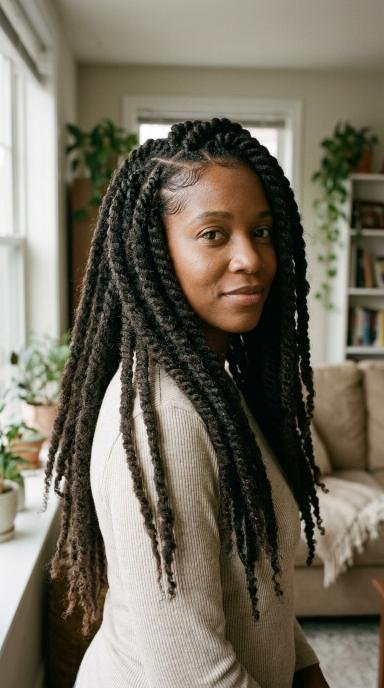
Marley twists use textured extension hair that resembles the appearance of natural Afro-textured hair. Their fuller, slightly fluffy finish creates a beautiful result for anyone who prefers a natural-looking protective style rather than a smooth, shiny twist. They can be worn in long lengths for a dramatic appearance or in shorter versions that feel practical for daily activities.
One appealing feature of Marley twists is how well they complement natural-textured outfits and everyday looks. You can wear them loose, create a chunky bun, or pull a few twists back from your face. Because the extension hair can add bulk, choose a size and length that your scalp can comfortably support. Keep your natural hair moisturized before installation, and avoid using so much product afterward that the twists become sticky or weighed down.
17. Kinky Twists

Kinky twists are a textured protective style made with two-strand twisting techniques and hair that closely resembles natural Afro-textured strands. They often appear smaller and more defined than Marley twists, although the final look depends on the extension hair and twisting method used. Their texture creates a natural finish that blends beautifully with the look of textured hair.
This style offers plenty of everyday flexibility without requiring you to manipulate your natural hair each morning. You can wear kinky twists down, pin them into an updo, or gather them into a ponytail when you want a change. The twists should be installed with enough room at the roots to avoid unnecessary tension. To maintain them, keep your scalp clean, moisturize your hair lightly, and avoid repeatedly twisting or retwisting the same sections too tightly.
18. Two-Strand Twists
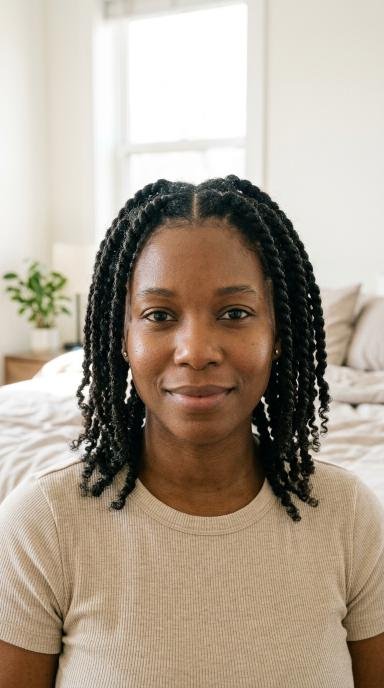
Two-strand twists are one of the most adaptable protective options for natural Black hair. They are created by dividing each section into two strands and wrapping them around each other, with the final appearance depending on the size of the sections and the texture of your hair. You can create chunky twists for a fuller look or smaller twists for a more detailed finish.
This style can be worn on its own or used as a starting point for a twist-out once you are ready to wear your hair loose again. It is especially convenient if you prefer styling your natural hair at home without relying on extensions. Apply a suitable leave-in conditioner before twisting, and allow your hair to dry thoroughly to help reduce unwanted frizz. Avoid making the roots excessively tight, and remember that even a simple style needs gentle handling when you take it down.
19. Flat Twists

Flat twists are created by twisting two sections of hair close to the scalp, producing a style that resembles cornrows but uses a twisting technique. They can run straight back, curve along the sides, or form intricate patterns that create a decorative finish. Flat twists are particularly useful when you want a protective style that works with your own hair and does not necessarily require extensions.
For everyday wear, flat twists can keep your hair organized while reducing the need for constant combing and brushing. They also offer a practical foundation for an updo or a twist-out, depending on how you choose to finish the style. Apply a light moisturizer to your hair before styling, and avoid pulling the twists too firmly around your temples. Since natural hair can shrink as it dries, make sure the twists are comfortable from the beginning rather than relying on tightness to keep them in place.
20. Faux Locs

Faux locs create the appearance of traditional locs without requiring you to commit to the long-term locking process. They are generally installed by wrapping extension hair around a braided or twisted base, producing a range of finishes from neat and smooth to textured and slightly distressed. This versatility makes faux locs appealing if you want a distinctive protective style with plenty of personality.
You can choose a shoulder-length look for easier daily handling or long faux locs for a more dramatic appearance. Dark shades create a classic finish, while brown, burgundy, and subtle highlighted tones can make the style feel more customized. Faux locs can become heavy depending on the installation method and length, so prioritize a lightweight result. Clean your scalp gently, moisturize your natural hair as appropriate, and avoid leaving the style in for so long that new growth becomes tangled or difficult to manage.
21. Butterfly Locs

Butterfly locs are a textured variation of faux locs that feature loops and a deliberately distressed finish. These details give them a soft, undone appearance rather than the smooth surface of more uniform loc styles. Their slightly messy texture is part of the appeal, making them a lovely choice if you enjoy relaxed hairstyles with plenty of visual character.
Butterfly locs look beautiful in medium and long lengths, but a shorter version can be easier to handle during work, travel, and daily errands. You can keep the color natural or choose a warm shade to complement your wardrobe. Because the wrapping can add bulk, ask your stylist to keep the installation lightweight and comfortable. Pay attention to the roots as your hair grows, and gently separate any locs that begin to catch on one another.
22. Soft Locs
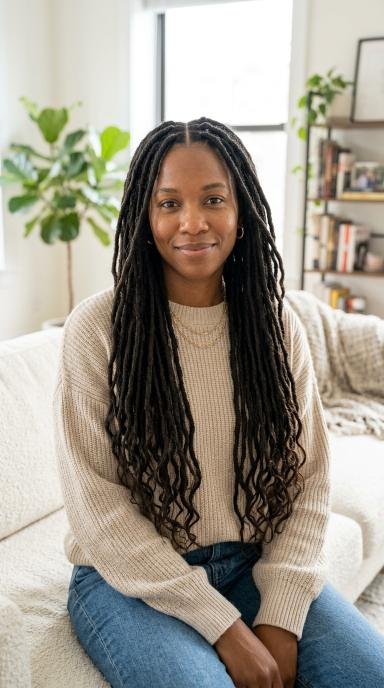
Soft locs offer a flexible loc-inspired look with a softer, more natural movement than some traditional faux loc styles. Their finish depends on the wrapping hair and installation technique, but they generally aim for a relaxed appearance that does not feel overly rigid. They can be styled in different lengths, allowing you to choose a subtle everyday look or a more noticeable protective hairstyle.
One advantage of soft locs is their versatility once installed. You can wear them loose, create a half-up style, or gather them into a loose bun when you want to change your appearance. Choose a length that feels comfortable, since long locs may become tiring if too much extension hair is used. Keep your scalp clean, avoid heavy product buildup, and have the style removed carefully so your natural hair is not pulled or tangled during takedown.
23. Bantu Knots
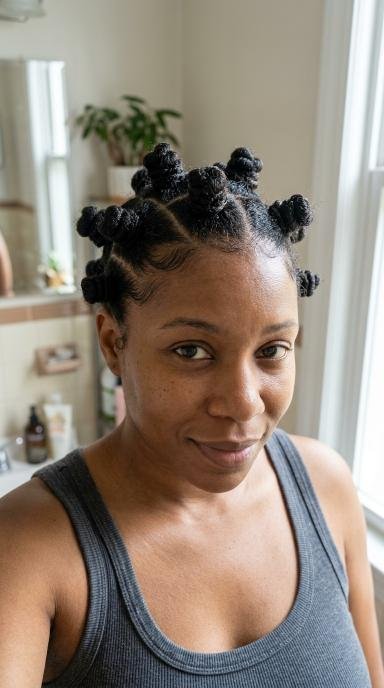
Bantu knots are created by sectioning hair and twisting or wrapping each section into a small knot secured close to the scalp. The knots create a distinctive, sculptural hairstyle that can be worn in neat rows or arranged in a more playful pattern. Depending on your preference, you can make them small and detailed or larger for a bold, eye-catching finish.
Bantu knots can be a useful option when you want a protective style without long extensions. They also offer an added benefit: after carefully taking them down, you can enjoy a defined Bantu knot-out with curls or waves shaped by the twisting process. Start with moisturized hair and avoid wrapping each knot too tightly, especially around the hairline. Keep the knots comfortable while sleeping, and take them down gently to avoid unnecessary breakage.
24. Crochet Braids

Crochet braids are installed by first creating a foundation of cornrows and then attaching extension hair with a crochet hook. The technique allows you to experiment with different textures, including curly hair, loose waves, kinky textures, and loc-inspired extensions. It can be a practical choice if you want a fuller style without individually braiding or twisting every section of your hair.
The finished look depends largely on the extension hair you choose. Crochet curls can create a voluminous, natural-looking style, while crochet locs offer a more structured appearance. Since the foundation cornrows sit close to your scalp, they should be comfortable and not overly tight. Keep the scalp clean with a gentle cleansing method, moisturize your natural hair as needed, and detangle curly extensions carefully to reduce matting and friction.
25. Protective Wig

A protective wig can be a convenient way to switch between hairstyles while keeping your natural hair tucked away underneath. You can choose a straight bob, a curly shoulder-length style, long waves, or a braided wig depending on the look you want. Wigs also make it easier to experiment with different colors and lengths without repeatedly applying heat or chemical treatments to your own hair.
The key is to prepare and care for the hair underneath. Cornrows or another gentle foundation can help keep your hair organized, but the braids should not be tight or left damp for long periods. Choose a wig cap and fit that feel comfortable, and avoid clips, combs, or adhesive methods that repeatedly pull on your edges. Take the wig off regularly to clean your scalp, moisturize your natural hair, and check for any irritation. A wig is only protective when the hair underneath receives proper care.
Frequently Asked Questions
What are the best protective hairstyles for Black women?
The best protective hairstyle depends on your hair’s condition, your preferred maintenance routine, and how much weight your strands can comfortably support. Knotless braids, two-strand twists, flat twists, crochet braids, and well-fitted wigs can all be useful options when installed and maintained gently. If your hairline is fragile or your scalp is sensitive, a lightweight style with minimal tension may be a better choice than very long, heavy braids.
How long should you keep a protective hairstyle in?
The appropriate length of time depends on the hairstyle, your hair’s growth, and how well you can maintain your scalp. Braids, twists, and loc-inspired extensions should be removed when they become uncomfortable, excessively tangled, or difficult to cleanse properly. Rather than keeping a style in for the longest possible time, pay attention to new growth, buildup, and changes in your hair’s condition. Gentle removal is just as important as careful installation.
Do protective hairstyles help hair grow?
Protective hairstyles do not directly make hair grow faster, because hair growth depends on factors such as genetics and overall health. However, a well-maintained style can reduce daily manipulation and help limit breakage, making it easier to retain the length your hair grows. Tight braids, heavy extensions, or rough takedown can have the opposite effect. Healthy hair care practices remain important regardless of which hairstyle you choose.
Can you wash your hair while wearing braids or twists?
Yes, you can usually cleanse your scalp while wearing braids or twists, although the method depends on the hairstyle and installation. Use a gentle shampoo or suitable scalp cleanser, work carefully between the parts, and rinse thoroughly to prevent buildup. Dry your scalp and roots completely rather than leaving them damp for extended periods. If your hairstyle is difficult to clean or begins to smell, itch excessively, or feel uncomfortable, consider removing it.
Which protective hairstyles are best for natural hair without extensions?
Two-strand twists, flat twists, Bantu knots, and some halo braids can work without extension hair, depending on your natural hair’s length and texture. These options can reduce the need for daily styling while allowing you to work with your own curls and coils. Start with clean, moisturized hair and avoid making the style so tight that it causes discomfort. You can also alternate between twists and twist-outs to enjoy different looks without constantly using heat.
How can you protect your edges while wearing braids?
Protecting your edges starts with choosing a style that does not pull tightly at your temples or hairline. Avoid excessively heavy extensions, tight ponytails, and repeated styling that places stress on the same areas. Keep your scalp clean, handle your edges gently, and remove any style that causes persistent pain or irritation. If you notice ongoing thinning or hair loss, consult a qualified healthcare professional or dermatologist rather than trying to cover the problem with another tight hairstyle.
Conclusion
Choosing from these Protective Hairstyles for Black Women is about finding the balance between personal style and healthy hair care. Box braids, knotless braids, cornrows, twists, faux locs, crochet styles, and protective wigs all offer different ways to keep your hair organized while reducing daily manipulation. Some are ideal for a polished workweek look, while others bring texture, volume, or a little extra personality to your everyday routine.
Before booking your next appointment, consider your hair’s current condition, how much maintenance you can manage, and whether the finished style will feel comfortable for several weeks. Ask your stylist to prioritize gentle tension, choose a manageable length, and make sure you can keep your scalp clean. With the right style and a consistent care routine, you can enjoy a beautiful look while giving your natural hair the attention it deserves.