Cold weather can make styling short hair feel a little tricky. Hats flatten your roots, scarves create friction, and shorter layers sometimes slip out just when you want your hairstyle to stay in place. That is where Winter Hair Braid Styles for Short Hair come in, offering practical ways to keep your hair looking polished while adding texture, charm, and a little seasonal personality.
You do not need long hair to enjoy beautiful braids. A chin-length bob, a short layered cut, a pixie with longer pieces on top, or a curly crop can all work with the right braiding technique. Some styles use tiny accent plaits, while others create the appearance of a crown, updo, or fuller braided shape.
The best part is that many of these looks work for everyday winter plans, whether you are heading to the office, meeting friends for coffee, attending a holiday gathering, or spending a relaxed weekend at home. Ahead, you will find 22 ideas to suit different hair textures, lengths, and skill levels, along with helpful tips for making each style work on shorter strands.
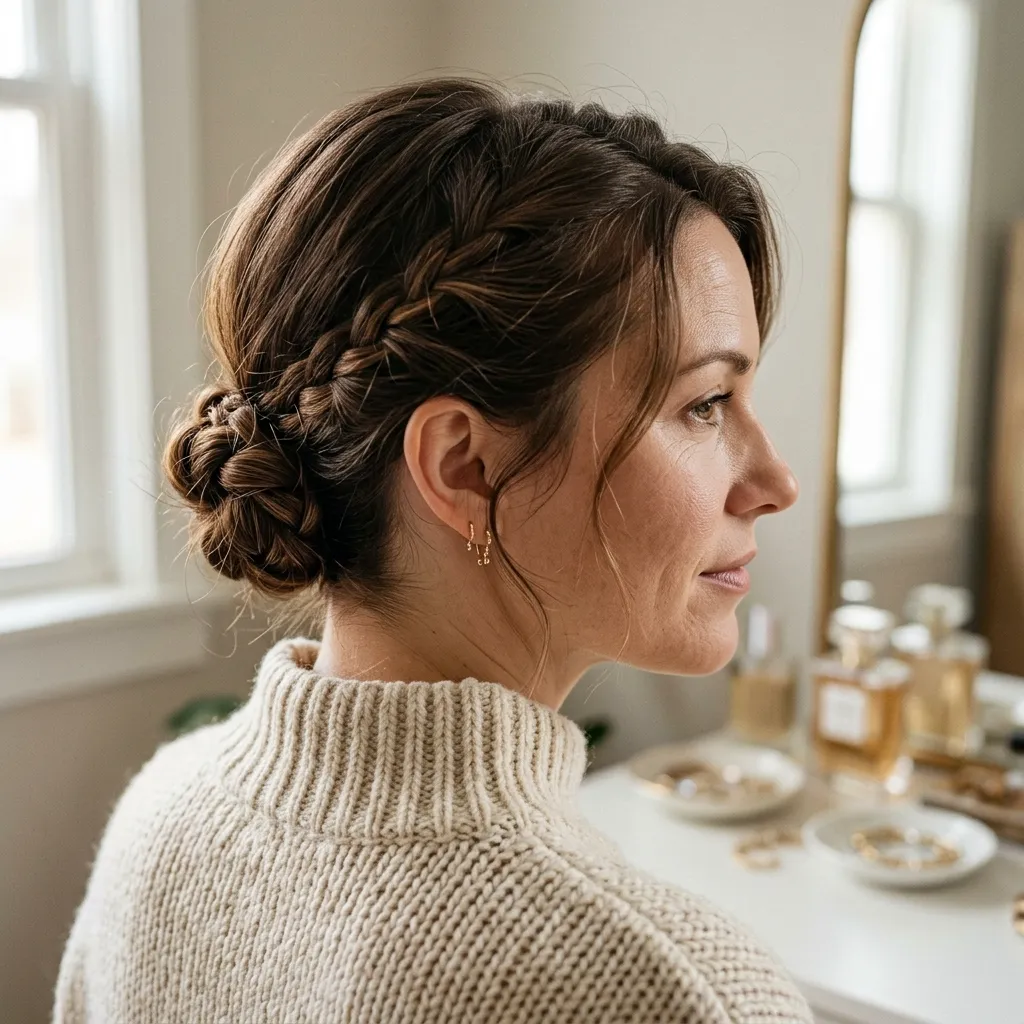
1. Loose Crown Braid

A loose crown braid gives short hair a soft, romantic finish without requiring enough length for a full traditional braid. The braid follows the curve of your head, creating a halo-like detail that looks especially lovely with a chin-length bob or a short cut with longer front sections. Leaving a few wispy pieces around your temples keeps the style relaxed rather than overly formal.
To create the look, start braiding near one temple and gradually incorporate small sections as you move along your hairline. Secure the braid with a discreet pin behind your ear, then repeat on the other side if your length allows the two sections to meet. A lightweight styling cream can help control flyaways, while a few decorative pins add a subtle winter touch.
2. Halo Braid
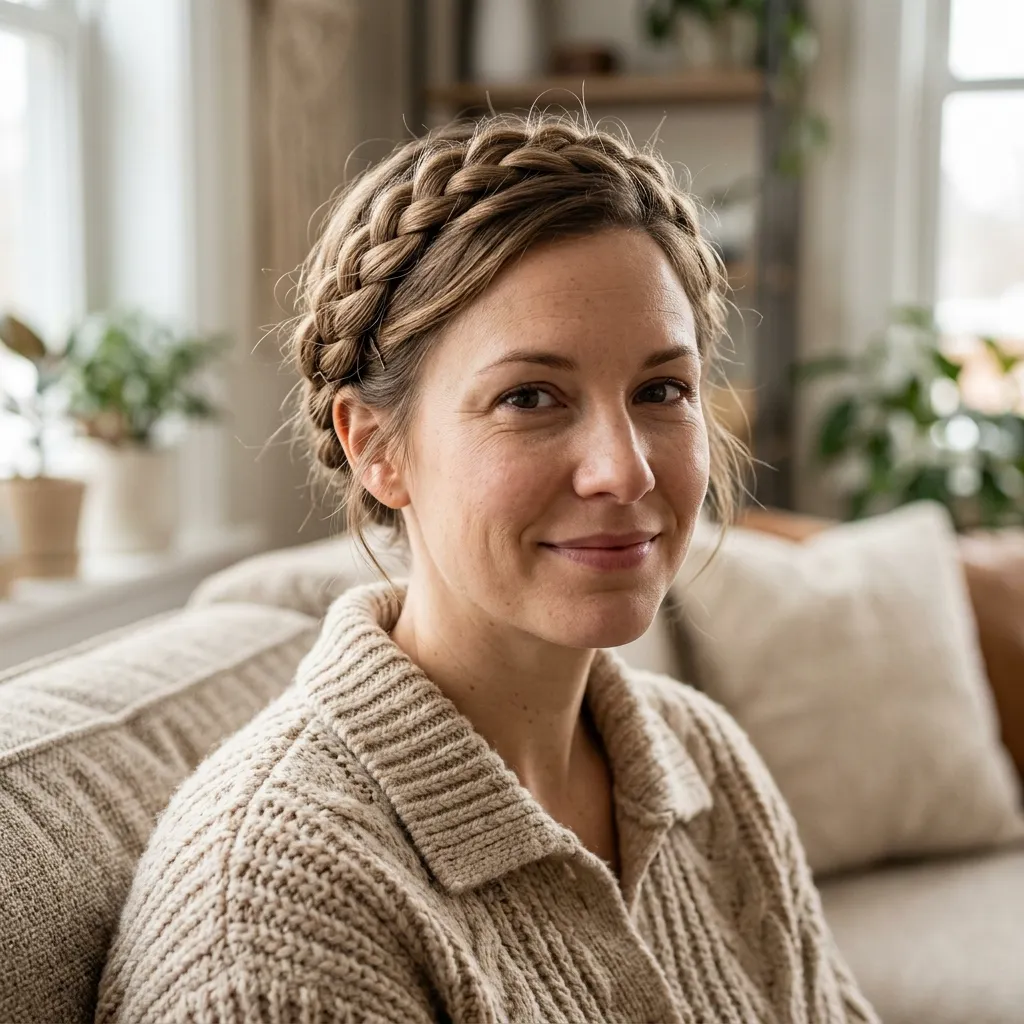
The halo braid is a beautiful choice when you want your short hairstyle to feel dressed up for a winter celebration. Unlike a loose crown braid, which can look deliberately undone, a halo braid usually has a more defined shape that circles the head. It works best on short hair with enough length around the sides and back, although a partial version can create a similar effect on shorter cuts.
For a practical approach, braid two sections separately and pin them around the upper sides of your head rather than forcing one continuous braid. This technique is particularly helpful when your hair barely reaches your ears or nape. Finish with a flexible-hold hairspray so the braid stays neat without making your hair feel stiff, especially if you plan to wear a coat or scarf.
3. Milkmaid Braids
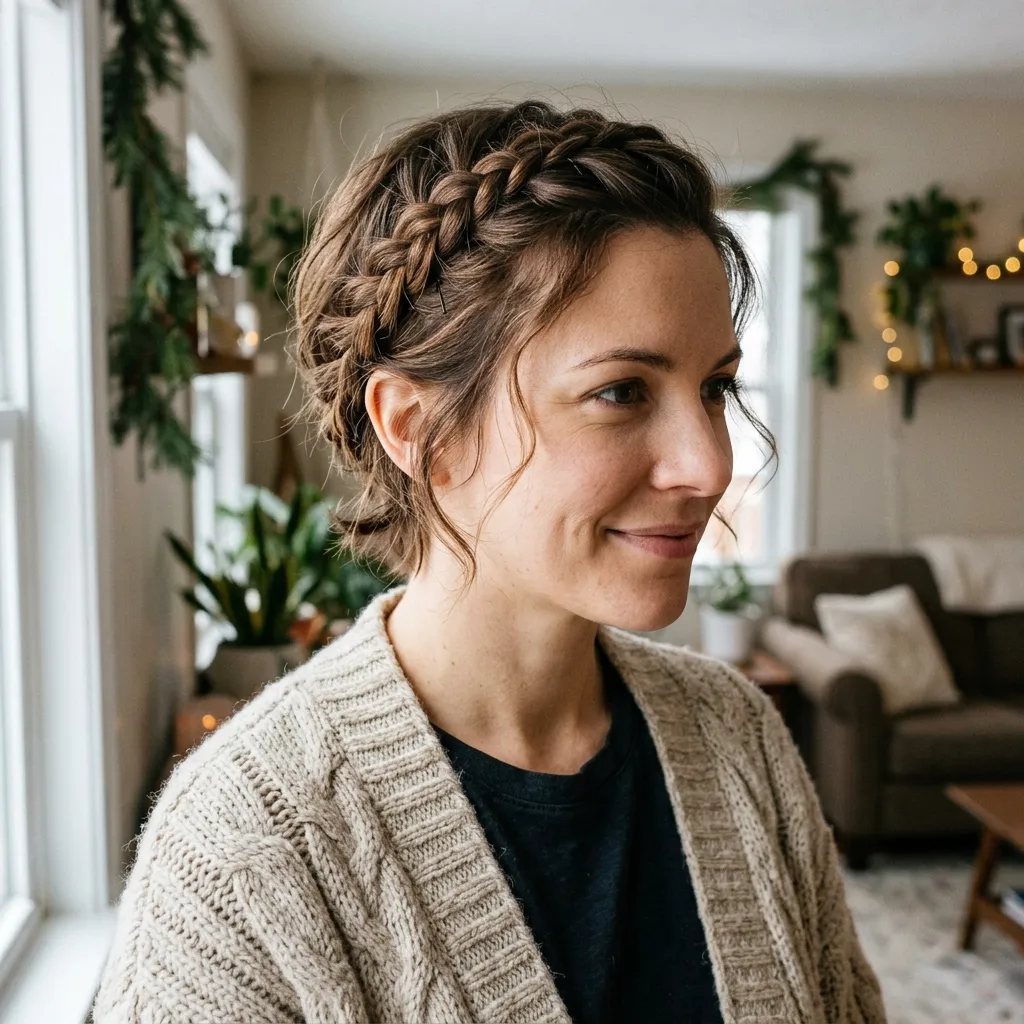
Milkmaid braids bring a cozy, vintage-inspired feel to winter outfits. They are traditionally formed from two braids pinned across the top of the head, but short-haired women can adapt the look using smaller braids and extra bobby pins. The result feels sweet and feminine, pairing nicely with chunky sweaters, wool coats, and simple knit dresses.
If your hair is too short to wrap full braids across your head, create two small Dutch or French braids along the sides and pin their ends toward the back. You can also use discreet hair extensions if you want a fuller milkmaid effect for a special occasion. Keep the tension comfortable, since pulling short sections too tightly may cause discomfort and make the style less wearable throughout the day.
4. Waterfall Braid
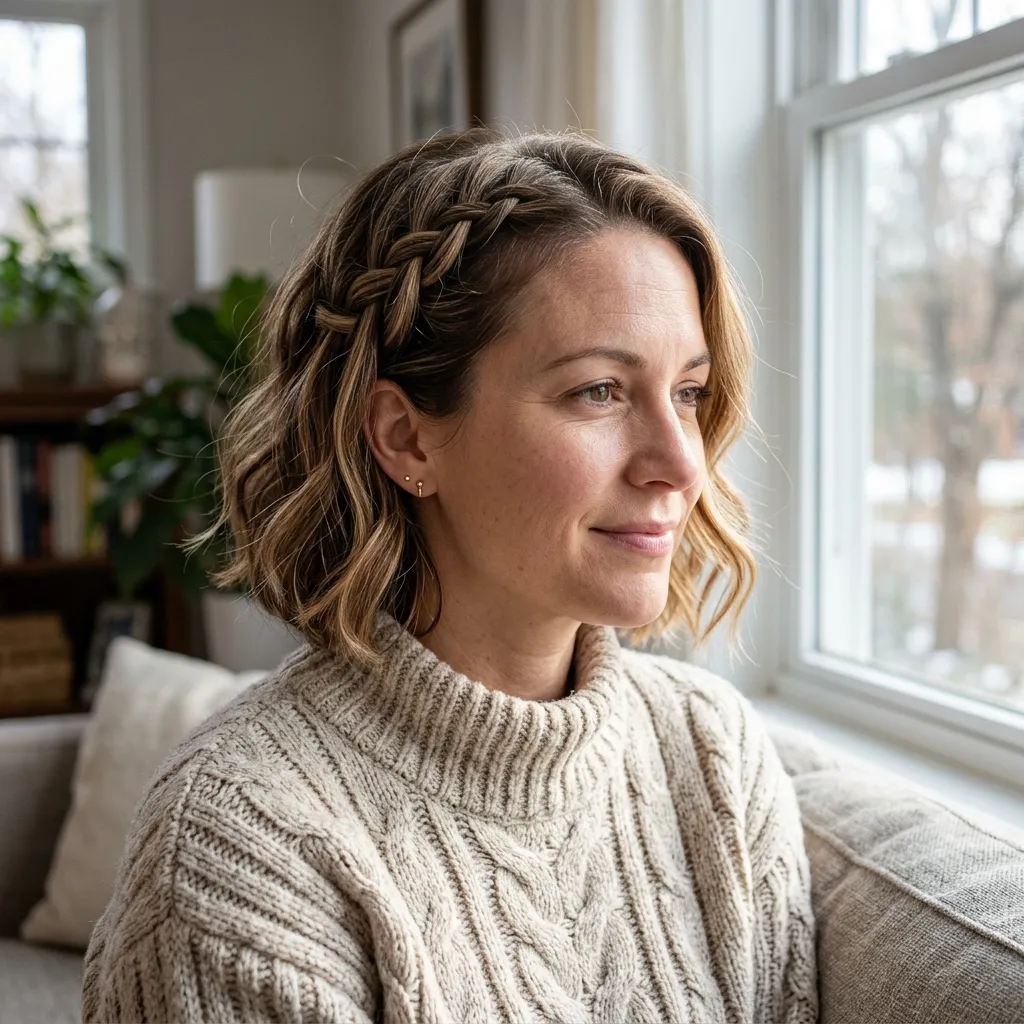
A waterfall braid is ideal when you want a braid that shows off your haircut instead of hiding it. The technique allows some strands to fall freely through the braid, creating a cascading effect that looks especially pretty on a bob with soft waves. It can also add interest to straight hair without requiring you to put every section up.
Begin near the front hairline and cross sections as you would for a French braid, letting one strand drop as you pick up a new piece. Because short layers can escape more easily, work with small sections and secure the finished braid behind your ear. For winter, pair it with a smooth blowout or soft bends created with a heat protectant and a styling tool used at a suitable temperature.
5. Classic French Braid
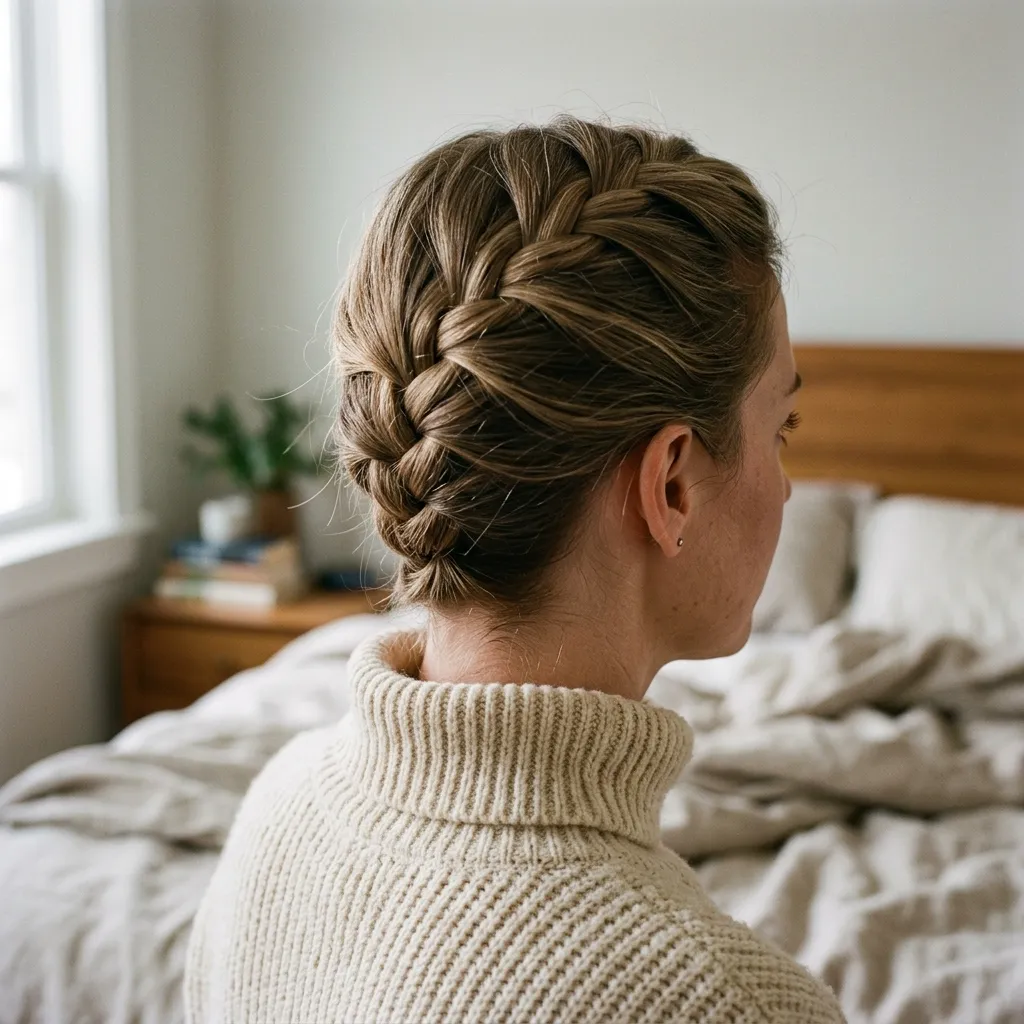
The classic French braid is a reliable option for short hair because it keeps strands close to the head and works with many everyday outfits. You can create one braid down the center, a small braid along one side, or a partial French braid that ends near the crown. The key is to adapt the size and placement to your haircut rather than expecting the braid to reach the ends of your hair.
Start with slightly textured hair if your strands are slippery, using a small amount of styling cream to improve grip. Add hair gradually and keep each section controlled, but avoid pulling so tightly that your scalp feels sore. If your bob is too short to secure a full braid, finish with a small elastic and pin the tail underneath nearby hair for a tidier appearance.
6. Dutch Braid
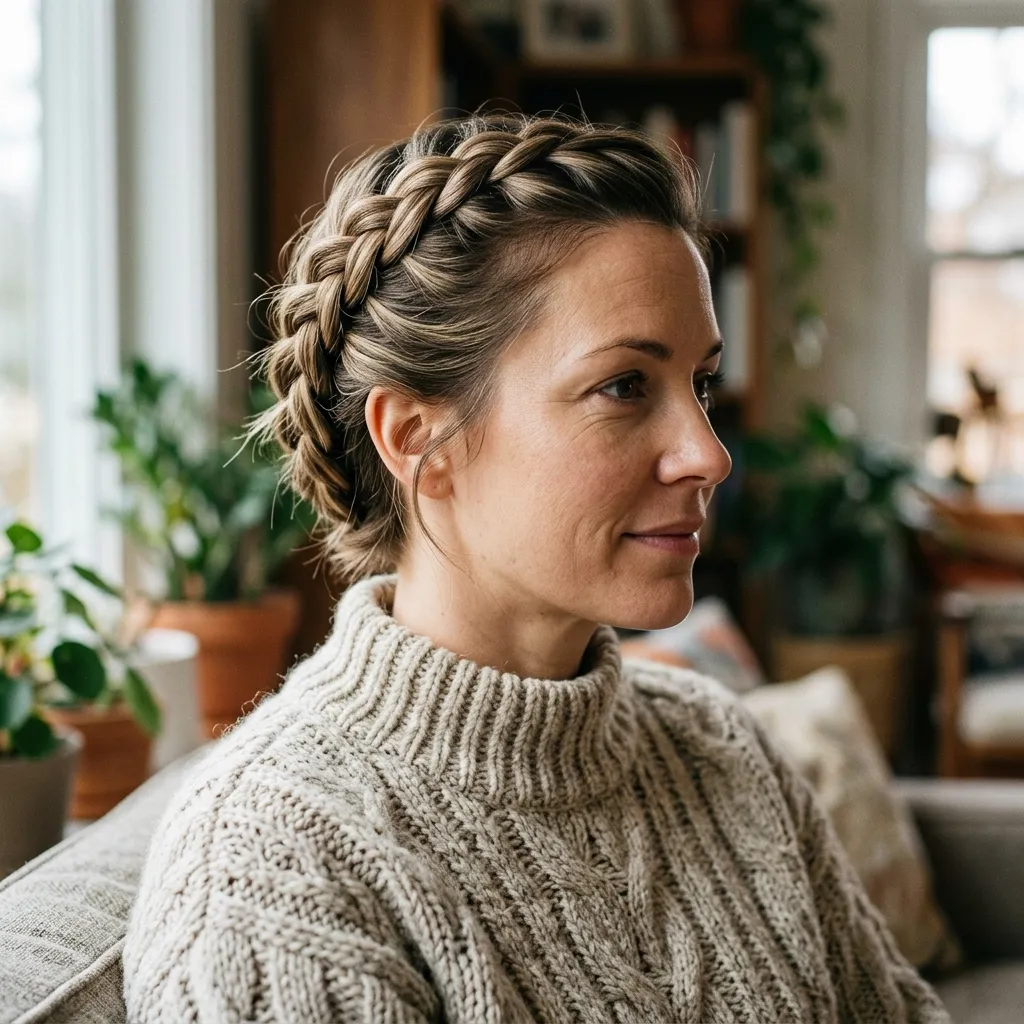
A Dutch braid creates a raised, dimensional pattern that stands out more than a traditional French braid. It is sometimes called an inside-out braid because the sections cross underneath one another rather than over the middle. That lifted shape can make short hair look more detailed, especially when the braid sits along one side of the head.
For a winter-friendly version, create a single Dutch braid from your hairline toward the crown and secure it with a small elastic or pin. The style works well with a pixie that has a longer top, a short bob, or an asymmetrical haircut with enough length to grip. If you want a softer finish, gently loosen the braid edges with your fingertips instead of tugging hard on the sections.
7. Double Dutch Braids
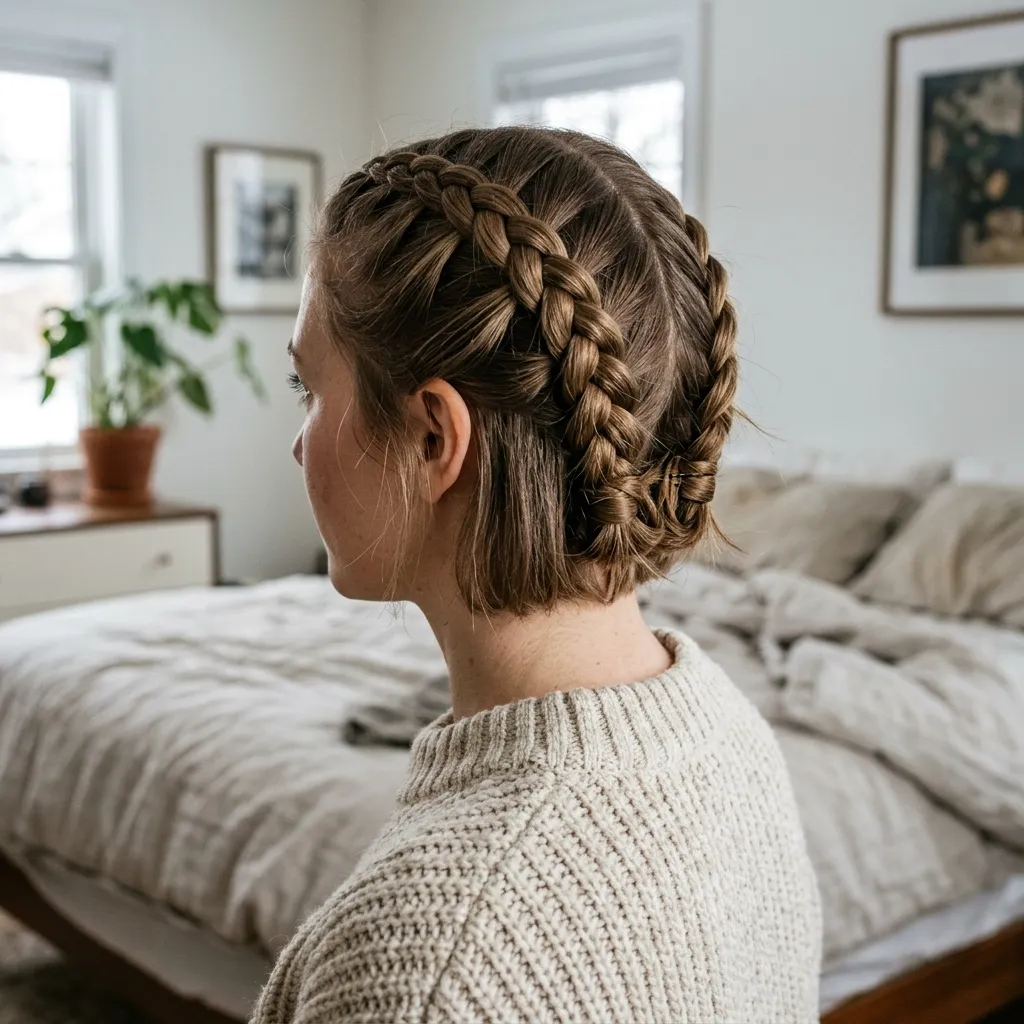
Double Dutch braids give short hair a sporty, youthful look that is practical for busy days. They can keep front sections away from your face while leaving the rest of your bob loose, or they can continue as far down the sides as your length allows. This style is especially useful when you want your hair secured before putting on a beanie or heading out for a winter walk.
Create a center part and braid each side separately, adding small sections as you move backward. If the hair at your nape is too short, stop the braids at the crown and secure them with mini elastics or pins. A little dry shampoo at the roots can improve grip on freshly washed hair, but avoid applying so much that the sections become powdery or difficult to handle.
8. Side Fishtail Braid

A side fishtail braid adds a delicate, woven detail to short hair and looks particularly attractive on a bob with longer front pieces. Although a full fishtail usually needs some length, a small version can sit near one temple or travel diagonally toward the back of your head. Its intricate pattern makes even a simple hairstyle feel more intentional.
To create it, divide a small section into two parts and repeatedly cross a thin piece from the outside of one section into the opposite section. Keep the pieces small for a clear fishtail pattern, then secure the end with a tiny elastic. If your hair is very short, pin the braid behind your ear and let the remaining hair fall naturally rather than trying to force it into a longer shape.
9. Angled Braid

An angled braid is a great way to add movement to a short haircut without committing to a complicated updo. Instead of following a straight line from the hairline backward, the braid travels diagonally across the side of your head. This placement can complement asymmetrical bobs, side parts, and short cuts with longer fringe.
Start near one temple and braid toward the opposite side of the crown, picking up small sections as needed. The diagonal line creates visual interest and can help keep longer bangs from falling across your eyes. For a polished winter look, smooth the surrounding hair with a small amount of styling balm and tuck the braid’s end beneath the hair at the back of your head.
10. Dragon Braid
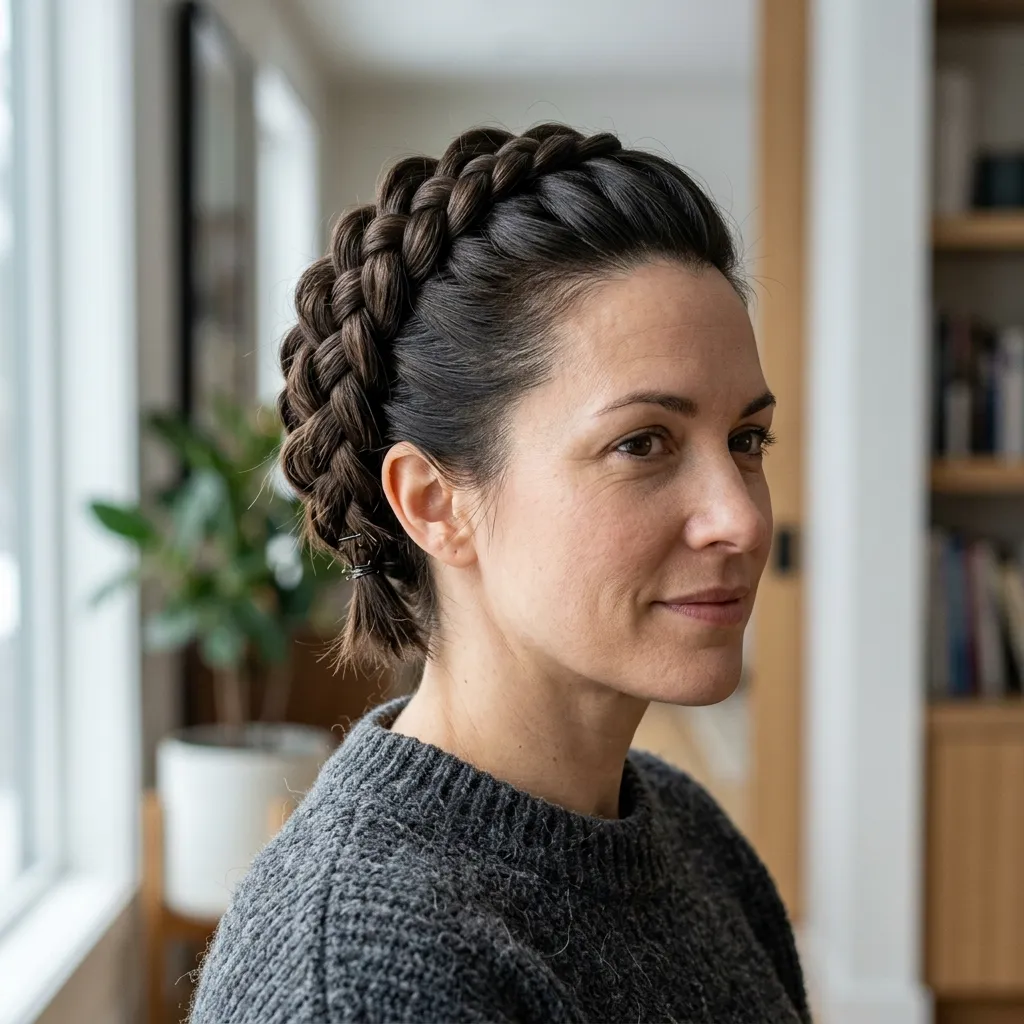
The dragon braid is a bold, raised style made from connected sections that create a segmented, almost scale-like appearance. On short hair, a simplified version can be created along the top of the head, where the hair is often long enough to work with. It is a fun choice if you prefer an edgy hairstyle that feels different from ordinary side braids.
Begin with a small section at the front and build the braid backward, incorporating new pieces while keeping the shape lifted. Short layers may make a full-length dragon braid difficult, so concentrate on the crown and secure the end with a pin or elastic. The style looks especially striking with a textured pixie or an undercut, and a touch of flexible-hold product can help the sections remain defined.
11. Face-Framing Braid

A face-framing braid is one of the easiest ways to try Winter Hair Braid Styles for Short Hair without changing your whole look. It involves braiding a small section near the hairline while leaving the rest of your hair loose. This makes it a good choice for women with short bobs, side-swept bangs, or layered cuts that need a little extra styling.
Take a narrow section beside your part and create a simple three-strand braid, then secure it with a small elastic or pin it behind your ear. You can make one braid on each side for symmetry or keep the detail on one side for a more relaxed finish. It also works well with naturally wavy or curly hair because the contrast between the braid and your natural texture creates dimension.
12. Braided Headband

A braided headband gives the appearance of a decorative hair accessory using your own hair. It is especially useful during winter because it can keep fringe and shorter front pieces away from your face without requiring a full updo. The style suits straight, wavy, and curly hair, although the technique may need adjusting depending on your texture and length.
Create a braid from a section near one ear and guide it across the top of your head, securing it near the opposite ear if you have enough length. If your hair is too short for a continuous braid, make two smaller braids and pin them separately to suggest a headband. Leave the rest of your hair natural, or add gentle waves for a soft, cozy finish that works with everyday winter clothing.
13. Peekaboo Hidden Braid

A peekaboo hidden braid is perfect if you like small details that are visible only when your hair moves. The braid sits underneath the top layer of hair, usually near the side or behind the ear. This makes it an understated choice for school, work, casual outings, or occasions when you want something different without wearing a very noticeable braid.
Separate a thin section from the lower layer of your hair and braid it close to the scalp or into a simple three-strand plait. Secure the end, then let the surrounding hair fall over it so only part of the braid shows. You can keep the braid natural or add a tiny accent elastic for a playful finish, making sure the accessory does not snag on scarves or winter clothing.
14. Braided Pin-Backs

Braided pin-backs combine the neatness of a braid with the easy feel of wearing your hair down. They are particularly flattering on short hair because you can use two small braids to secure the front sections while showing off the shape of your haircut. The finished style looks simple enough for everyday wear but can also work for a dinner or holiday gathering.
Create a small braid on each side of your part, then bring the ends toward the back of your head and secure them with bobby pins. Cross the pins slightly for a firmer hold, placing them underneath the hair whenever possible. If your hair has layers, use a little styling cream before braiding so the shorter pieces stay in place instead of poking out throughout the day.
15. Braided Half-Up
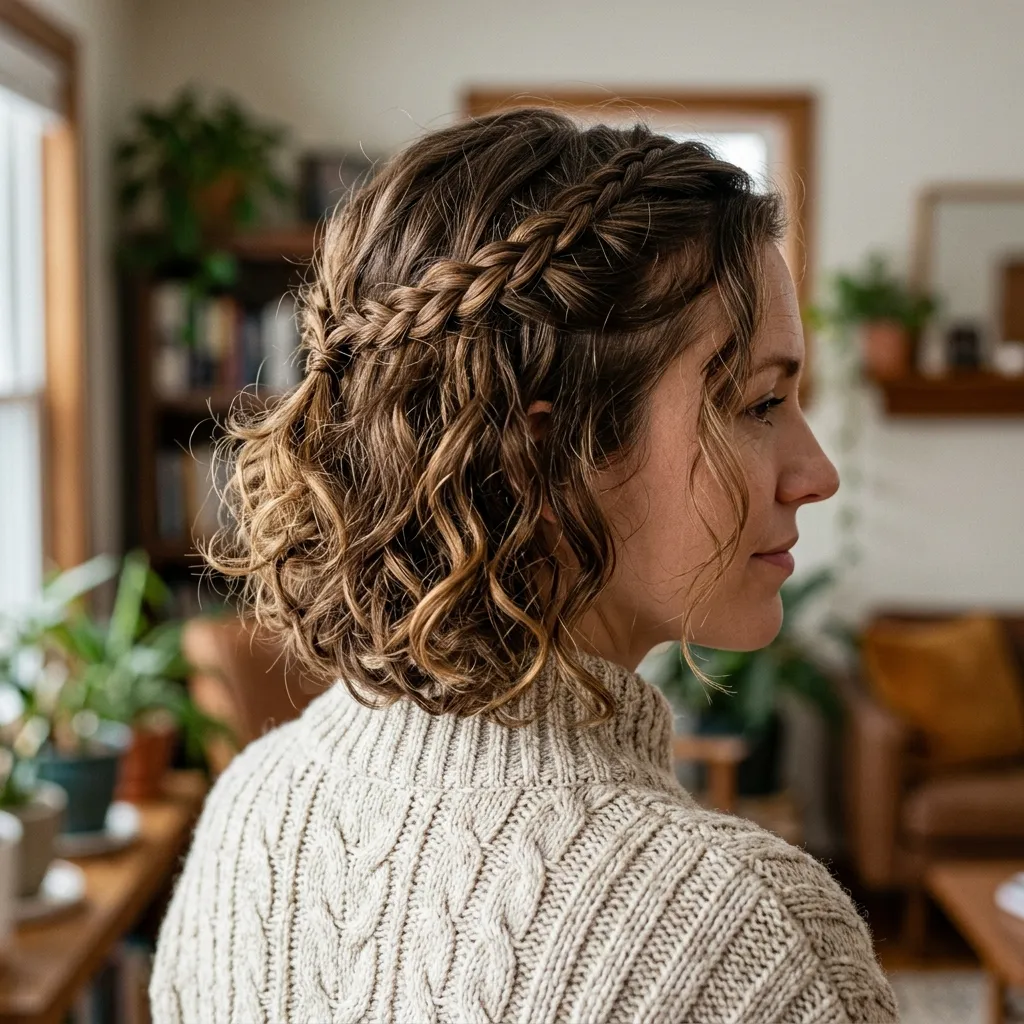
A braided half-up hairstyle is a flexible option for short hair because it keeps some strands away from your face while allowing the rest of your cut to remain visible. You can use one braid along the crown or create two small braids that meet at the back. This style is particularly pretty on a short bob with waves, curls, or subtle layers.
Begin by separating the upper section of your hair and making a small French or Dutch braid on each side. Bring the braids together at the back and secure them with a mini elastic, decorative clip, or discreet pins. The remaining hair can be worn straight or textured, depending on your preference, and a soft ribbon or small winter-themed clip can make the hairstyle feel festive without overwhelming its proportions.
16. Braided Low Bun
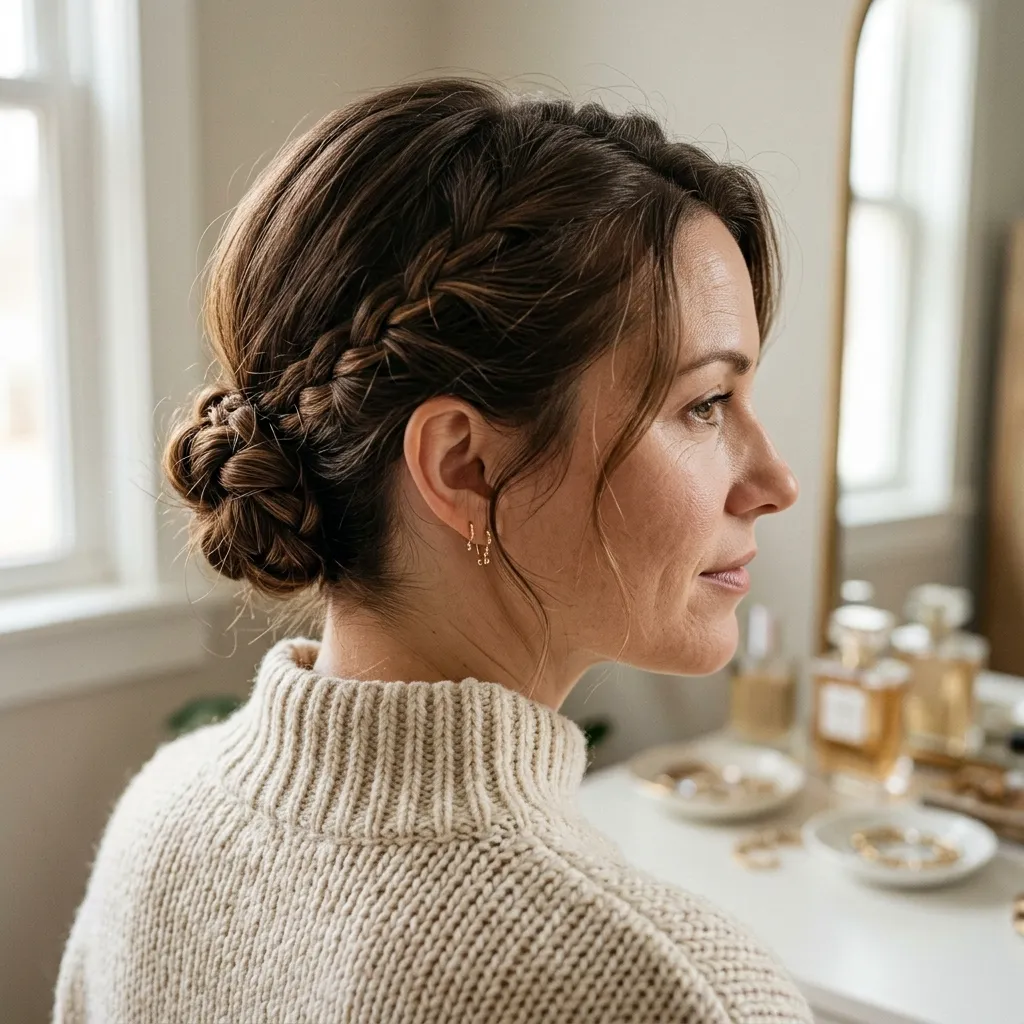
A braided low bun can be adapted for short hair by combining small braids with pinned sections at the nape. You may not have enough length for a large, traditional bun, but several small twists and braids can create the impression of a compact updo. This is a lovely choice for winter weddings, office parties, or dinners when you want a more polished hairstyle.
Start by making one or two small braids along the sides, then gather the remaining hair at the nape and pin it into a low, tucked shape. If the back is too short to gather, twist small sections and pin them individually to create a bun-like silhouette. Finish with a few secure bobby pins and flexible hairspray, checking that the style feels comfortable when you turn your head or pull on a coat.
17. Accessorized Braid
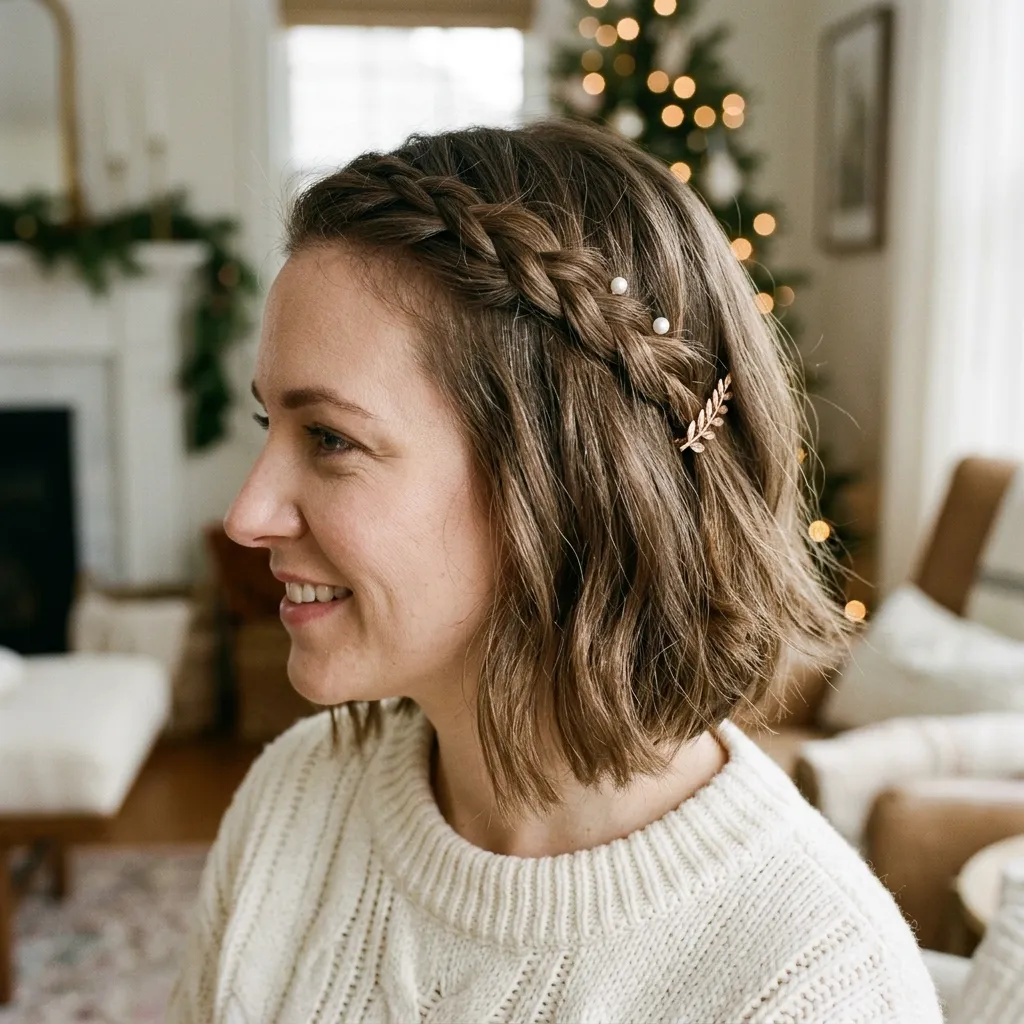
Accessories can transform a basic braid into a seasonal hairstyle without requiring extra length. On short hair, small velvet ribbons, pearl pins, metallic clips, and subtle decorative elastics can add interest while keeping the braid itself simple. Choose one or two details rather than covering every section, so the hairstyle remains balanced and comfortable.
Create a French braid, side braid, or small accent plait that suits your haircut, then add an accessory near the end or where the braid is pinned. For a winter gathering, a velvet bow can bring a soft seasonal feel, while a minimalist metal clip works well for everyday outfits. Make sure the accessory is lightweight and securely attached, especially if you will be wearing a scarf or a hat over your hairstyle.
18. Braided Faux-Hawk
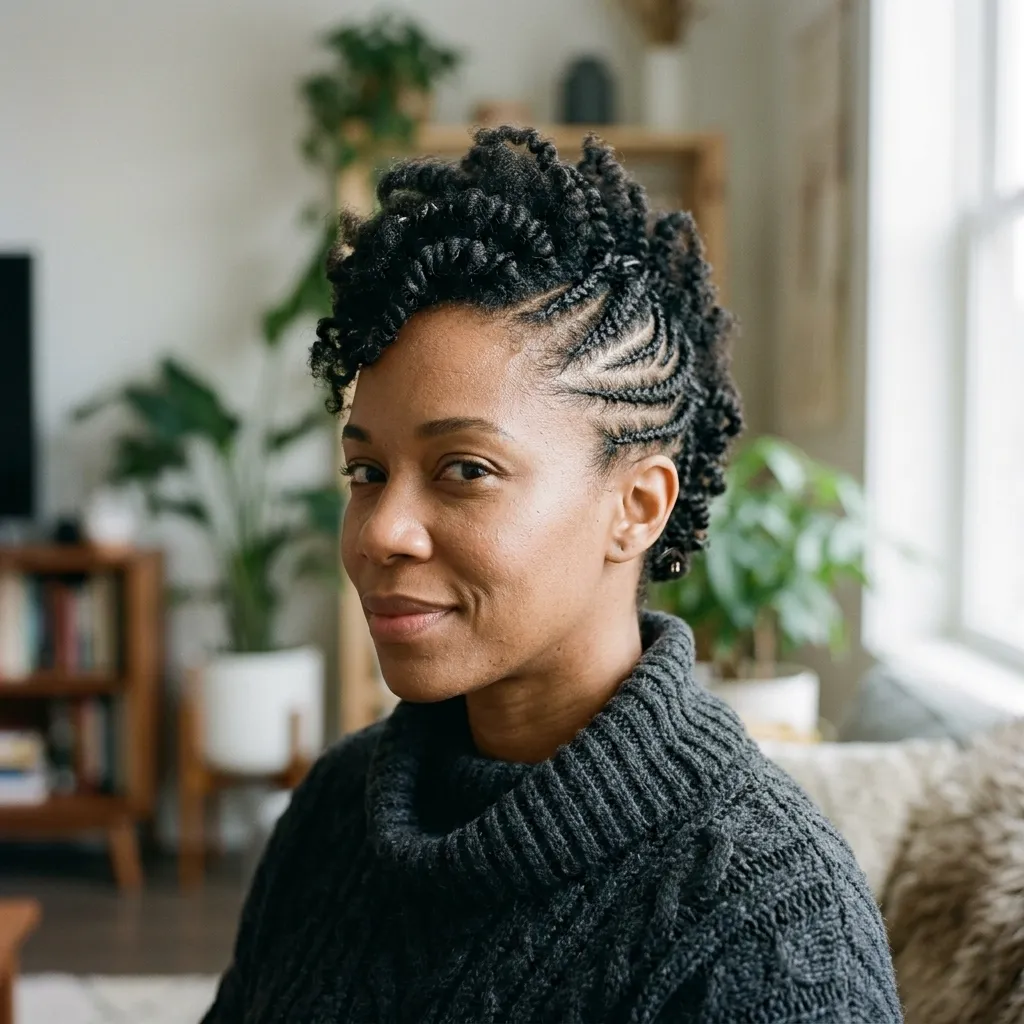
A braided faux-hawk gives short hair a little attitude while keeping the sides neat and the top full of texture. It works especially well on pixie cuts with longer hair through the center or on short styles that can be braided along the crown. The raised middle section creates the impression of a mohawk without requiring a dramatic haircut.
Create one or more Dutch braids along the center of your head, allowing the sides to remain smooth or naturally textured. If your hair is too short for a continuous braid, use small twists and pins to build a similar raised shape. A lightweight styling product can help define the top, while the sides can be smoothed with a little gel if you prefer a sharper finish.
19. Cornrow Side Accents
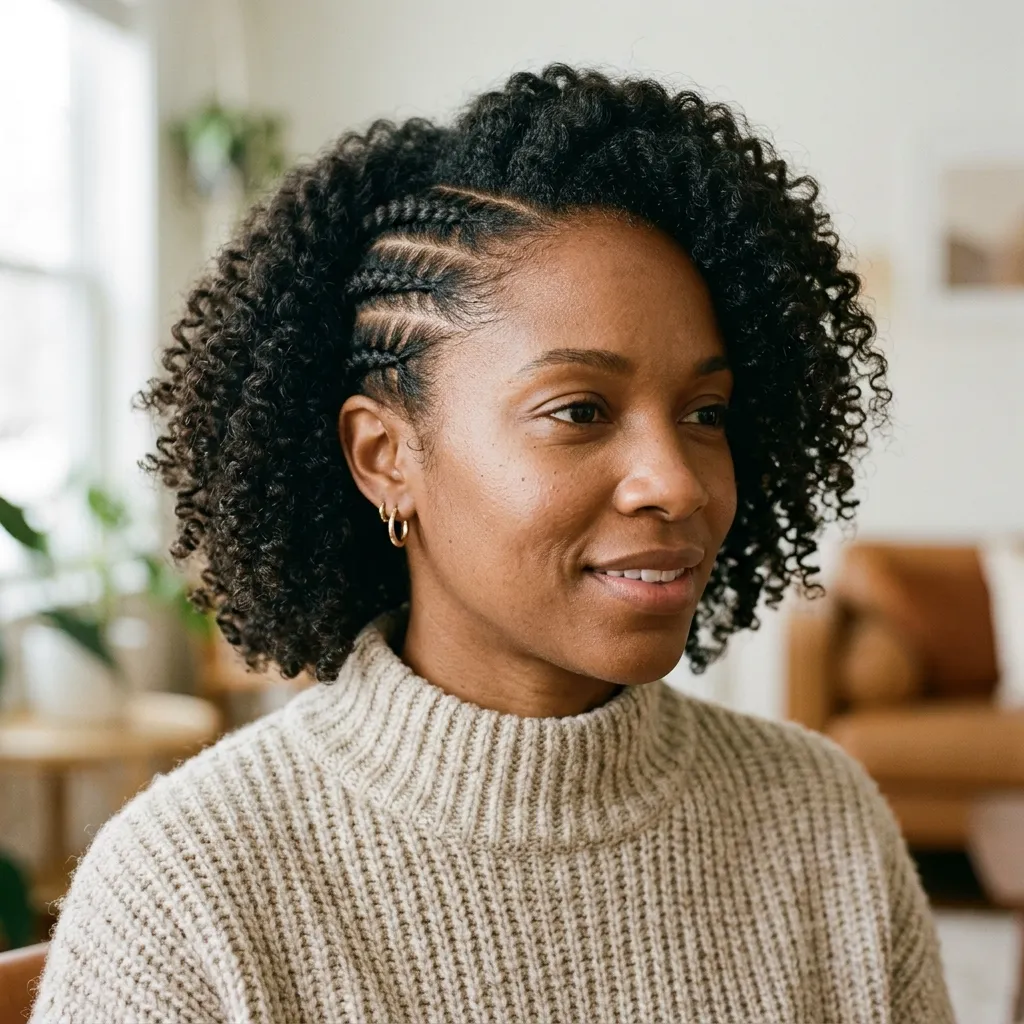
Cornrow side accents offer a sleek way to add braided detail to short hair, especially when you want one side to look more structured than the other. Small cornrows can sit above the ear or extend from the hairline toward the back, leaving the rest of the haircut loose. They work with a range of short styles and can be adapted for different natural hair textures.
For this look, clean parts and even tension are important, so take your time when sectioning the hair. If you are new to cornrowing, start with one or two simple side rows rather than attempting a complex pattern. Keep the braids comfortable and avoid excessive tension around the hairline, particularly if you plan to wear the style for several days.
20. Mini Box Braids
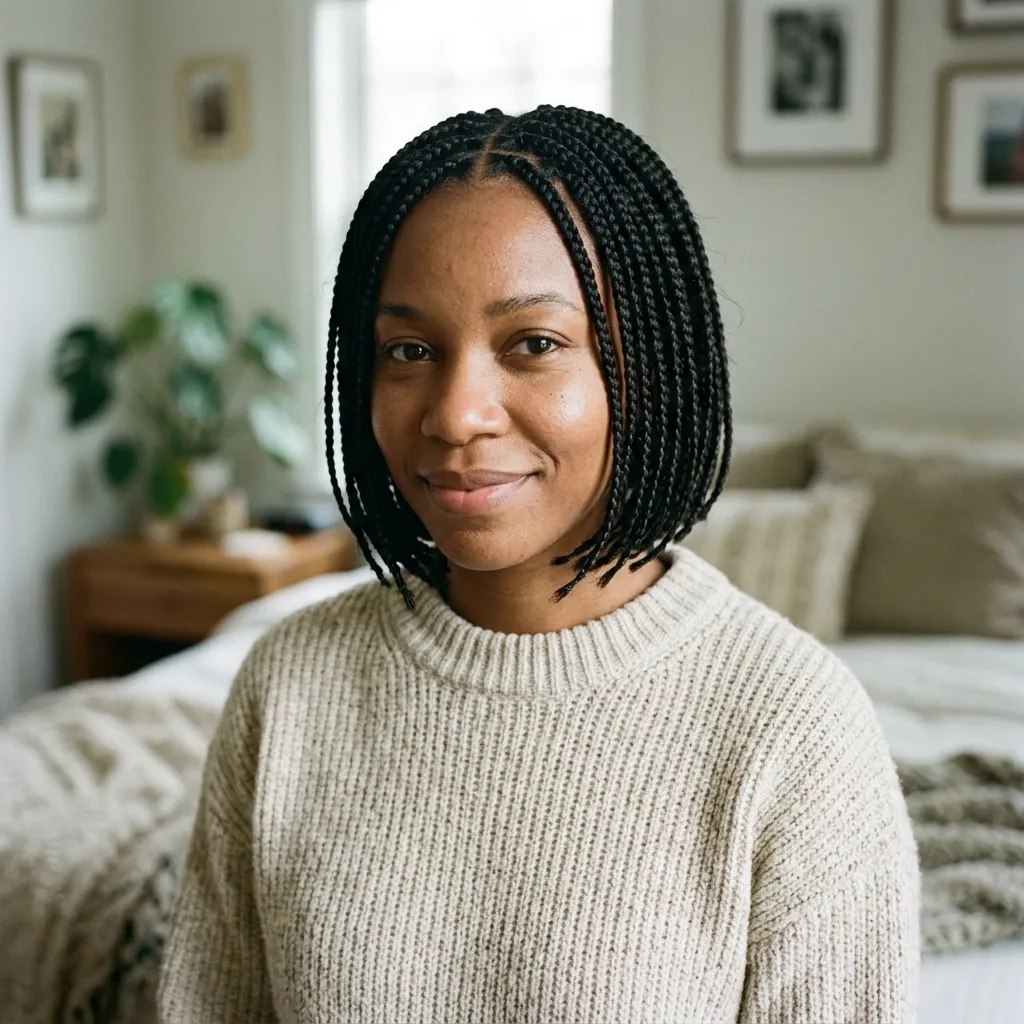
Mini box braids are a versatile option for short natural hair when you want a protective style with plenty of movement. The hair is divided into small sections and braided individually, creating a look that can suit a short afro, tapered cut, or chin-length style with sufficient length. Depending on your haircut and texture, you may be able to wear the braids freely, tuck them behind your ears, or pin them into a small updo.
Sectioning makes a big difference in the final result, so work with clean, manageable parts and avoid making the braids too tight. You can keep them simple or add a few lightweight beads near the ends if your hair length allows. Protect the style at night with a satin or silk bonnet, and moisturize your hair and scalp appropriately to help reduce dryness during colder weather.
21. Braided Bob
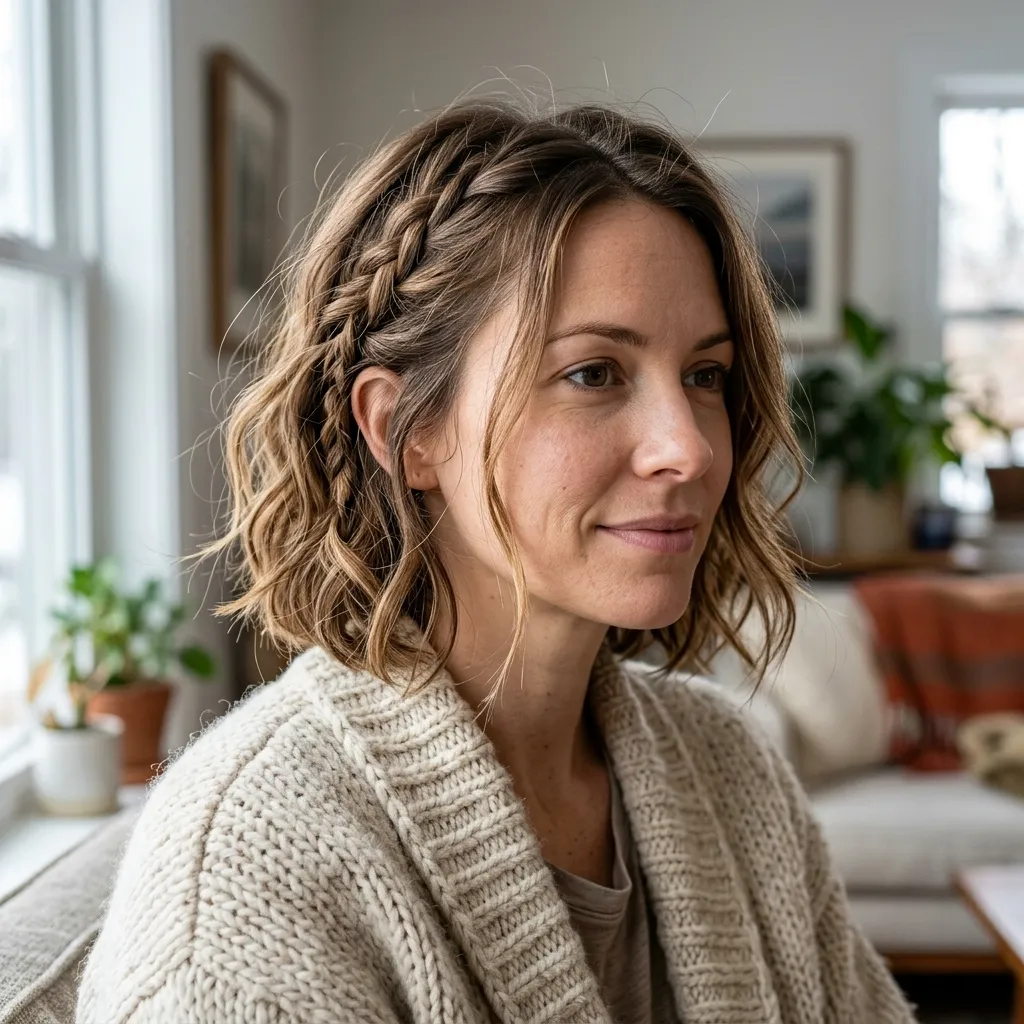
A braided bob is a stylish way to make a short haircut feel more detailed without hiding its shape. You can create a single braid across the front, add two small side braids, or incorporate several accent plaits throughout the bob. This approach is ideal when you want to keep your hair down but still enjoy the texture and interest of braiding.
For a quick everyday version, braid a small section on one side and tuck it behind your ear while leaving the rest of your bob loose. If your hair is naturally wavy, the braid will stand out against the texture, while straight hair creates a cleaner contrast. A little smoothing cream can help manage winter flyaways, and a lightweight clip can hold the braid in place without adding too much bulk.
22. Bubble Braid

A bubble braid is a playful option when you want a braided look without using a traditional braiding technique. Instead of weaving three strands together, you secure sections of hair with small elastics and gently pull each section outward to create rounded bubbles. On short hair, a half-up bubble braid or a small side version is usually easier to manage than a long ponytail.
Gather a small section near the crown or side of your head and place several mini elastics down its length, spacing them according to how much hair you have. Gently loosen each section to create the bubble effect, being careful not to pull so hard that the elastics slip out. Choose snag-free elastics and remove them slowly at the end of the day to reduce breakage, especially when winter air has left your hair feeling dry.
Frequently Asked Questions
Can you braid very short hair?
Yes, you can braid very short hair, but the best technique depends on your haircut and the length of individual sections. Pixie cuts often work best with tiny French braids, side accents, or braided pin-backs, while chin-length bobs can support more elaborate styles. If your hair is too short to hold a traditional braid, try small twists, mini plaits, or pins that create a braided appearance.
How do I keep braids from slipping out of short hair?
Short layers can slip out because they do not have as much length to stay woven into a braid. Start with manageable sections, add a small amount of styling cream for grip, and use discreet bobby pins to secure loose pieces. Avoid applying too much product, since heavy buildup can make the hair slippery or difficult to separate.
Which winter braids work best with a beanie?
Small French braids, double Dutch braids, face-framing braids, and low-profile side braids are usually comfortable options under a beanie. Flat styles tend to work better than large buns or raised braids because they create less bulk beneath the hat. Choose a beanie that fits without pulling on your hair, and smooth your hair gently after taking it off rather than brushing aggressively.
How can I protect braided short hair during winter?
Cold air, indoor heating, and friction from hats or scarves can leave hair feeling dry or create extra tangles. Use a conditioner suited to your hair type, consider a satin or silk-lined hat, and avoid making braids uncomfortably tight. At night, a satin pillowcase or bonnet can help reduce friction, particularly if you have curls, coils, or a protective braided style.
Are braided hairstyles suitable for short curly or natural hair?
Absolutely. Short curly and natural hair can look beautiful in cornrow accents, mini box braids, braided crowns, and small pin-back styles. Work with your natural texture rather than forcing it into a shape that feels uncomfortable, and use products that provide slip when detangling or sectioning. Protective styles should feel secure but never painful, and your scalp should remain clean and comfortable.
What is the easiest braid for beginners with short hair?
A simple three-strand face-framing braid is one of the easiest places to start because you only need a small section of hair and a tiny elastic. Braided pin-backs are another beginner-friendly choice, since you can make two small braids and secure them behind your ears. Once you feel comfortable controlling short sections, you can try French braids, Dutch braids, or a small waterfall braid.
Conclusion
The best Winter Hair Braid Styles for Short Hair are the ones that suit your haircut, work with your natural texture, and feel comfortable throughout the day. From a simple face-framing braid to a romantic crown, a raised Dutch braid, or playful mini box braids, short hair gives you more styling options than you might expect. You do not need long strands or complicated techniques to create a look that feels fresh and put together.
Start with one small braid that keeps your hair away from your face, then experiment with different placements, accessories, and textures as you become more confident. During colder months, remember to protect your hair from friction, keep braids comfortably loose, and choose lightweight accessories that will not snag on hats or scarves. With a little practice, you can find a few winter braid styles that make getting ready easier while keeping your short haircut looking stylish all season.