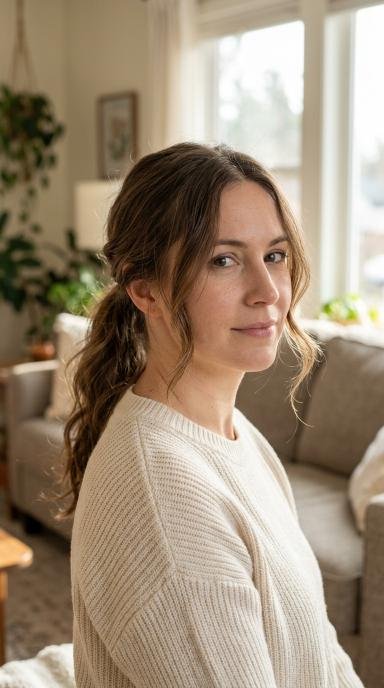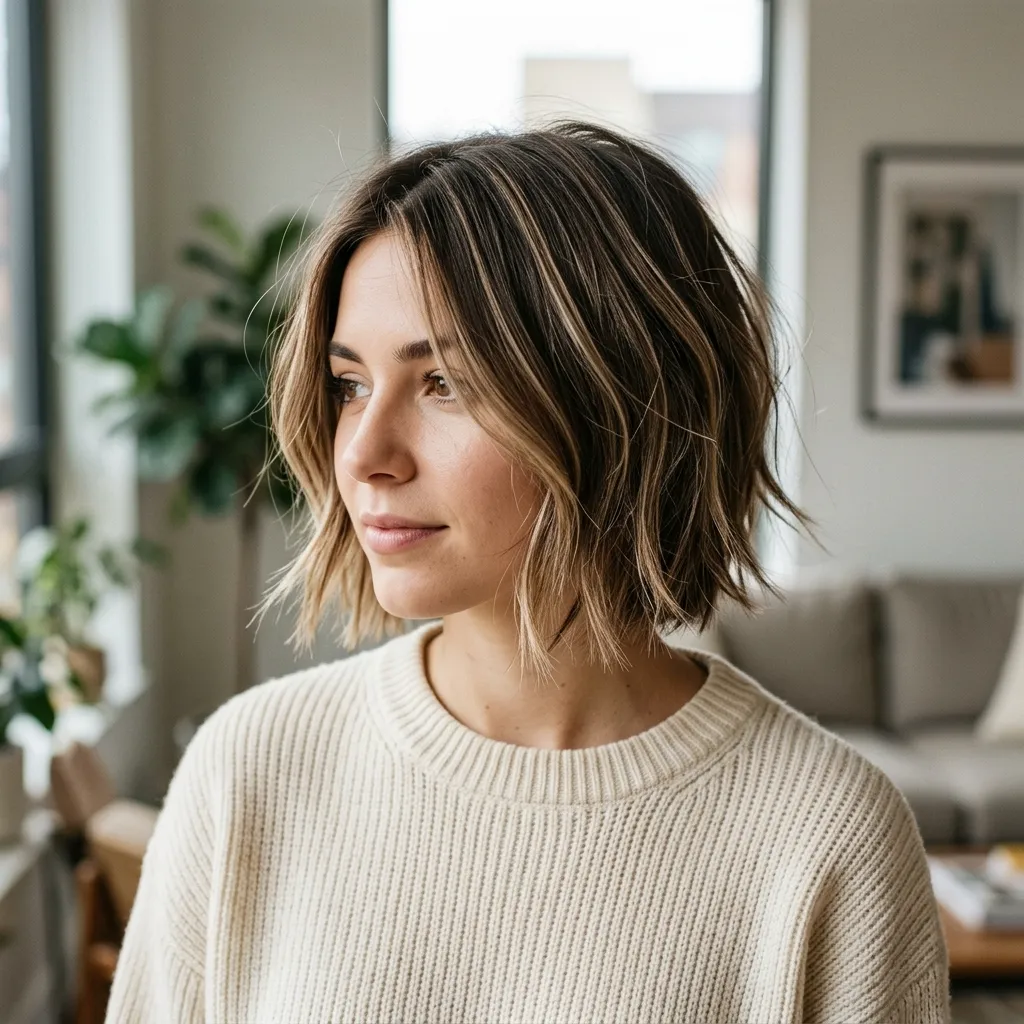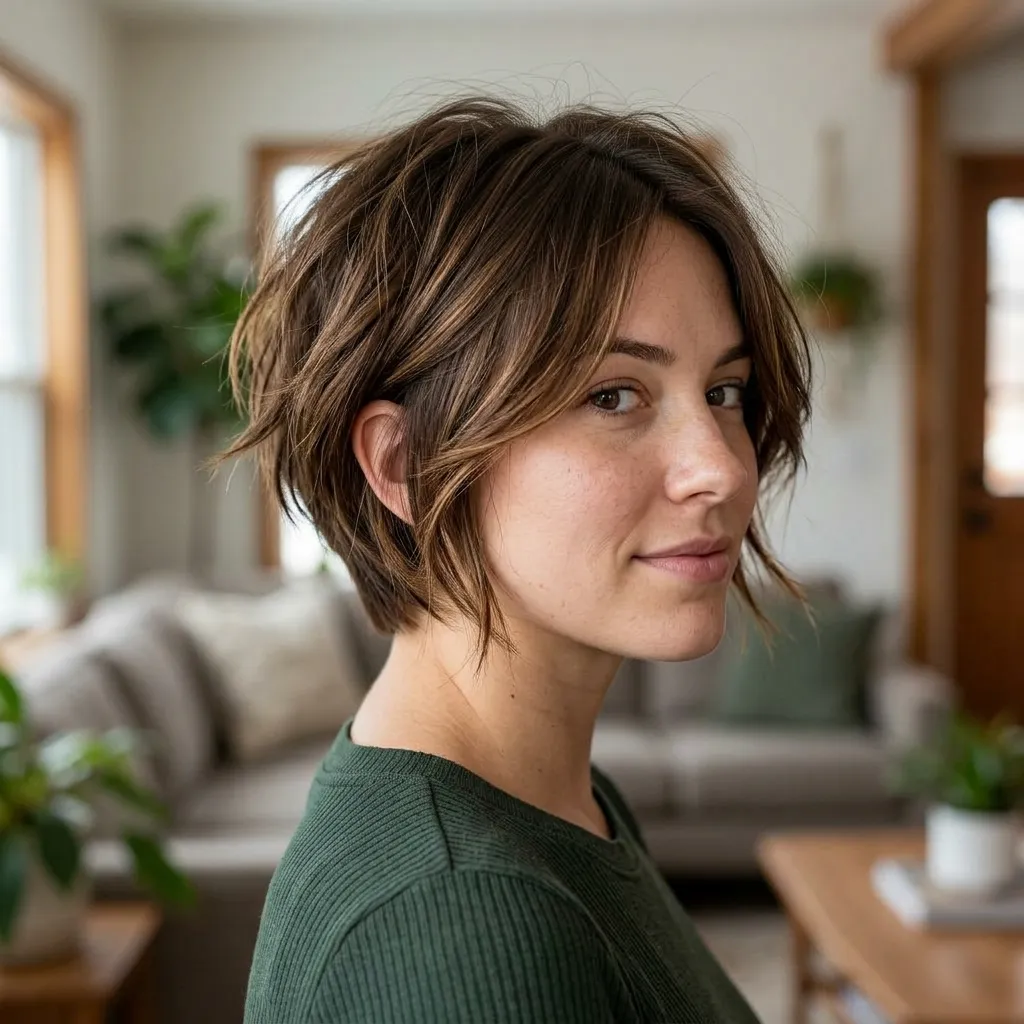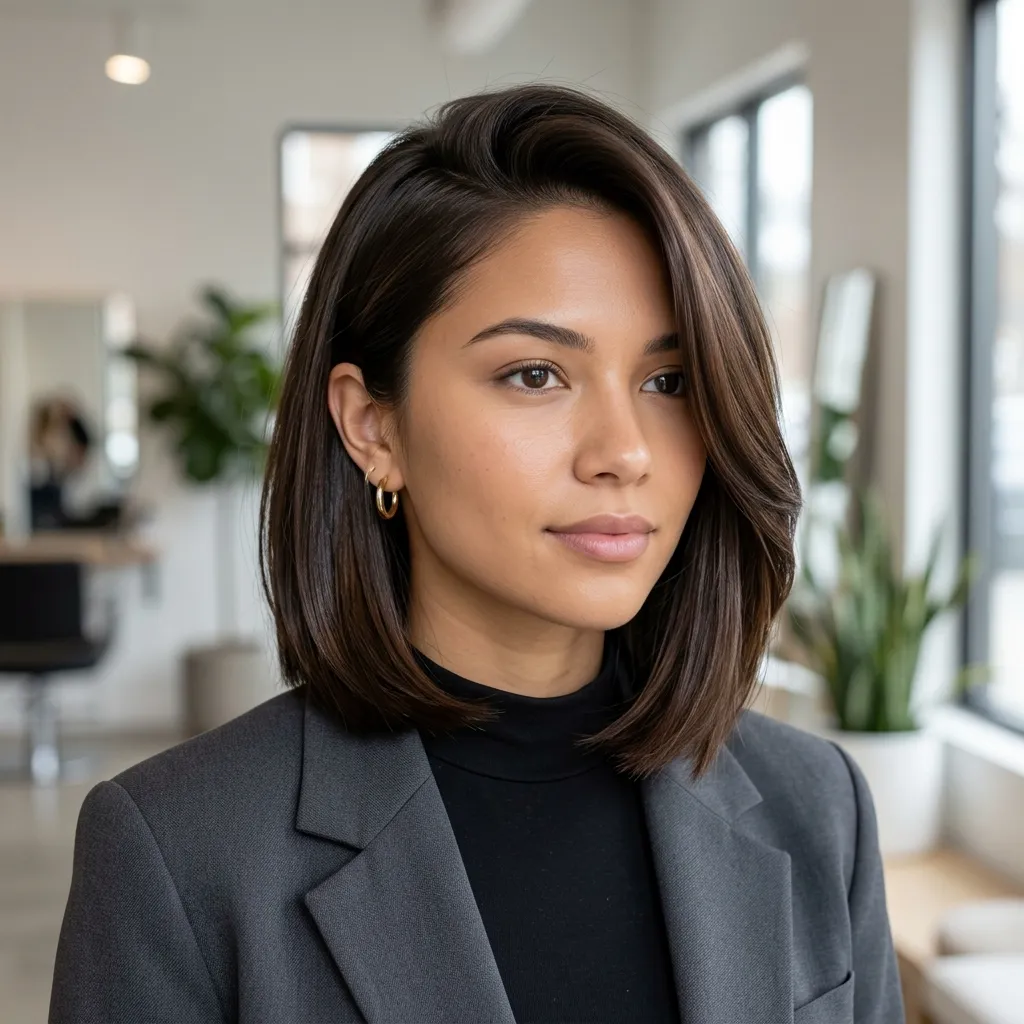
Most bobs look great from the front and fall flat from the back. The inverted bob fixes that by stacking the layers at the nape so the shape lifts where hair tends to go limp. Longer pieces at the front still frame your face, so you get softness and structure in the same cut. That is why inverted bob hairstyles keep returning no matter how many trends come and go.
The 20 ideas below cover short, medium, and long versions, with different levels of graduation, bangs, parts, and color. Think about how bold you want the back to look, how much time you have to style it, and which bangs suit your face. Then take your favorite to your stylist and ask how it will grow out.
1. Classic Inverted Bob
The classic version has stacked graduation at the back and longer pieces at the front, with the front length near the jaw. The stacking creates lift at the back where most bobs lack it. Use a round brush on the back to set the shape and direct the front pieces forward. A trim every five to six weeks keeps the graduation crisp.
2. Short Inverted Bob
A short inverted bob brings the front to the chin and graduates the back to around mid-nape. The shorter length makes the whole cut feel more dramatic while keeping that signature stacked back. It suits people who are comfortable with short hair and want strong impact. A round brush and a little pomade through the back add definition.
3. Medium Inverted Bob
At collarbone length in front, a medium inverted bob offers more styling flexibility while the back still keeps its lift. Blow-dry it with a round brush from front to back. It works best when your hair has some natural lift to support the graduation. It is also a friendly first step if you are moving from longer hair into an inverted cut.
4. Long Inverted Bob
A long inverted bob stretches the front just past the shoulders, edging toward lob territory, while the back stays graduated. You can wear it down, half-up, or pulled into an updo, which makes it the most versatile length. Use a round brush on the front and to shape the back. The long front pieces also let you play with different parts.
5. Inverted Bob with Subtle Graduation
Not everyone wants a dramatic stacked back. A subtle graduation gives you enough lift to see a difference without a sharp angle. A round brush at the back is usually enough to style it. It suits anyone new to inverted cuts or anyone who prefers minimal styling effort.
6. Inverted Bob with Dramatic Graduation
With steep stacking at the back, this version creates real height and volume above the nape. It makes the most of what an inverted bob does best. Hair with good density supports the shape without looking thin. Set the stacked shape with a round brush, then direct the long front pieces forward, and consider bolder color to match the attitude.
7. Inverted Bob with Curtain Bangs
Curtain bangs that fall from the cheekbone to the jaw soften the strong silhouette of an inverted bob. They add movement and negative space at the forehead. Part them softly in the center and brush them outward with a round brush. Warm caramel or chestnut tones pair well with this look.
8. Inverted Bob with Wispy Bangs
Wispy, piecey bangs at the brow add an airy detail that keeps the cut from feeling too heavy. They are lighter than blunt bangs, so they do not compete with the structured back. Blow-dry them with your fingers and separate with a bit of texture cream. They work best when your hair has some body.
9. Inverted Bob with Blunt Bangs
Full blunt bangs cut straight across just above the brow give this style a strong, graphic edge. The straight fringe and the stacked back both read as precise. It works best on hair that is mostly straight so both elements stay crisp. Bangs need frequent trims, so plan on visiting every four to five weeks.
10. Inverted Bob with Side-Swept Bangs
Side-swept bangs that sweep diagonally across the forehead soften the graphic precision of the cut. They add asymmetric movement while the stacked back keeps its shape. Train the bangs on damp hair with a comb and set with a little mousse at the root. Rich brunette and chestnut shades look especially good here.
11. Center-Parted Inverted Bob
A clean center part adds vertical structure to the angled silhouette. It shows your parting line clearly, so it works best when your density is fairly even. Use a smoothing serum and a flat iron on the front pieces, then comb the part into place. A single, consistent color shows off the structure nicely.
12. Side-Parted Inverted Bob
A deep side part adds asymmetry that complements the angled shape of the cut. The heavier side sweeps across the forehead while the lighter side shows more of the face. Set the part with a comb on damp hair and add mousse at the roots. It flatters a square or strong jawline and pairs well with the dramatic graduation versions.
13. Sleek Inverted Bob
A sleek, high-shine finish lets the precision of the cut do the talking. The smooth surface reflects light off both the front pieces and the stacked back. A glossing treatment, smoothing serum, and a flat iron pass create the finish. It works best if your hair does not frizz easily, and deep, rich colors make it look even more polished.
14. Wavy Inverted Bob
Add soft S-waves to the longer front pieces while keeping the back smooth. The waves soften the cut without hiding the graduation. A one-and-a-quarter inch curling wand works well, and you can skip the stacked back entirely. It suits hair that holds curl well.
15. Choppy Inverted Bob
Slide cutting and point cutting create visible texture through the longer front pieces. That choppiness softens the precision of the cut while the back keeps its shape. It takes a stylist experienced in textural cutting to balance the two. Gray and silver hair can look especially interesting with this style, because uneven texture catches the light.
16. Razored Inverted Bob
Razoring the front pieces creates soft, feathered ends that take the edge off the cut. The back graduation stays structured. Medium to thick hair holds razored ends best, while very fine hair can start to look stringy. Finish with your fingers and a touch of texture cream, and book a trim every six to seven weeks.
17. Asymmetrical Inverted Bob
One side of the front is cut noticeably shorter than the other while the back stays stacked. The result is bold and directional. It reads best on straight or slightly wavy hair, since heavy curl can hide the angle. Style it straight for crisp asymmetry or with soft waves for a gentler take.
18. Inverted Bob with Balayage
Hand-painted highlights look beautiful on the longer front sections of an inverted bob, because the colorist has more length to work with. The lightest pieces usually sit around the face. A consistent base color underneath keeps everything cohesive. The dimension contrasts nicely with the structured back.
19. Inverted Bob with Money Piece
Lightened panels that frame the face from the part to the chin stand out clearly against a clean, structured cut. The contrast emphasizes the directional shape of the bob. Deep brunette or espresso bases give the strongest effect. Refresh the color every few months.
20. Inverted Bob with Stacked Volume
This version pushes the volume even further with extra internal texturing in the stacked back. The cut itself provides the lift, so you rely less on product and tools. It is ideal if back volume is your main concern. Keep styling simple and let the shape do the work, with trims every five to six weeks.
FAQs About Inverted Bob Hairstyles
Who looks best with an inverted bob?
Many hair types can work, but the style especially helps people who want more lift at the back. Straight and slightly wavy hair show the shape most clearly. Your stylist can adjust the amount of graduation to fit your density.
How often does an inverted bob need a trim?
Most versions look best with a trim every five to seven weeks. The stacked back and the angled front lose their shape as the hair grows. Cuts with bangs may need even more frequent visits.
Is an inverted bob hard to style?
It is simpler than it looks. A round brush and a little blow-drying are usually enough to set the shape. Sleek and textured finishes both work, depending on your mood.
Can I get an inverted bob with fine hair?
Yes, though a subtle graduation tends to work better than a dramatic one. A stylist can keep the perimeter strong while adding gentle lift at the back. Avoid heavy razoring if your hair is very fine.
Final Thoughts on Inverted Bob Hairstyles
The appeal of inverted bob hairstyles is simple: they give you structure, shape, and back volume in one cut. Whether you want a soft, subtle stack or a bold dramatic one, there is a version here that can fit your hair and your routine. Pick the length and bangs that match your style, then bring a few photos to your stylist. A great cut makes mornings noticeably easier.